
On April 25th, 2000, a date that still stings for many wrestling fans, David Arquette became WCW Champion. How did it come to this? How did a championship built by legends suddenly feel vulnerable in a single moment?
At a Thunder taping in Syracuse, the unthinkable unfolded. An actor — not a contender, not a grinder of the road — stood inches away from wrestling’s most prestigious prize.
David Arquette, known more for Hollywood than headlocks, stepped into a match that carried consequences far bigger than anyone in the ring.
The setup itself raised eyebrows. Diamond Dallas Page, the reigning WCW Champion, is teaming with Arquette against Jeff Jarrett and Eric Bischoff.
But the real shock came in the stipulation — one fall decides everything. No rankings. No earning it. Just one pinfall, and the title changes hands.
Ask yourself: when the stakes are that high, should the rules be that loose?
Then it happened.
A guitar shot. A cover. A three-count.
Arquette pinned Bischoff.
And just like that… the “Big Gold Belt” changed hands.
For fans watching, the reaction wasn’t just surprise — it was disbelief. Anger. Confusion. Was this a joke? A publicity stunt?
A breaking point? Around the world, longtime viewers felt something shift. If this could happen, what did the championship even mean anymore?
In that moment, a question echoed louder than the referee’s count: Was this the night WCW lost more than just a title?

The Night David Arquette Became WCW Champion –
Promotion Over Tradition
To understand how WCW got there, you have to start with Ready to Rumble, a Warner Bros. comedy starring Arquette and Scott Caan.
The film was produced in cooperation with WCW, and the promotion leaned heavily into cross-promotion in early 2000.
Arquette began appearing regularly on television alongside Diamond Dallas Page, playing an exaggerated fan-turned-ally.
Behind the scenes, WCW was desperate. Television ratings were collapsing, WWF (now WWE) had firmly taken the lead in the Monday Night War, and executive producer Vince Russo was pushing increasingly unconventional ideas to generate buzz.
From a booking standpoint, that distinction mattered internally. To fans, it didn’t.
Even Arquette questioned the idea immediately. In multiple interviews, he has recalled his reaction bluntly:
“I said I didn’t think it was a good idea!”
(David Arquette via The Steve Austin Show (transcribed by Wrestling News)))
Elsewhere, he elaborated further:
“That’s a terrible idea. No, we can’t do that.”
(David Arquette via Espn)
The title change happened in a tag team match: David Arquette & Diamond Dallas Page against Jeff Jarrett & Eric Bischoff. The stipulation: whoever scored the pinfall would become WCW World Heavyweight Champion.
The match itself was structured to protect the illusion of legitimacy while still delivering the shock ending. Jarrett and Page handled most of the in-ring work, with Arquette playing the overwhelmed celebrity figure caught in chaos.
The finish came quickly and deliberately. Late in the match, Arquette hit Bischoff with Jarrett’s trademark guitar. In WCW logic, that was enough. He covered Bischoff, the referee counted three, and suddenly the unthinkable had happened.
Arquette was champion.
The live crowd reaction was mixed — some confusion, some amusement — but it was the reaction afterward that defined the moment.

Confusion Turns to Backlash
Within days, the decision was widely criticized across wrestling media, locker rooms, and fan communities.
Arquette himself later admitted that no one anticipated the scale of the backlash:
“We just never knew it was gonna be taken as bad as it was.”
Fans saw the WCW World Heavyweight Championship — a title once held by Ric Flair, Sting, and Goldberg — as devalued overnight.
Inside the locker room, the reaction was even more intense. Arquette later described the atmosphere candidly:
“There was a lot of hatred, and a lot of people got so pissed off.”
(David Arquette Says That He Was Hated Backstage After WCW World Heavyweight Championship Win )
For wrestlers who had spent years chasing the title, the decision felt like a dismissal of their work. Arquette, to his credit, understood why. He acknowledged the grind of the business and the resentment that followed.
That moment mattered to Arquette, even as criticism mounted.
One of the most important aspects often overlooked is that Arquette never approached the situation as a stunt for ego or money.
In fact, he has consistently emphasized that he was a lifelong fan living out a surreal moment. He described holding the championship as:
“Like being a little kid living a dream.”
(David Arquette via WWE)
He also didn’t financially benefit as critics assumed. Arquette has stated he refused to profit from wrestling appearances during that period, donating his earnings instead. (David Arquette via Wrestling Inc.)
Even during his brief reign, which lasted 12 days, he tried to connect with fans in unconventional ways, bringing the title into crowds and letting people interact with it directly. (David Arquette on his tumultuous time as WCW World Champion)
Still, those gestures didn’t soften the broader perception. To many, the damage was already done.

The Fallout: Losing the Title and WCW’s Decline
Arquette’s reign ended at Slamboree 2000, where he lost the championship back to Jeff Jarrett in a triple cage match also involving Diamond Dallas Page.
The match itself leaned even further into chaos, with run-ins, interference, and the now-infamous visual of Arquette turning on Page to help Jarrett retain control of the title scene.
By that point, the damage to WCW’s credibility had already set in.
While it would be overly simplistic to say Arquette’s title win caused WCW’s downfall, it became a defining symbol of the company’s final year, a period marked by hot-shot booking, celebrity involvement, and a disconnect between creative direction and audience expectations.
That part worked. But the attention wasn’t the kind WCW needed.
For years, Arquette’s title win was treated as a punchline — shorthand for everything that went wrong in WCW’s final era.
But over time, the narrative has shifted slightly.
Arquette’s later efforts to legitimately train, wrestle on the independent circuit, and even risk injury in serious matches reframed how some fans viewed him.
His commitment suggested that his original involvement wasn’t cynical — it was naïve, perhaps, but rooted in genuine passion.
That aligns with how he himself has always framed the experience. He admitted he could have said no, but didn’t fully grasp the implications at the time. (David Arquette on Chris Van Vliet via Wrestlezone)
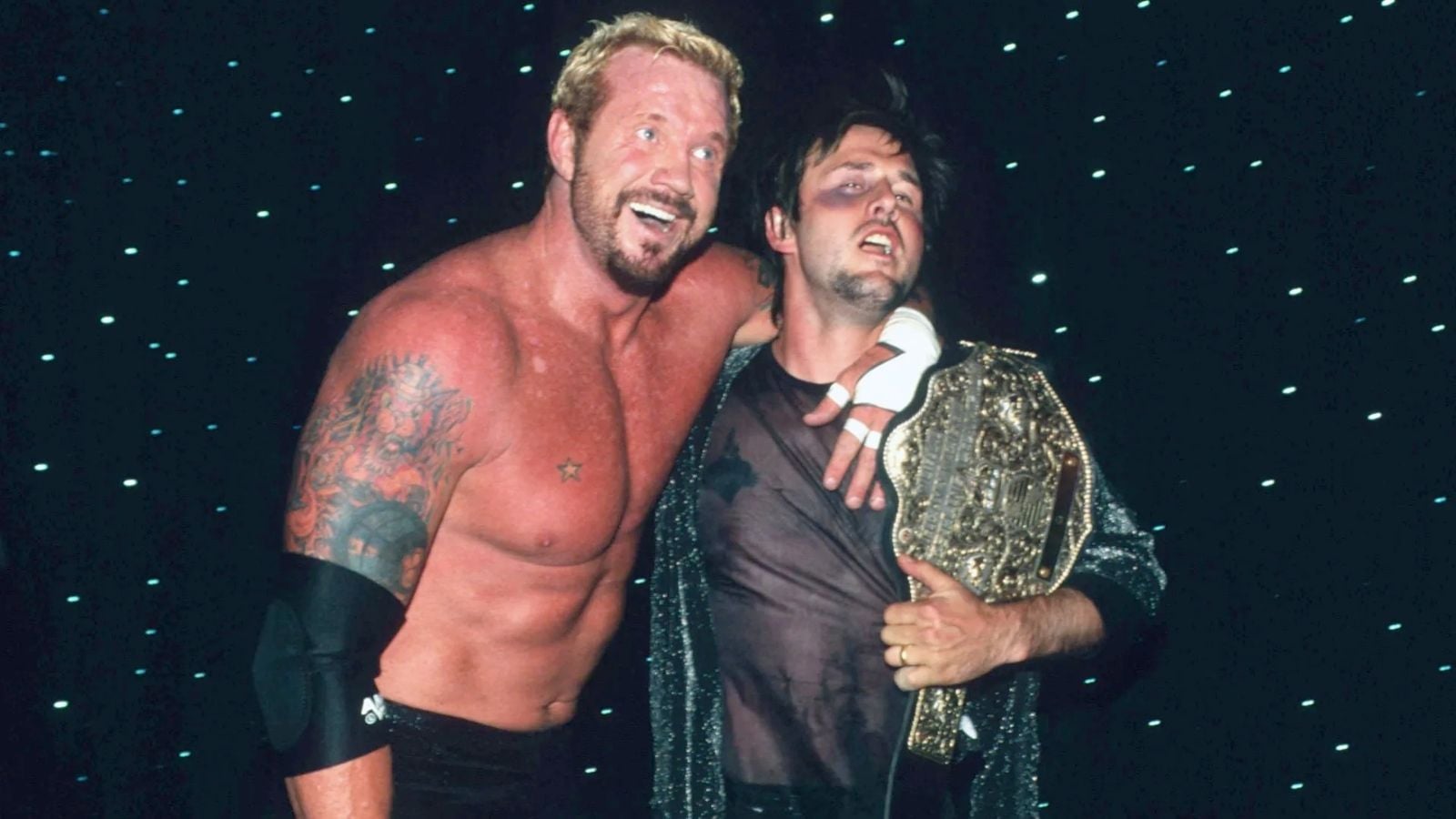
The night David Arquette won the WCW World Heavyweight Championship wasn’t just a controversial booking decision — it was a collision between entertainment marketing and wrestling tradition.
From WCW’s perspective, it was an attempt to generate mainstream buzz during a period of decline. From the locker room’s perspective, it undermined years of effort. From the fans’ perspective, it crossed a line that wrestling had rarely crossed before.
And from Arquette’s perspective, it was a dream that quickly turned into something far more complicated.
The image of him holding the “Big Gold Belt” remains one of the most enduring visuals of WCW’s final year — not because of what it accomplished, but because of what it represented.