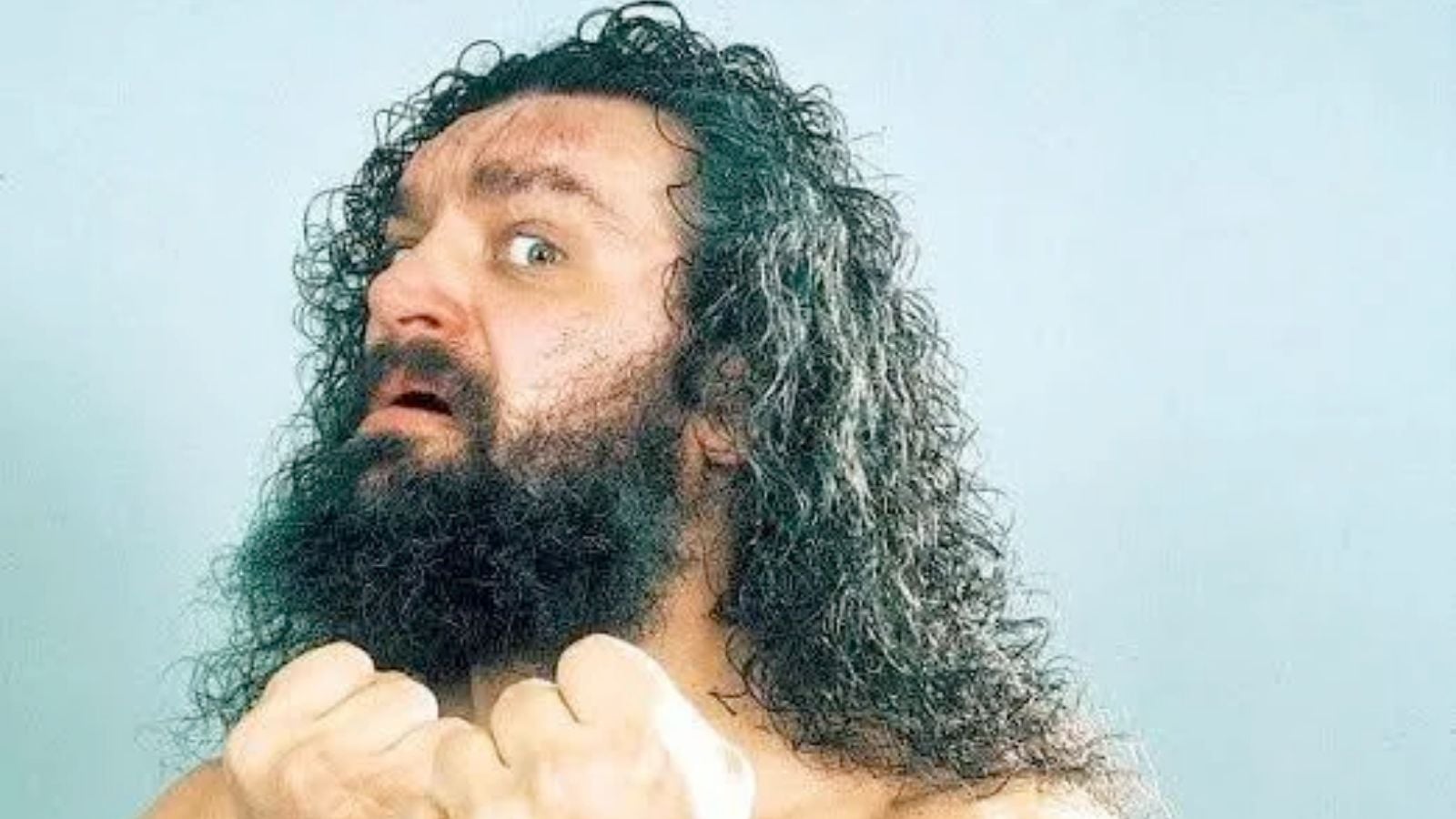
Few figures in professional wrestling history command the same mixture of awe, fear, and reverence as Bruiser Brody.
Standing 6’8” and weighing around 300 pounds, Brody was born Frank Goodish and was a force who defied simple categorization. He battled hard in the ring and terrified fans outside of it.
He was wild but calculated, chaotic but intelligent, a brawler with the instincts of a storyteller and the mentality of an independent contractor long before that term became industry standard.
Brody’s career spanned major U.S. territories and international strongholds—most notably All Japan Pro Wrestling (AJPW), where he became an institution.
His violent, free-flowing style influenced generations. His death in 1988 remains one of wrestling’s darkest moments, forever altering how the industry views safety, trust, and accountability.
This is the story of his rise, his defining matches, his peers’ reflections, and the lasting imprint he left on the culture and business of professional wrestling.
Bruiser Brody – Early Life and Breaking Into the Business
Frank Goodish entered wrestling in the late 1970s after a brief run in football and a stint in sports journalism. Breaking in under the name Bruiser Brody was a nod to Dick the Bruiser, who actually threatened legal action if the name was used in his territories.
Goodish quickly found his groove as an unrestrained, unpredictable heel. In his earliest territory runs—Dallas, Florida, and various NWA offshoots Brody developed the big-man characteristics that would define him:
He would share roaring promos laden with intensity. Brody was accompanied with an arsenal built around hard punches, high knees, and the “King Kong Knee Drop.”
One of Brody’s most unique qualities was his refusal to be tied to any one wrestling promotion, often wrestling all over the world.
In essence, he would be akin to an independent wrestler only in front of far larger crowds from Japan to Canada to Puerto Rico.
Brody wasn’t simply big. He was believable. Wrestlers who faced him often said that working with Brody was like “trying to ride a bull that didn’t want to be ridden.”
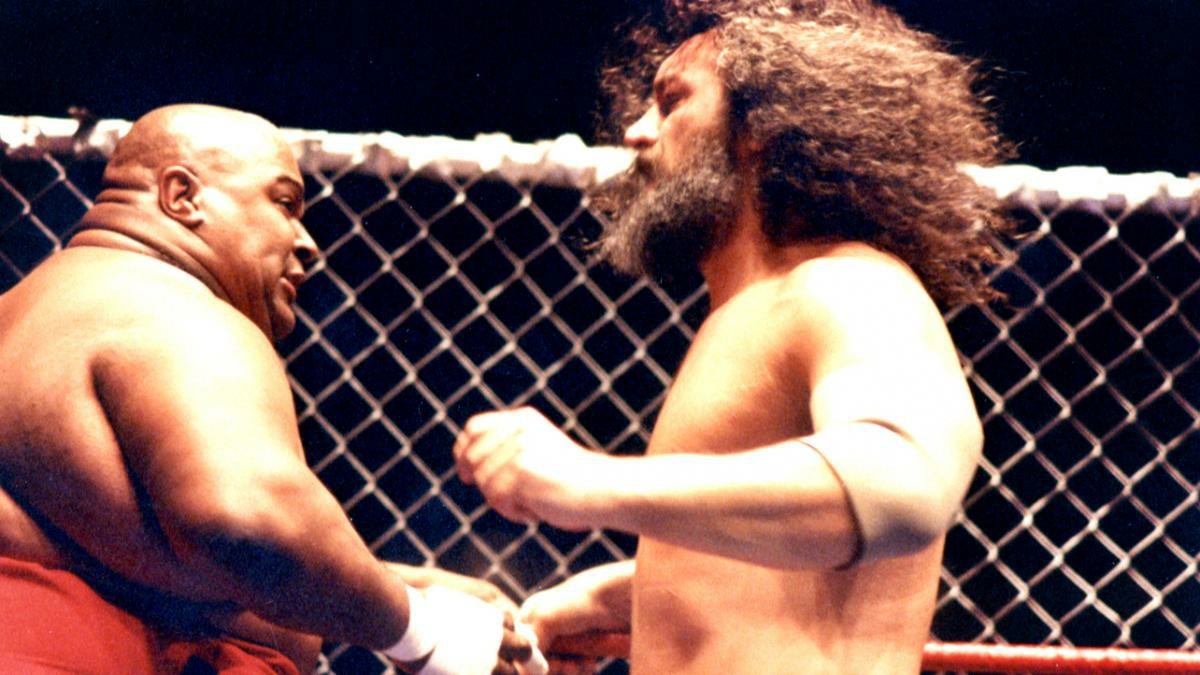
Abdullah The Butcher and Bruiser Brody in one of their many bloody brawls [Photo: Tumblr]
Rising Through the Territories: Legendary Feuds and Matches
Bruiser Brody & Abdullah the Butcher had one of the longest-running, bloody, violent feuds in wrestling history. Perhaps wrestling’s most violent rivalry, Brody and Abdullah carried their “blood feud” around the globe from the U.S. to Japan to Puerto Rico.
Few, if any, of their matches were held in a ring. In fact, fans would be hard-pressed to watch them compete in a ring at the best of times.
Brody and Abdullah would simply use the arena as their confines, and anything or anyone that runs the risk of falling prey to that.
Their matches were less about structure and more about mayhem, featuring chairs, forks, and crowds scrambling away from the commotion.
Abdullah once said,
“Brody hit you hard, but he expected you to hit him back. That’s why we clicked.”
Bruiser Brody in All Japan Pro Wrestling
Brody became a transcendent figure in Japan. Under Giant Baba’s AJPW, he and partner Stan Hansen formed one of the most intimidating teams in history.
Their rivalry with the likes of The Funks, Jumbo Tsuruta, Genichiro Tenryu, and The Road Warriors produced some of AJPW’s most enduring classics.
AJPW fans revered Brody. His iconic visual swinging chains above his head while “Immigrant Song” blasted—became an integral part of the promotion’s identity.
Tenryu once remarked through translation,
“You didn’t wrestle Brody. You survived him.”
Bruiser Brody and the incident with Lex Luger (Florida, 1987)
The infamous steel-cage encounter between Brody and a green Lex Luger has become a case study in Brody’s protective instincts. Brody—realizing Luger wasn’t comfortable—stopped cooperating, forcing Luger to escape the cage in confusion.
Luger later recalled,
“He wasn’t trying to hurt me. He was trying to teach me something. I didn’t know what at the time, but I know now.”
Puerto Rico and WWC
Brody spent significant time in Carlos Colón’s World Wrestling Council (WWC). He and Colón had a heated, bloody rivalry that fans believed was personal.
Colón himself once stated in retrospect,
“Brody made the people believe. That’s the biggest compliment I can give anyone.”
Although Brody never chased titles the way some contemporaries did—territorial loyalty was not his priority—he still amassed an impressive list of championships across the world:
He held the NWA International Tag Team Championship in AJPW alongside Stan “The Lariat” Hansen, the NWA American Heavyweight Championship during his time in World Class Championship Wrestling, WCCW Texas Brass Knuckles Championship, WWC Universal Heavyweight Championship in Puerto Rico and an All Japan Pro Wrestling Tag League Winner multiple times over.
Brody’s philosophy was simple:
“I didn’t need a belt to get over. I needed freedom.”
Bruiser Brody was polarizing. Some wrestlers saw him as a genius who protected the business. Others felt he could be difficult or unpredictable.
Stan Hansen on Brody:
“He was smart—very smart. He wasn’t out of control. Everything he did had a purpose.”
Mick Foley, heavily influenced by Brody:
“Brody made me want to wrestle. His matches with Abdullah were the first things I ever saw that felt dangerous.”
[Photo: WWE]
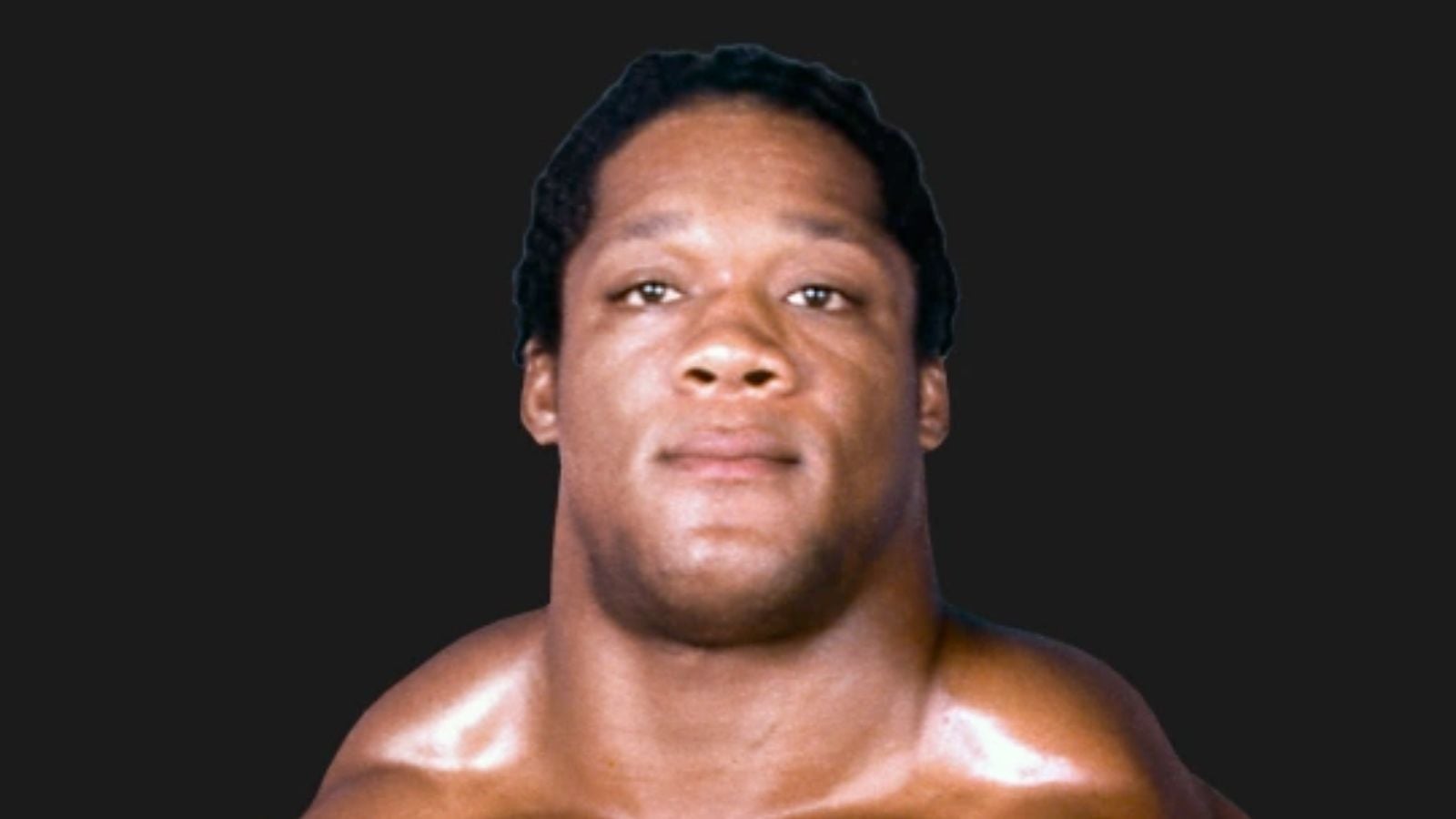
Tony Atlas, who was present the night Brody was killed:
“Brody respected honesty. If you shook his hand and gave your word, that meant something to him.”
Brody’s larger-than-life persona was not an act—yet it was also not a lack of discipline. He was fiercely protective of his image and refused to let promoters or bookers compromise it.
Brody’s style became the blueprint for an entire subculture of wrestling. Deathmatch and hardcore wrestling took cues from Brody’s unpredictable crowd brawls.
The history of the puroseau and Japanese strong-style was absorbed by his intensity and physicality. When considering, independent wrestlers have adopted his mindset of controlling their own bookings.
Finally, ‘big men’ began modeling their movement and strikes on his agility. Wrestlers as varied as Foley, Hansen, JBL, Jon Moxley, Brody King, and Luke Harper/Brodie Lee cited Brody as a primary inspiration.
The late Luke Harper/Brodie Lee once said,
“Everything I did was because of him. I watched him every night before I went out.”
The Tragic Night in Puerto Rico
On July 16, 1988, in Bayamón, Puerto Rico, the wrestling world changed forever. Before a WWC show, Brody was approached in the locker room shower area by fellow wrestler and booker José Huertas González (also known as Invader #1). A confrontation broke out, and Brody was stabbed multiple times.
Tony Atlas, who was present, told the story repeatedly over the years:
“Brody handed me his locker key and said, ‘Take care of my stuff.’ He knew… he knew how bad it was.”
Brody was taken to a hospital where delays in treatment—partially due to limited resources and language issues—compounded the severity of his injuries. He died the next morning.
González was charged with homicide but was ultimately acquitted, citing self-defense. Key witnesses (American wrestlers) were not effectively subpoenaed in time, leaving the trial without critical testimony. The verdict remains one of wrestling’s greatest points of anger and sorrow.
Wrestlers across the globe reacted with rage, disbelief, and fear. Many stopped working altogether in Puerto Rico.
Stan Hansen summarized the sentiment:
“We lost a friend. We lost a locker room leader. And we lost faith in the system.”
Bruiser Brody’s Legacy: What Remains
Even now, Brody exists in wrestling memory in a way few others do. His legacy rests on three pillars.
Brody’s frantic, unpredictable, yet strangely elegant brawling style remains the template for monstrous heels and wild babyfaces. His psychology—knowing when to charge, when to sell, when to create chaos—remains a teaching tool for wrestlers studying physical storytelling.
Brody refused to be owned by a promotion. He often controlled his finishes, negotiated his pay directly, and refused to compromise his credibility. In today’s era of independent contractors, Brody’s approach looks prophetic.
His Mythology is tied to his death, which felt unresolved—legally, emotionally, morally—Brody’s aura only grew. He became a symbol of what can happen when caution, accountability, and unity break down in the industry.
Wrestlers speak of him not in nostalgia but in reverence. Tony Atlas’s connection to Bruiser Brody is impossible to separate from the tragic night in 1988 in Bayamón.
But long before the stabbing, Atlas saw Brody as a colleague, a friend, and a complicated figure in a business full of complicated people.
Atlas often described Brody as direct but fair. He wasn’t a diplomat, but he wasn’t the reckless destroyer some painted him to be. “Brody respected honesty,” Atlas later said, repeating a sentiment that became the core of his testimony in interviews.
“If you shook his hand and gave your word, that meant something to him.”
The trust between the two was strong, built in locker rooms and through shared road miles in the territories.
On July 16, 1988, Atlas became the most important eyewitness to Brody’s death. In every version of the story he’s told since, one detail always hits hardest:
Brody handed him his locker key after being stabbed. Atlas has described that moment as the instant he realized Brody understood the severity of his injuries.
“He knew. I saw it in his face. He knew he wasn’t going home.”
Atlas also played a critical role in physically carrying Brody to the ambulance when emergency responders struggled with the weight of his body.
He’s recounted how Brody groaned in pain while being lifted, yet remained conscious during the chaotic scene. For Atlas, the memory never faded. He continued to speak openly about the night, even when others in the industry refused.
After Brody’s death, Atlas distanced himself from wrestling in Puerto Rico and was outspoken about his frustrations with the court process.
Subpoenas never reached key American witnesses in time, leaving Atlas as one of the only voices pushing for accountability.
Though the case ended in acquittal, Atlas continued telling the story in interviews, shoot videos, conventions, and documentaries.
His motivation wasn’t profit or spotlight. It was loyalty. Atlas believed Brody deserved his story told truthfully, without political filters or backstage fears. His recollections remain some of the clearest documentation of the event painful, detailed, and unwavering.
In the years since, Atlas hasn’t allowed Brody’s memory to be buried by the circumstances of his death. For him, preserving Brody’s legacy isn’t just recounting the tragedy; it’s honoring a competitor he respected, a friend he trusted, and a man whose story shaped the course of wrestling history.
Bruiser Brody’s life was a testament to individuality, conviction, and physical storytelling. His matches were raw, emotional experiences.
His influence reshaped styles, philosophies, and industry standards. His tragic death remains a painful reminder of the dangers wrestlers face—and the importance of unity and protection behind the curtain.
More than three decades later, Brody’s roar, his chain, and his sprint to the ring still echo through wrestling’s halls.
His shadow is long, his legacy indelible, and his impact unquestioned. In a business built on giants, Bruiser Brody remains one of the few who still stand tall.
As a wrestling enthusiast for over 30 years, my fondness for professional wrestling explores the irrational in a rational way. I will explore the details inside and outside the ring and hopefully have a laugh with you in the process. I've had the fortune to interview wrestlers from Lucha Underground, TNA, Ring of Honor, GFW, and former WWE talent as well. Feel free to follow me on Twitter @TheMarcMadison