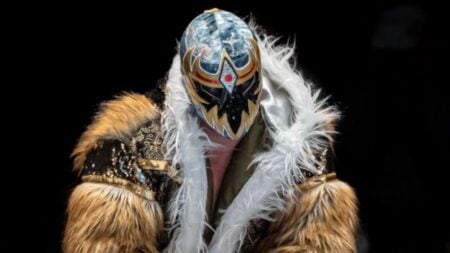




Kana’s rise to Asuka did not happen because she fit a company mold. It happened because she made herself impossible to ignore.
From the Japanese scene to WWE, her career has been built on sharp edges, hard matches, and the kind of presence that turns a crowd when she walks through the curtain.
She did not arrive in WWE as a blank slate. She arrived as a finished product, and that is what made her one of the most dangerous women’s wrestlers of her generation.

Kana to Asuka: The Rise of a Wrestler Who Never Fit the Box
Her career also matters because it was never just about wins and losses. Kana built her name in Japan by clashing with expectations, then carried that same intensity into WWE, where she became one of the key names in the modern women’s wrestling boom.
The path from Osaka to NXT to the main roster was long, but it was never random. Every stage added to the version of Asuka that fans know now.
Kana, real name Kanako Urai, started wrestling in 2004 with AtoZ before stepping away and then returning as a freelancer in 2007.
Her early years were spent working across Japan’s women’s scene, where she built a reputation as a hard-hitting, stubborn, highly skilled worker who could carry a match without much flash.
She worked in promotions including JWP, NEO, Pro Wrestling Wave, Reina, Smash, and Wrestling New Classic. That résumé mattered because it showed range: she was not attached to one company’s style, and she learned how to fit into different environments while keeping her identity intact.
Kana’s time in Japan also gave her the first version of the attitude that fans later came to know as Asuka, the empress of tomorrow, which felt so distinct.
However, she wasn’t as polished in a safe, corporate way. She was blunt, physical, and willing to push against the industry’s habits.

Building Of An Empress…in Japan
Kana’s Japanese career is important because it established the foundation for everything that followed. She won titles across multiple promotions, including the JWP Openweight Championship, the Smash Diva Championship, and the Wave Tag Team Championship.
Those championships were not just props. They showed that she could move between promotions and still stay at the center of the conversation. That kind of credibility is what later made WWE take her seriously as more than just another overseas signing.
Her style also set her apart from many of her contemporaries. She wrestled like someone who wanted the match to feel physical, even when the choreography got elaborate.
The kicks, the submissions, the pacing, and the controlled violence all became part of the Kana identity. By the time WWE came calling, she already had a clear in-ring language, which is one reason she adjusted so quickly once she landed in NXT.

Rivalries that mattered
Kana’s Japanese rivalries helped define her as a worker with a ceiling far above the usual freelancer track. That mattered because her later WWE run did not feel like a reinvention. It felt like the same wrestler moving onto a bigger stage.
In WWE, the rivalries became more visible and more central to the company’s long-term women’s division story. Asuka’s NXT run was defined by the undefeated streak and by matches that gradually pushed her from dangerous outsider to division standard-bearer.
Her feuds with Bayley, Sasha Banks (AEW’s Mercedes Monè), and Charlotte Flair became major checkpoints in that rise. Each one tested a different part of her character:
Bayley forced her into a longer emotional arc, Sasha sharpened the technical exchange, and Charlotte turned the rivalry into a straight pride fight.
Asuka’s WWE rivalries each helped establish a different part of her place in the company. Against Bayley, the story was often about Asuka being the barrier Bayley could never fully clear.
Against Sasha Banks (AEW’s Mercedes Mone), the matches had the edge of two top workers trying to outclass each other in pace and control.
Against Charlotte Flair, the rivalry had a bigger aura because both women carried the weight of their divisions and their legacies.
Charlotte later said her match with Asuka at WrestleMania 34 took her to the next level, adding that Asuka was her favorite opponent to apply the Figure Eight to.
It’s not that I like putting her in it, but I really feel that my match with Asuka took me to the next level, when I broke her streak at WrestleMania.
She had nothing to prove and someone who works backstage, who I’m super close to, thought I was going to lose.
I was like, ‘I was the underdog?’ Putting Asuka in the figure eight was my favorite. – Charlotte Flair via Ryan Satin Out of Character
That is a telling reaction because it shows how even Asuka’s biggest losses still elevated the people opposite her. A lot of wrestlers can say they worked with Asuka. Fewer can say she changed the level of the match.
Sasha Banks and Bayley also treated Asuka like a measuring stick. In a WWE segment, the story was framed around whether Bayley could do what Sasha could not, and whether anyone in the division could actually end Asuka’s streak.
That kind of booking only works if the wrestler at the center feels credible enough to carry the whole division. Asuka did.

NXT and her undefeated streak
When Asuka debuted in NXT in 2015, she did not come in like a prospect who needed time to be introduced. She arrived and immediately felt threatened. Her debut at NXT TakeOver:
Respect and her subsequent undefeated run changed the way WWE presented women’s wrestling on that brand. The company built her as a champion who looked like a boss from the beginning, not as someone waiting to become one.
What made the streak work was that the matches were not empty wins. They became a series of escalating tests. Bayley pushed her to the limit, Sasha brought out a more technical and urgent side, and Charlotte became the final barrier that proved Asuka could headline at a top level.
That is why Asuka’s NXT period still gets talked about as one of the cleanest long-term builds in the women’s division.
Asuka’s own words help explain why the move to WWE worked. In an interview, she said her goal was to get more people around the world to know her and to share Japanese and Asian culture through wrestling.
I want to say to Asian girls, don’t give up on your dreams! When I was 16, I wanted to be a WWE superstar.
One day I asked my mom can I be a WWE superstar, and she said, ‘No, you have to go college!
I also told my high school teacher, ‘I want to be a WWE superstar.’ She laughed and said, ‘Don’t be silly.’ I was shocked. I had no choice. I gave up on my dream once.
I went to college and after graduating from college, I started training. I couldn’t give up on my dream.
My friends gave me confidence, ‘You can do it, you can do it!’ I called a wrestling company in Tokyo.
I left my hometown of Osaka, Japan. Now I am a WWE superstar. Don’t give up on your dream! – Asuka via ProWrestling.net via ETCanada.com
That is a simple quote, but it gets to the heart of her career. She never treated WWE as a place where she had to erase what came before. She treated it as a platform to make that background matter even more.
She also spoke directly about the adjustment from Japan to WWE’s style through the coaching she received in NXT. In an interview during her Performance Center period, she said,
Coaches here are teaching me a lot of things I didn’t know in Japan. Basics to advance techniques.
Some of it is similar to what I was doing in Japan, but rhythm or timing is a little different in the States, so how I mix Japanese and American techniques into my style is what I need to work on. – Asuka on her time training in the WWE
That quote matters because it shows she was not arriving as a finished museum piece. She was actively blending systems and shaping her game for a wider audience.
Another interview captured the confidence behind her WWE rise. She said,
“I feel proud to fight in the Extreme Rules title match as the first Japanese Raw Women’s Champion in WWE history”.
That line is not hype for hype’s sake. It reflects what she had already become by the time she reached the main roster: a wrestler whose success had historical weight.
The move to the main roster
Asuka’s main roster run extended the same core identity, even as the presentation changed. She became a Grand Slam-level figure, a champion in multiple divisions, and one of WWE’s strongest stylized personalities.
What made it work was that WWE did not have to invent her. They just had to let her be Asuka.
Her success also opened the door for more Japanese women wrestlers in WWE. Asuka spoke openly about her desire to help people understand Japanese and Asian culture through her work.
That gave her career a layer that went beyond championship stats. She became a reference point, especially for younger wrestlers and fans who had not previously seen a Japanese women’s star presented so strongly in the U.S.
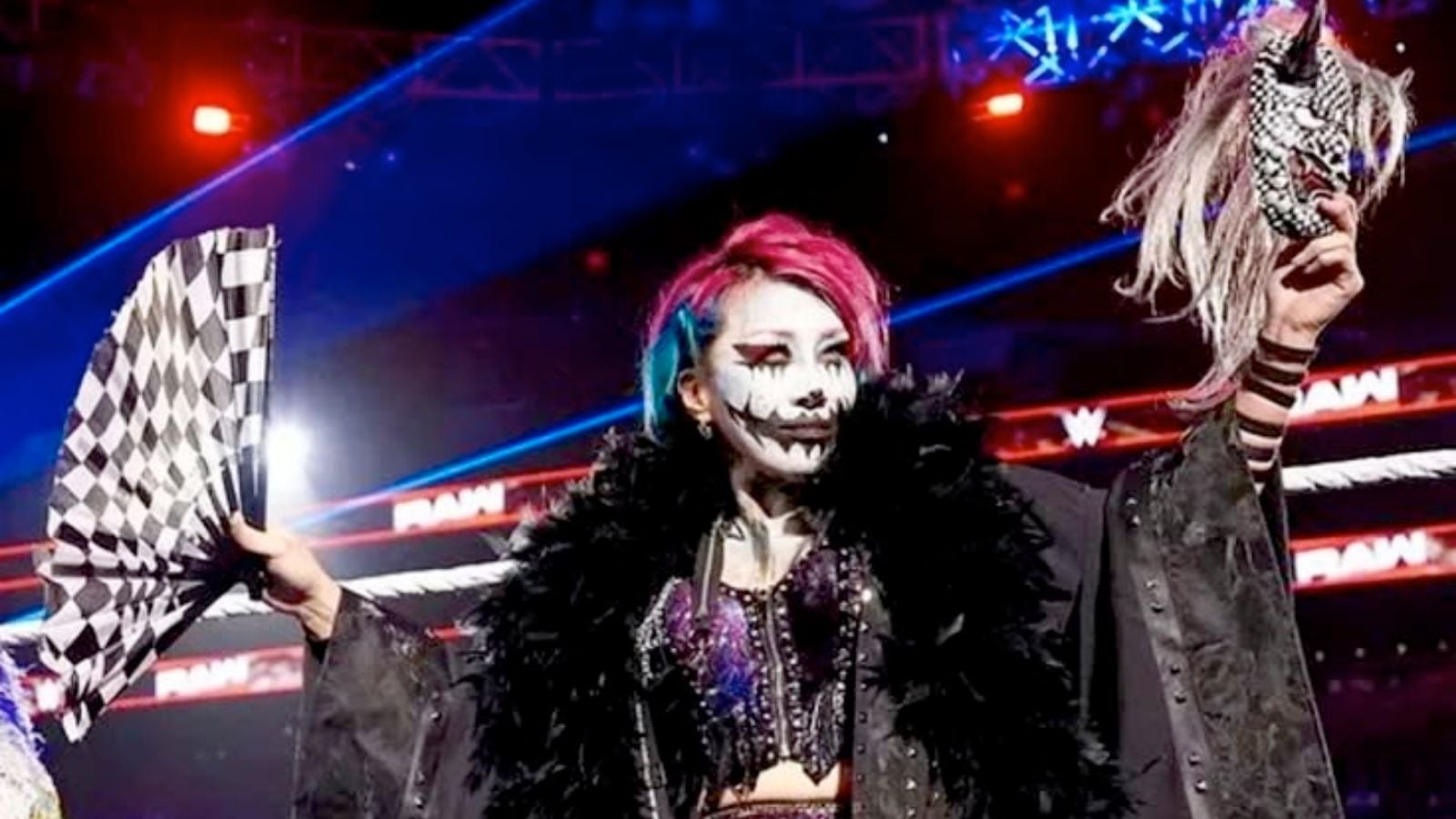
Why her ascent lasted
The reason Asuka’s career still matters is that it never relied on a single peak. Kana gave her a base in Japan. NXT gave her a platform. WWE gave her a spotlight.
The rivals changed, the setting changed, but the core stayed the same: she came off as someone who could make a match feel dangerous, important, and personal.
That is the throughline of her career from Japan to WWE. She was not a one-note import, and she was never positioned as one.
She earned the right to be treated like a top act because she had already done the work before arriving. Kana built the base. Asuka turned it into a global career.
This Damage CTRL entrance photo captures Asuka’s WWE evolution: a vibrant jacket, gloves, and a dynamic pose amid a group presentation.
She has since feuded with countrywoman Iyo Sky, with the student besting the mentor. It was a beautifully violent match between two war-tested women with history in Joshi rising up the ranks.