
On September 28, 1985, roughly 20,000 fans packed Comiskey Park in Chicago for SuperClash 85′. This supercard put wrestlers from the AWA, the NWA, World Class Championship Wrestling, and All Japan Pro Wrestling on the same show.
It was the biggest test yet of an idea that, on paper, made total sense. If Vince McMahon’s WWF was going to keep expanding into other promotions’ backyards, maybe the promotions he was expanding into could fight back by working together instead of against each other.
Why Four Companies Ended Up on One Card with SuperClash 85′
The alliance behind SuperClash was called Pro Wrestling USA, formed in 1984 by a group of promoters who’d watched the WWF’s national expansion eat into their business one territory at a time.
Verne Gagne’s AWA, Jim Crockett Promotions and other NWA members, Ole Anderson’s Georgia Championship Wrestling, and the Memphis-based operation run by Jerry Lawler and Jerry Jarrett all signed on, collecting talent and television time in an attempt to build something resembling a genuine national counterweight to McMahon
The stakes were real. McMahon had already bought Georgia Championship Wrestling’s spot on TBS in 1984, a move so resented in the old NWA world that it’s remembered simply as the “Black Saturday” incident, and WrestleMania’s success that March had only sharpened the sense that regional wrestling needed to answer back with something equally big.
World Class Championship Wrestling and All Japan Pro Wrestling weren’t founding members of Pro Wrestling USA in the same formal sense.
Still, both had longstanding working relationships with the coalition’s promoters — WCCW through the NWA’s Texas affiliation under Fritz Von Erich, and All Japan through Giant Baba’s decades of talent-exchange agreements with American promotions.
SuperClash became the show where all of those relationships converged at once, with Pro Wrestling USA billing it as the venture’s marquee event.
SuperClash 85′ – Booking a Show With Four Promotions’ Egos in the Room
Putting together a card that satisfied four separate companies’ champions, storylines, and box-office interests required real diplomacy, and the Pro Wrestling USA structure meant no single promoter had full control, the way Gagne or Crockett would over their own weekly shows.
Gagne, who owned the American Wrestling Alliance and the promotion that technically hosted the event, had the most talent visible on the card.
However, Crockett’s NWA contributed its own reigning World Champion and top storylines. Both WCCW and All Japan arrived with matches built to protect their own titles and top acts rather than simply serving as guest stars.
The result was a show that read less like a single promotion’s vision and more like four separate undercards stitched into one night thirteen matches deep, with titles from every participating company on the line somewhere on the bill.
The Card
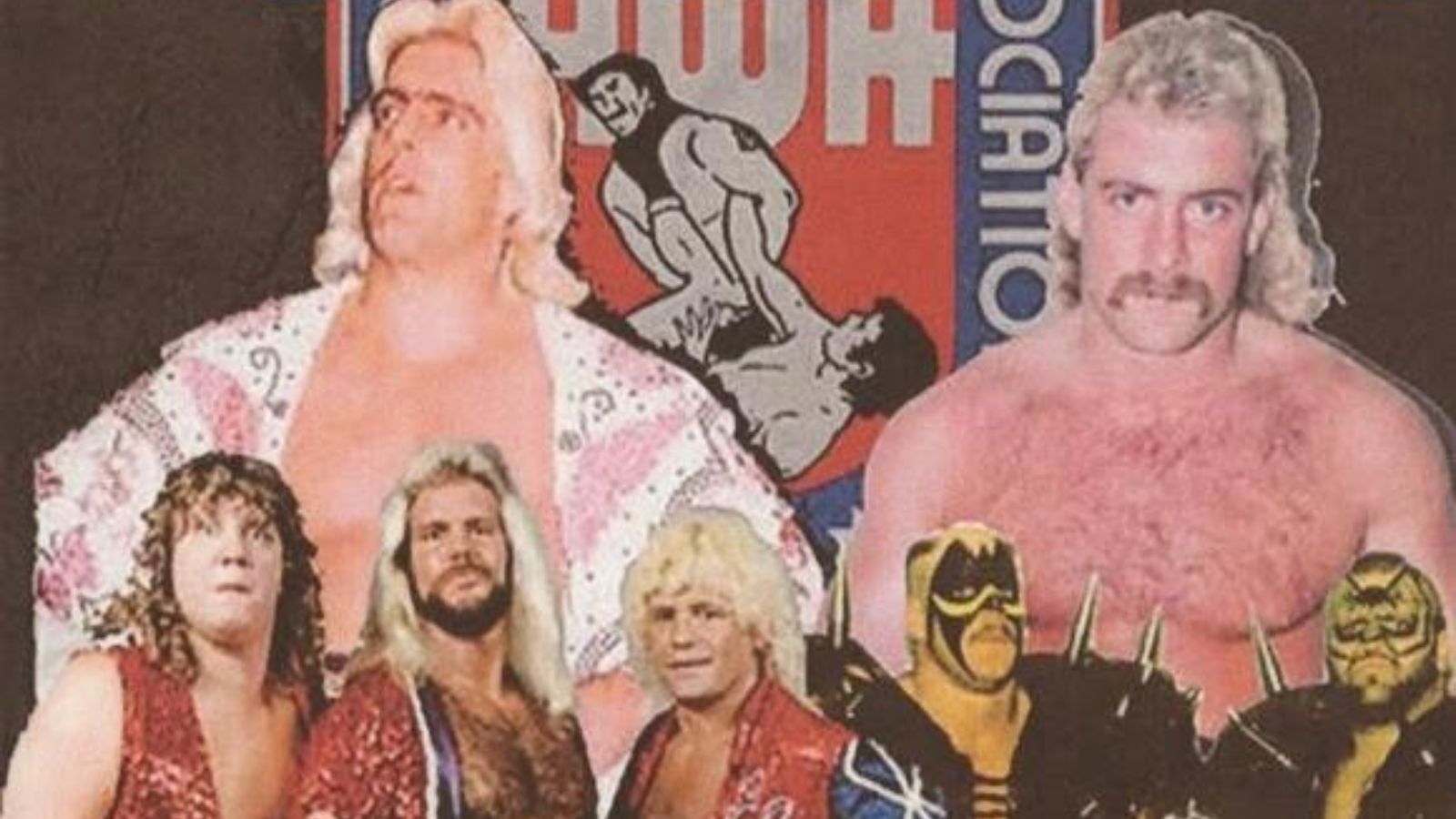
SuperClash’s two headline matches carried the two biggest titles in American wrestling (outside of the WWF). Ric Flair defended the NWA World Heavyweight Championship against Magnum T.A. in a match that ran nearly twenty minutes, retaining the title by pinfall in front of a Chicago crowd that, by most contemporary accounts, knew Flair far better than his younger challenger going in.
Rick Martel defended the AWA World Heavyweight Championship against Stan Hansen in a much shorter, chaotic brawl that ended in a double disqualification at just over three minutes. This finish kept both men’s momentum intact without forcing either promotion to give up its champion.
The rest of the card leaned heavily on the cross-promotional idea. The Road Warriors, the AWA’s reigning tag champions, lost the titles to the NWA and WCCW-aligned Fabulous Freebirds Michael Hayes and Terry Gordy — though the decision was reportedly reversed afterward through video review.
This detail speaks to just how unusual and improvised the entire venture could feel in practice. Kerry Von Erich defended the WCCW Texas Heavyweight Championship against Jimmy Garvin. Sgt. Slaughter defended the Pro Wrestling USA Americas Championship against Boris Zhukov.
And the All Japan contingent — Giant Baba, Jumbo Tsuruta, and Genichiro Tenryu — teamed up in a six-man tag against Harley Race and the Long Riders, giving Japanese wrestling stars a rare high-profile spot on an American supercard of this size.
Sherri Martel won the AWA World Women’s Championship from Candi Devine, and Jerry Blackwell beat Kamala in a bodyslam match further down the card.
SuperClash 85′ –
The Night Four Wrestling Companies Tried to Beat Vince McMahon Together
A Big Number, a Real Show — and Still Not Enough for SuperClash 85′
By most measures, SuperClash delivered on its own terms. Attendance topped 20,000, in Tim Hornbaker’s “Promotional Wars”. National Wrestling Alliance:
The Untold Story of the Monopoly that Strangled Pro Wrestling gate receipts were reported in the neighborhood of $288,000, and the show got taped for later broadcast on ESPN, giving Pro Wrestling USA’s member promotions a genuine showcase of what their combined talent pool looked like on one card.
It didn’t hold. Almost immediately after the show, Gagne and Crockett found themselves in a public dispute over how much money the event had actually made; Crockett claimed the gate came to $288,000. At the same time, Gagne insisted it was closer to $200,000.
The disagreement escalated fast. NWA talent scheduled to appear on upcoming AWA cards got pulled, entire shows were cancelled outright, and the alliance that had taken over a year to build fell apart within months.
The AWA’s business through this period was blunt about how the coalition ultimately hurt Gagne’s own promotion, describing the alliance’s collapse as leaving the AWA financially strained and forced back into a much smaller regional footprint than before.
What It Actually Proved
SuperClash didn’t stop the WWF’s national expansion, and Pro Wrestling USA didn’t survive long enough to try a second version of the same idea on that scale. SuperClash 85′ events happened, but under different circumstances, without the same four-company cooperation.
What the show did prove, even if only for one night, was that a genuinely stacked cross-promotional card could still draw a huge crowd in 1985, at a time when most of the old NWA-affiliated territories were struggling to compete with the WWF’s television reach on their own.
It’s remembered today less as a turning point in the industry’s direction and more as a snapshot of what regional wrestling’s last real stand against the WWF looked like; an enormous show, built on genuine cooperation between old rivals, that came apart over money almost as fast as it had come together.
Sources
- F4W/WON, “Daily Pro Wrestling History (09/28): AWA SuperClash 1985”
- Tim Hornbaker (2007). “Promotional Wars”. National Wrestling Alliance: The Untold Story of the Monopoly that Strangled Pro Wrestling. ECW Press. pp. 250–271.