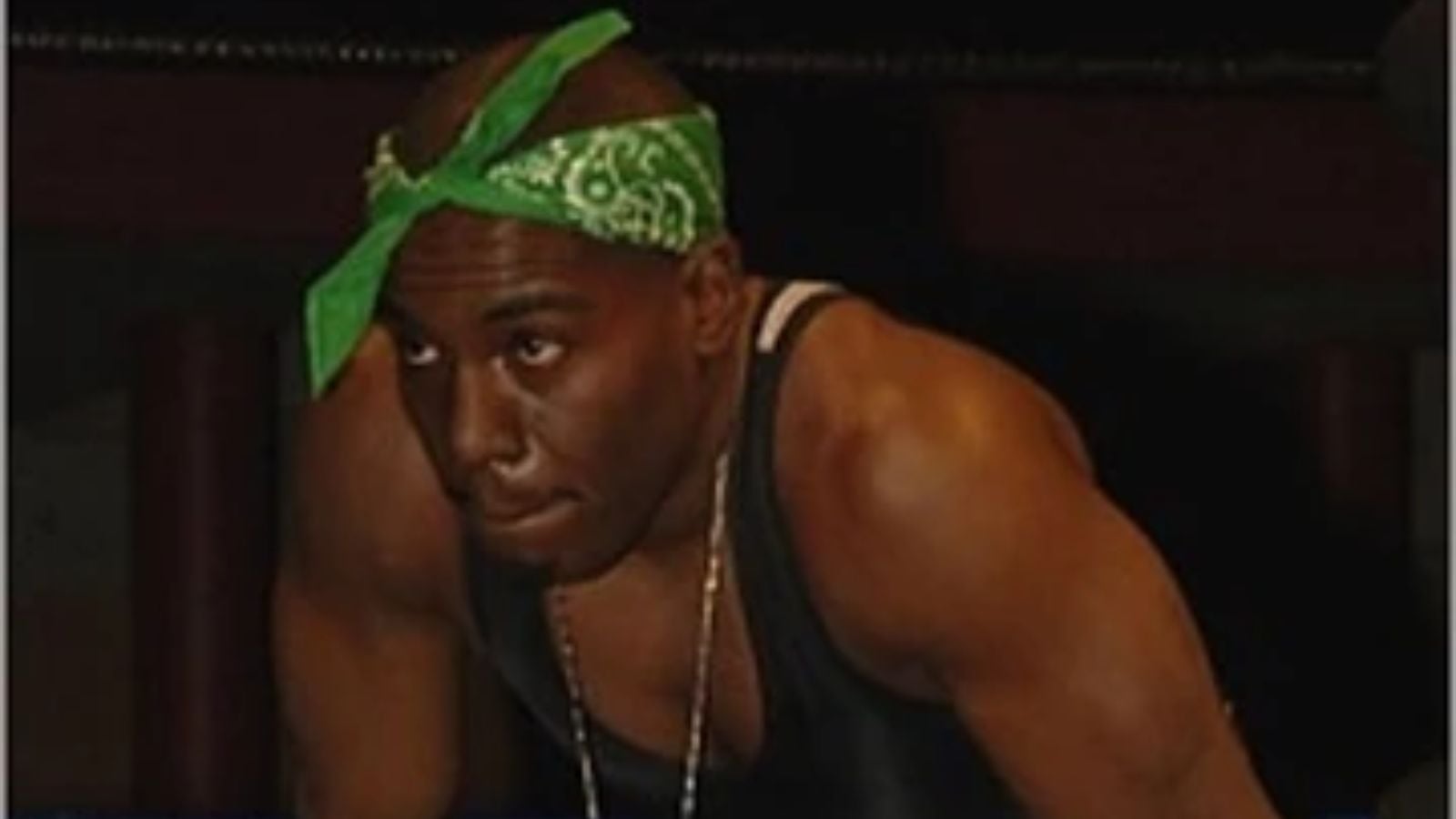
When wrestling fans talk about performers who were ahead of their era, certain names always surface. Ruckus should be one of them.
For more than two decades, Claude Marrow built a career that often felt impossible to categorize. He wasn’t supposed to move the way he moved, and he wasn’t supposed to fly the way he flew.
He wasn’t supposed to fly the way he flew. He certainly wasn’t supposed to combine the size of a heavyweight with an arsenal that looked like it was pulled from a video game.
Yet he did, night after night, town after town, promotion after promotion.
[Photo: Pro Wrestling Fandom]
Long before social media clips turned spectacular athletic feats into daily content, fans traded VHS tapes, DVDs, and grainy online videos to see what Ruckus might attempt next.
That anticipation became part of the attraction. Nobody knew exactly what was coming, only that it would be memorable. That unpredictability became his trademark.
Born in Baltimore, Maryland, Marrow entered professional wrestling in 1999. The independent scene was entering a period of rapid change.
Years after watching Memphis Wrestling as a child and recalling the underrated nature of the Jackie Fargo/Jerry Lawler feud, wrestling stayed with Marrow for nearly his entire life.
Wrestling in grade school as part of a backyard wrestling promotion known as HCW: Hardcore Championship Wrestling, Marrow and former TNA and ROH talent Sonjay Dutt would eventually be trained by the likes of Bob
Starr, Chad Austin, Dino Cassanova, and Axl Rotten.
Extreme Championship Wrestling was nearing its end and Ring of Honor had not yet emerged. Combat Zone Wrestling was still establishing itself. Across the country, wrestlers searched for new ways to stand out.
Me and Hurricane Kidd did a show in New Jersey for Power Pro Wrestling. That night, John Zandig was in the crowd along with Dewey and they got to see me work.
A week later, I got the call from Zandig to come tryout with the Briscoe brothers, and all three of us got picked up afterwards.
Ruckus didn’t search. He simply performed, and the attention followed.
Ruckus – Building a Reputation
Early in his career, Ruckus worked throughout Maryland and the Mid-Atlantic region, developing a style that immediately separated him from his peers.
Most wrestlers his size relied on power. Ruckus climbed ropes, then climbed higher.
The physical gifts were obvious, but what often gets overlooked is how quickly he learned to connect with audiences.
Fans reacted not just to the moves but to the confidence behind them. He wrestled with the swagger of someone who knew exactly how different he was. That confidence became a recurring theme throughout his career.
Years later, reflecting on his journey after being inducted into the Indie Wrestling Hall of Fame, Ruckus admitted the recognition surprised him.
For all the innovation associated with his career, Ruckus never presented himself as someone chasing praise. He was a wrestler who wanted opportunities, wanted competition, and wanted to entertain. The accolades came later.
[Photo: CZW]
Combat Zone Wrestling and a Breakthrough
Ruckus arrived in Combat Zone Wrestling in 2001 and quickly became one of the promotion’s most recognizable performers. The timing mattered because CZW was becoming a destination for independent wrestling fans searching for athleticism, violence, and creativity.
CZW was becoming a destination for independent wrestling fans searching for athleticism, violence, and creativity.
Wrestlers such as Nick Gage, Justice Pain, Messiah, Trent Acid, B-Boy, Sonjay Dutt, Chris Hero, and Claudio Castagnoli helped define the promotion’s identity. Ruckus fit naturally into that environment.
His first major breakthrough came when he captured the CZW World Junior Heavyweight Championship in December 2001.
The victory established him as more than an attraction. He became a legitimate title contender and one of the promotion’s foundational stars.
Soon afterward, a series of matches against Sonjay Dutt helped elevate both men’s reputations. The chemistry was obvious.
Neither wrestler seemed interested in taking the easy route. Their matches featured a level of speed and aerial creativity that stood out even within an era known for innovation. Watching those contests today reveals how much of modern independent wrestling was already taking shape inside those rings.
Fans noticed. Promoters noticed. Other wrestlers noticed.
[Photo: 3PW]
Ring of Honor and a Different Audience
Ruckus also crossed paths with Ring of Honor during the promotion’s formative years. His appearances were relatively limited compared to his work in CZW, but they remain an interesting chapter in his career because they exposed him to a different audience.
ROH crowds often rewarded technical precision and athletic excellence above spectacle alone. Ruckus entered that environment with a reputation as a highlight machine, but many fans discovered there was considerably more depth beneath the aerial offence.
Matches against competitors from ROH’s stacked roster demonstrated that he could adapt. He could slow down when necessary, structure a match, and work beyond the moments that filled highlight reels.
Yet his relationship with ROH also reflected a larger truth about independent wrestling: Sometimes talent and timing never fully align. Ruckus became a defining figure elsewhere.
Winning the Big One
Championships don’t always define careers. Sometimes they confirm them. That happened in February 2005 when Ruckus defeated Messiah to win the CZW World Heavyweight Championship.
The victory represented a major milestone because it showed how far he had evolved from athletic curiosity to main-event centrepiece.
The feud itself became one of the notable rivalries of his CZW tenure. Messiah represented one vision of CZW, and Ruckus represented another.
The title change reflected a promotion increasingly embracing athletic innovation alongside its more traditional hardcore roots.
His reign helped reinforce the idea that independent wrestling’s future would not be built exclusively around violence.
It would also be built around movement, creativity, and risk.
[Photo: CZW]
BLKOUT Changes Everything
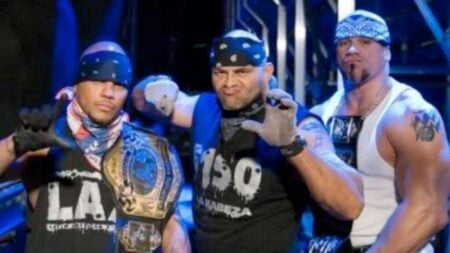
Then came BLKOUT. For many fans, this chapter remains the defining section of Ruckus’ career. The faction emerged in 2004 with Ruckus, Sabian, Robbie Mireno, and Joker before eventually expanding to include future stars such as Eddie Kingston.
In a company already filled with memorable groups, BLKOUT stood out for its presentation, attitude, and chemistry. Most importantly, they won.
I was set to lose the CZW Junior Heavyweight title to Sonjay Dutt, and CZW did not know what to do with me from that point.
So I asked to turn heel for a change, and at the same time, Robbie Mireno had just been put on the shelf.
CZW did not want him to be the ring announcer, so Robbie had an idea to manage me and we would be like Biggie and Puff Daddy.
Then we decided to add 2 friends of ours from back in the day, Sabian and Joker. So we got them in and called ourselves BLK OUT.
CZW let us run with it and book our own angles. Once it started to blow up, they based the company around the group, and the rest is history.
It was one of those things that happened at the right time. We later brought in Eddie Kingston, who is awesome all around, and it just rounded everything out.
Ruckus: An Indie Wrestling Original Who Refused to Stay Grounded
Ruckus and Sabian developed into one of independent wrestling’s strongest tag teams, capturing the CZW World Tag Team Championship and becoming central figures in the promotion’s tag division.
Their success wasn’t built solely on flashy offence. That remains one of the biggest misconceptions about both men.
The team understood timing. They understood pacing. They knew when to accelerate and when to slow down.
Against teams such as The Backseat Boyz, the Kings of Wrestling, and various combinations throughout CZW,
Ruckus and Sabian consistently delivered matches that balanced innovation with structure. Those contests helped establish BLKOUT as more than a faction. It became an institution.
Years later, Eddie Kingston would speak openly about BLKOUT’s significance and influence within independent wrestling.
The group provided opportunities and visibility while creating a sense of identity that resonated with performers and fans alike.
Ruckus stood at the center of it, not because he demanded the spotlight, but because he earned it.
Several matches continue to surface whenever longtime independent wrestling fans discuss Ruckus. His encounters with Sonjay Dutt showcased elite athleticism.
Ruckus’ battles with B-Boy combined intensity and physicality. His matches against Trent Acid had a competitive edge, reflecting two wrestlers pushing one another creatively.
Then there was Best of the Best. Winning the prestigious tournament in 2006 strengthened his standing among the elite performers of the independent scene. The event had become a proving ground for rising stars, and Ruckus’ victory confirmed what many already believed.
Ruckus belonged among the very best, not merely among the most exciting. The distinction matters because many wrestlers generate reactions, but far fewer sustain excellence over time.
Opportunities for a major promotion were also possible, even though he hadn’t competed in WWE. The possibility of it happening presented itself.
“It’s really anticlimactic, it’s not really a crazy story. Stevie Richards helped me get in touch with WWE originally.
I used it to send tapes in, you know what I mean? One day, I got back from doing a tour for All-Japan,
I remember coming home and on my message machine, Tommy Dreamer was on it. He said, ‘I wanna give you a job.’ I was like, cool.
I was all pumped up about it, you know what I mean? We talk it over and I was told to get in shape, to get a TV-style body or whatever.
So I did all of that, I dropped about 220 pounds in about five months and just got jacked, and I never used steroids or anything like that.
I got in the shape I needed to get in and everything, but I was then told they were on a height kick, so now I’m too short and too skinny.
If I would’ve stayed the size I was, it probably would’ve worked out differently. It is what it is.”
While it didn’t ultimately come to be, that instance didn’t define what could have been but what in fact was. Ruckus remained one of independent wrestling’s most innovative talents, and those in the industry could see it.
His reputation eventually carried him beyond North America. Tours with Big Japan Pro Wrestling exposed him to a different style and different audience.
The promotion’s demanding environment challenged wrestlers physically and mentally. Ruckus embraced that challenge.
[Photo: CZW]
He captured the BJW Junior Heavyweight Championship and earned respect among Japanese fans who appreciated innovation but demanded execution.
It was a great learning experience and a great place to visit. The wrestling in Japan is awesome, and all the wrestlers there work very hard.
It makes you wanna work just as hard, and winning the BJW Junior title in Japan was awesome.
Italy was great because I got to go over there with all of my friends. I got to have great matches with Trent (Acid) and learn from Bret Hart every day. That Italy trip was such a memorable time.
Behind the athletic achievements was a wrestler who understood how difficult independent wrestling could be. The travel, injuries, and uncertainty.
Unlike performers signed to major television contracts, independent wrestlers often operate without guarantees. Success depends on reputation, consistency, and relationships.
Ruckus experienced all of those realities. Yet throughout interviews and convention appearances, one theme consistently emerged: gratitude.
Whether discussing his Hall of Fame induction, his peers, or his career accomplishments, he rarely framed the conversation around what he did not receive.
Instead, Ruckus focused on what he accomplished. That perspective shaped how many colleagues viewed him.
A Legacy That Continues
Evaluating Ruckus strictly through championships misses the larger story. The numbers matter. He was a two-time CZW World Junior Heavyweight Champion, CZW World Heavyweight Champion, CZW World Tag Team Champion, BJW Junior Heavyweight Champion, Best of the Best winner, and, most recently, an Indie Wrestling Hall of Famer.
[Photo: Fightful]
“It was great bro. GCW, Brett Lauderdale, some of the best people in the world, you know what I mean?
Brett, he’s always been my dude from day one, so when he called and told me that, I was shocked.
I was really appreciative of the honor, you know what I mean? The way he set that whole thing up that night, it was great.”
Those accomplishments deserve recognition. But legacy involves more than title belts. Ruckus helped expand perceptions of what a wrestler of his frame could accomplish in the ring.
Long before larger athletes routinely incorporated dives, springboards, and complex aerial sequences into their offence, Ruckus was already doing it.
Ruckus normalized possibilities, but challenged assumptions. He forced audiences to reconsider limitations. Modern independent wrestling contains traces of his influence everywhere.
Not because wrestlers copied him directly, but because he helped widen the creative boundaries available to them. Ruckus’ impact extends beyond moves.
BLKOUT remains one of the most influential factions in independent wrestling history. His work in CZW helped define one of the promotion’s most successful periods. His matches continue to appear in discussions about
overlooked innovators of the 2000s independent boom.
Most importantly, fans still remember him. Not every wrestler achieves that. Many collect championships and headline shows.
Many disappear from conversation once their careers end. Ruckus never entirely left the discussion. Someone inevitably brings him up when debating the most creative performers independent wrestling has produced.
Someone remembers a match or a dive. And someone remembers seeing something for the first time and wondering how it was even possible.
That’s the real measure of influence. Years later, the reaction remains the same. People still talk, watch and remember.
For an independent wrestler who spent his career creating moments that seemed to defy gravity and common sense, that may be the strongest legacy of all.
As a wrestling enthusiast for over 30 years, my fondness for professional wrestling explores the irrational in a rational way. I will explore the details inside and outside the ring and hopefully have a laugh with you in the process. I've had the fortune to interview wrestlers from Lucha Underground, TNA, Ring of Honor, GFW, and former WWE talent as well. Feel free to follow me on Twitter @TheMarcMadison