
Arguably, pro wrestlers have been part of the Olympics since wrestling was introduced to the games in 708 BC. These men (and we’re positive they were always men) displayed such talent in wrestling that they were able to make a living by competing.
They were wrestlers, as a profession. That’s why they’re called professional wrestlers, see. But that’s not what you’re here for.
You’re here to find out which wrestlers competed at the Olympics before they set foot in a squared circle, which wouldn’t be invented for another 1100 years. Today we look back on the modern pro wrestlers who took part in the modern Olympics.

A Brief History of Pro Wrestlers at The Olympics
1928, Amsterdam –
Ed Don George
Edward Nye George, Jr was born in 1905 in the rural town of Java, New York. He attended Canisius High School in Buffalo, NY, where his athletic skills began to shine.
His parents, Sarah and Ed Sr, became of the opinion that their son’s skill at sport would bring him international fame. Ed, Jr excelled at many sports, but wrestling was the one that got him noticed, earning a scholarship to the University of Michigan, where he studied Engineering.
There, he would compete in wrestling contests for the Amateur Athletic Union. In 1928, at 23 years old, he would capture the AAU Heavyweight Freestyle Wrestling Championship, punching his ticket to that year’s Olympic Games.
The 1928 Olympics were only the 9th such event since Pierre de Coubertain et al resolved to bring back the Olympic Games in 1896.
Wrestling had been an event at those original games, as they had intended them to be a revival of the Athenian Olympics.
Ed Don George made it to the semifinals, facing eventual gold medalist Johan Richthoff of Switzerland, and eventually placing 4th overall.
The next year, he would move to Boston, training under Paul Bowser and wrestling for his American Wrestling Association (the one in Boston, not Minneapolis).
It was there that he would face Gus Sonnenberg for the original World Heavyweight Wrestling Championship. He would hold the belt for 124 days before losing it to the legendary Ed “Strangler” Lewis.
In 1942, George enlisted with the US Navy, where he would teach hand-to-hand combat. Upon his return, he would begin promoting wrestling cards up and down the US East Coast and even into Cuba before Castro took control. He died in Ft Lauderdale, Florida, in 1985.

London, 1948 –
The Games That Made The AWA
The 1948 Olympic Games in London were the first to take place in the wake of World War II. As such, tensions ran a little high, not only between Germany and the nations conquered by the Nazi regime, but also the Soviet Bloc and the nations referred to as “The Free World.”
The 1948 Olympics were the first to see a political defection, when Marie Provazníková, president of the International Gymnastics Federation, refused to return to Czechoslovakia after the coup d’etat by the Czech Communist Party.
Also, the 1948 Olympics were the first to feature a number of amateur wrestlers who would go on to define the professional wrestling of the next generation.
Starting with the youngest of the 4 men, then-18-year-old Maurice Vachon of Montreal, Canada. Vachon defeated Indian champion Keshav Roy by pinfall before losing rounds 2 and 3 by decision.
However, while he did not medal, he did make friends with the second youngest of our 4 protagonists: then-22-year-old Verne Gagne of Corcoran, Minnesota.
Gagne was chosen to lead the US Greco-Roman Wrestling team after losing to eventual Freestyle gold medalist Henry Wittenberg in a match to determine who would lead which team.
However, upon arrival in London, US Olympic officials decided the Greco-Roman team would not compete. With time on his hands, he chose to make friends within the Olympic Village.
Among the friends he made were Vachon, Karel Istak of Belgium, and fellow American Richard “Dick” Hutton.
When Gagne returned to America, he became head of the Minneapolis Boxing & Wrestling Club, where he would offer his friends places on the card.
Hutton would be the earliest to wrestle for Gagne in Minneapolis, however come 1957, he captured the NWA World Heavyweight Championship.
In 1960, Gagne would split away from the National Wrestling Alliance over dissatisfaction with their booking, forming the American Wrestling Association (the one in Minneapolis, not Boston) and getting Istak (now Karl Krauser, later Karl Gotch) and Vachon to wrestle for the first successful breakaway from the National Wrestling Alliance.

Helsinki, 1952 & Melbourne, 1956
Danny Hodge’s Double-Header
Born and raised in Perry, Oklahoma, Dan Allen Hodge lived a difficult life. After losing his home in a house fire that nearly claimed his mother’s life, he went to live with his grandfather, who struggled with alcoholism and beat him regularly.
Hodge began wrestling at 13, and seemingly just kept snapping up championships after he won his first tournament in 1951 at age 19. Later that year, he would join the US Navy, where he would gain further training.
In 1952, he appeared at the US Olympic trials in Ames, Iowa, blowing away the judges as he appeared to be the second coming of Frank Gotch, becoming the US representative at the Helsinki Olympics in 1952.
However, Hodge would lose 2 of his 3 bouts, finishing outside the top 7. This disappointment drove him to train harder, joining the wrestling team at the University of Oklahoma.
During his time wrestling for the University of Oklahoma, he racked up an impressive record of 46-o and won the Big Seven conference championship three years in a row from 1955-1957.
Also in 1956, Hodge won the Amateur Athletic Union championships in both Freestyle and Greco-Roman wrestling.
This paved the way for him to compete in the 1956 Olympic Trials, from which he emerged as the favourite to win in the Middleweight division.
Arriving in Melbourne, he would win 4 of his 5 matches, losing the final match to Bulgarian Nikola Stanchev and capturing a silver medal.
Returning home, he was seen as something of a hero, much in the same vein as Frank Gotch some 52 years earlier.
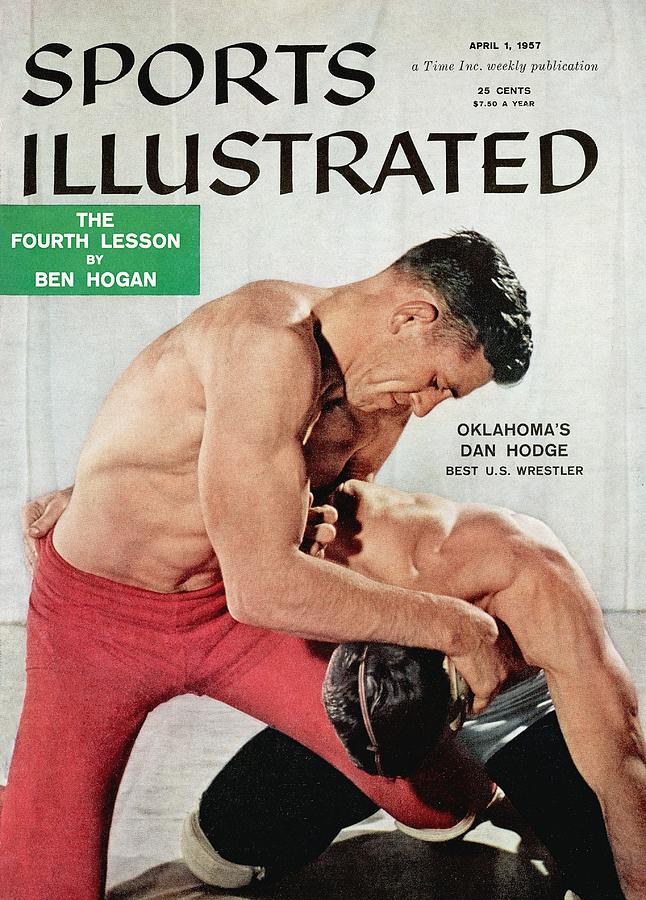
In 1957, Dan Hodge became the first, and to date only amateur wrestler to grace the cover of Sports Illustrated. The next year, he would begin training with Leroy McGuirk and “Strangler” Lewis, entering the squared circle in 1959.
Over his career, he was a perennial Junior Heavyweight Champion, holding the belt 7 times, a record that stands to this day.
However, his highest honor would be the introduction of the Dan Hodge Trophy, collegiate wrestling’s answer to the Heisman Trophy in 1995.

Tokyo, 1964 –
Masa Saito
The 1964 Olympics in Tokyo, the first games to be held in Asia, were a long overdue affair. Tokyo was supposed to host the Olympics in 1940, but the Olympic committee decided to move the games to Helsinki after Japan’s invasion of China.
Then, when it became clear that the world was plunging toward war, they cancelled the games altogether. The people of Japan were quite proud to be hosting the Olympics, as it showed how far the nation had come since their defeat in WWII.
As such, there was much riding on the Japanese competitors. When it came to wrestling, the Japanese team cleaned up, taking home 5 gold medals and one bronze.
And two members of that team would go on to shape Japanese Puroresu, which was still in its infancy. Masanori Saito and Tsuneharu Sugiyama both competed on the freestyle wrestling team, and while neither man captured a medal, their work impressed one Hiro Matsuda.
A student of the legendary Rikidōzan, Matsuda saw to it that the two competitors were trained to work the squared circle.
While Tsuneharu “Thunder” Sugiyama would become a draw in his native Japan, Masa Saito would leave a much greater mark on the world.
In 1967, just two years into his career, Masa Saito would have a number of matches with the likes of Danny Hodge, Johnny Valentine, and Antonio Inoki. Hodge and Valentine would return to the states with tales of Saito’s technical chops and punishing style, earning him the nickname Mr. Torture.
Soon he would be wrestling matches for Big Time Wrestling in Hawaii, then Championship Wrestling from Florida, then Georgia Championship Wrestling, and even the WWF, teaming with Mr. Fuji to capture the WWF World Tag Team Championship twice.
As the 80’s wore on, he would spend much of his time bouncing back and forth between Verne Gagne’s AWA and New Japan Pro Wrestling, teaming with the likes of Jesse Ventura, Larry Zbysko, and Nick Bockwinkel.
It was also in the AWA that Saito would capture his first and only World Championship in singles competition, defeating Larry Zbyszko in the Tokyo Dome.
While the win brought attention from national newspapers, it was soon overshadowed by Buster Douglas’ shock win over Mike Tyson the next night in the same arena.
As his career wound down, he would continue working in America, serving a number of stints in WCW. He retired in 1999, but continued working with NJPW as a commentator until 2003. Saito passed away in 2018 from complications due to Parkinson’s disease. His legacy lives on in the name of his finisher, the Saito Suplex.

Munich, 1972
Jumbo Tsuruta, Riki Choshu, & Ken Patera
The 1972 Olympic Games in Munich will always live under the shadow of violence. Eight members of the militant organization Black September managed to infiltrate the Olympic Village and take hostages from the Israeli Olympic Team, killing 6 coaches and 5 athletes before German police were able to bring the standoff to an end.
The games continued as planned, and the wrestling event featured two of the greatest wrestlers ever to come out of Japan. Tomomi Tsuruta and Mitsuo Yoshida both came from athletic backgrounds, participating in multiple sports in their respective high schools.
Both men took up amateur wrestling in university, Tsuruta for Chuo University and Riki Choshu for Senshu University. Competing in the All Japan Student Wrestling Championships in 1971 and 1972, both won championships in their respective weight classes.
Doing so, both men landed on the Japanese Olympic wrestling team. However, when they arrived in Munich, Olympic officials refused to allow the future Riki Choshu to compete for Japan due to his Korean heritage.
Thankfully, the Korean wrestling team recognized his talent and allowed him to compete for them. Tsuruta finished the tournament with no wins, while Choshu racked up a win and two losses before being disqualified on penalties.
However, Tsuruta’s sheer size brought comparisons to AJPW founder Giant Baba, who trained him in wrestling. Meanwhile, Yoshida would begin training with Masa Saito and the NJPW dojo.
Interestingly, the 1972 Olympic Games were the first to feature a future pro wrestler who did not compete in the wrestling tournament.
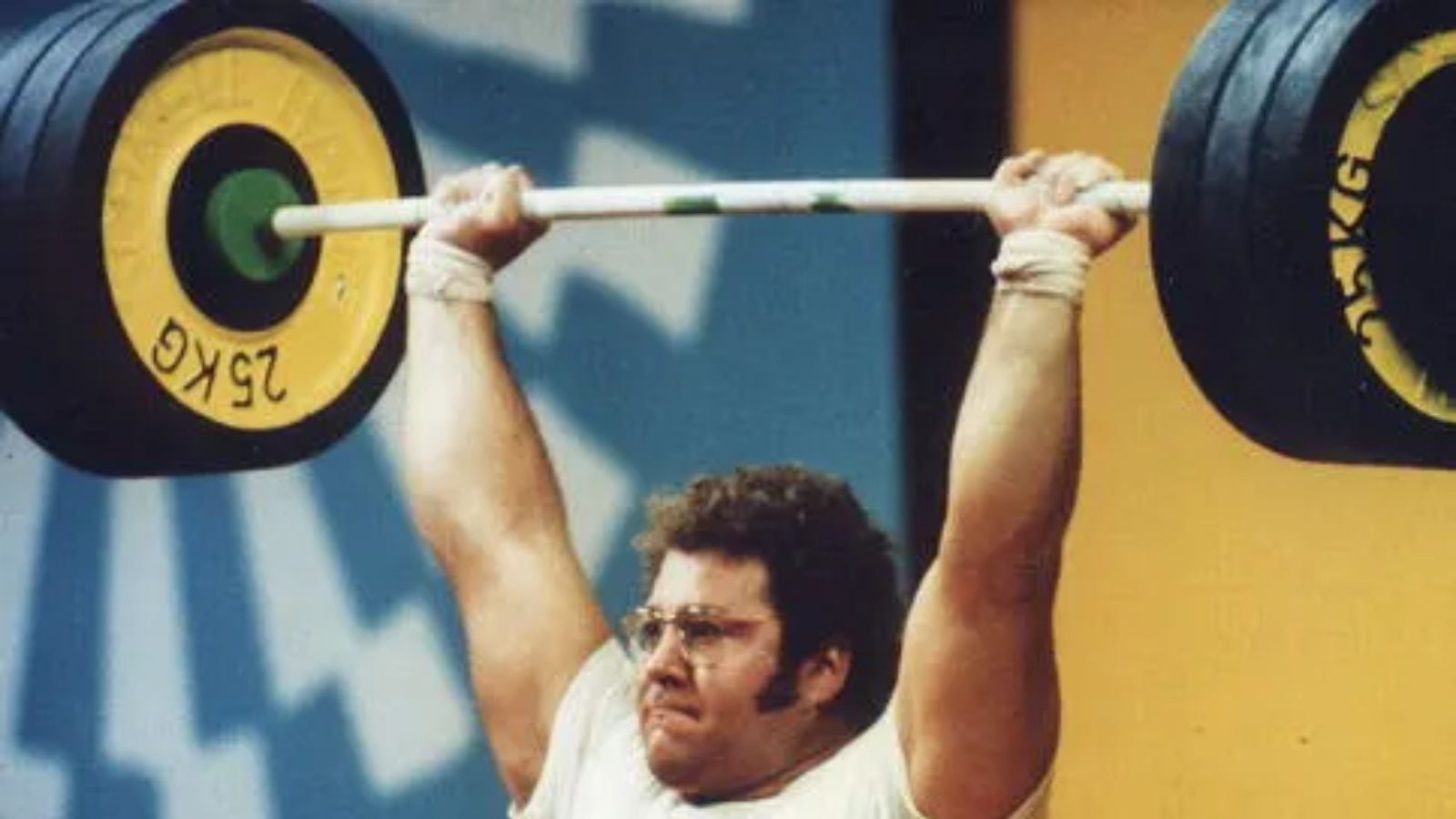
Competing for Brigham Young University, Patera went all the way to the 1968 Olympic trials for shot put. However, a disappointing 6th-place finish led him to switch to weightlifting, in which he would win four consecutive US Weightlifting Championships.
Ken Patera competed in the 1971 world weightlifting championships, taking home the silver medal, and the 1971 Pan American games in Cali, Columbia, winning gold.
The 1972 Olympic Weightlifting event provided an interesting story, as it represented a sort of rematch between Patera and Vasily Alekseyev, the man who took the gold at the World Weightlifting Championships.
However, Patera failed to total and was not among medal recipients. Soon thereafter, Patera’s specialty event, the clean and press, was retired from the games, and he decided to retire from weightlifting. Soon thereafter, he would begin training to wrestle under Verne Gagne.
Montreal, 1976 –
Bad News Brown & “Gentleman” Chris Adams
Again we step away from wrestling, but this time into the world of Judo. While Sumo wrestling might be the official sport of Japan, it is not a sport commonly practiced in other countries.
Judo, however, had taken off around the world thanks to Japanese immigration. So when the Olympic games came to Tokyo in 1964, they opted to make Judo an official event.
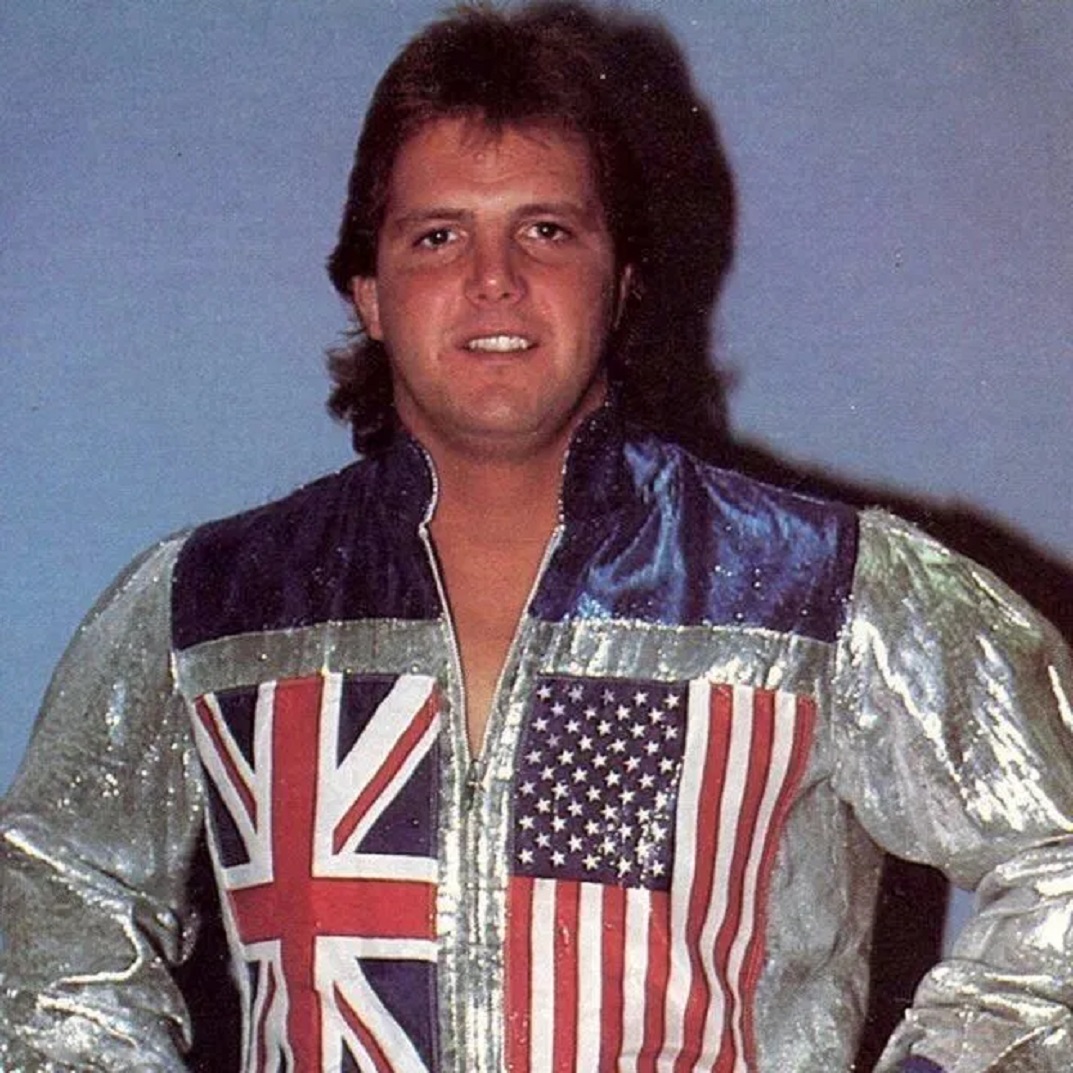
Hailing from Rugby in Warwickshire, Chris Adams took up judo at age 9 along with his brother Neil. This would prove to be among the most pivotal moments of his life, as he spent the next 14 years single-mindedly training to become a Judoka.
He would win the British National Judo Championship three times before turning 21, at which point he was chosen to join the British Olympic Judo team.
However, while his skill was enough to get him to Montreal, he wasn’t chosen to compete at the event. Returning to England, he would continue to compete in judo tournaments until deciding to step into the squared circle for UK’s Joint Promotions in 1978.
Like most British pro wrestlers of the era, he had little to no training as of his first match, instead relying on his judo knowledge in the beginning of his career.
However, his martial-arts-inspired wrestling style would set him apart in a time and place where realism was prized.
Indeed, his ring work was strong enough for him to make it as a pro wrestler in America, joining World Class Championship Wrestling in Texas in 1983 and shortly becoming one of their top stars. However, his greatest claims to fame are inventing the Superkick and training “Stone Cold” Steve Austin.

Within three years he had achieved black belt status, but he wouldn’t enter the competitive judo scene until the relatively late age of 22.
However, when he did get around to it, he made quite an explosive entrance, winning the Amateur Athletic Union Judo championship every year from 1966 to 1970.
Following his 1970 championship win, he would relocate to Japan to study judo at Nihon University. In 1972, he earned a spot at the Olympic trials, and may have even gone to the Munich games had he not injured his knee in a bout.
Upon recovery, he immediately began training for the next Olympic Games, winning another AAU championship and a gold medal at the 1975 Pan American Games.
However, he almost lost the opportunity to compete in the Olympics a second time due to a class-action lawsuit against the US Olympic Committee.
When he did finally make it to the 1976 games in Montreal, he captured the bronze medal, becoming the first black American athlete to medal in a solo sport other than boxing or track and field.
However, this would be his final outing in competitive judo, as he became disillusioned with the internal politics of competitive judo.
After a year working odd jobs, he would begin training as a pro wrestler, going on to work for NJPW, Stampede Wrestling, WWF, and WCW.
However, his greatest contribution to the sport was the direction he took his character. In an age where kayfabe ruled and the lines between babyfaces and heels was stark, Bad News Brown opted to be neither.
He didn’t like the good guys, but he also knew better than to get friendly with the bad guys. It was this “Tweener” angle that would go on to shape pro wrestling in the 90’s, with the likes of Razor Ramon, Diesel, and even Stone Cold Steve Austin taking the concept to new heights and redefining the industry.