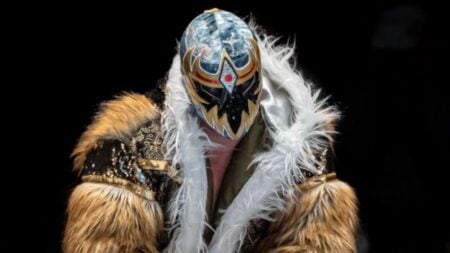
Few wrestlers get to reclaim the identity that made them famous after giving it up for what looked, at the time, like a bigger opportunity when you are Místico. Luis Ignacio Urive Alvirde did exactly that.
As Místico, he was the biggest box office draw in Mexican wrestling for the better part of a decade. He left it behind to become WWE’s Sin Cara, a run that didn’t go the way anyone hoped.
He spent years working under other names before the character he’d built finally came back to him — and today, in his forties, he’s headlining shows for CMLL and AEW under the mask that started it all.
[Photo: AEW]
Mistico –
An Orphan’s Story, Built Around a Real Wrestling Family
Místico debuted for Consejo Mundial de Lucha Libre in 2004, presented with an elaborate backstory: an orphan taken in and trained by Fray Tormenta, the real-life Catholic priest who moonlighted as a masked wrestler and used his career earnings to fund an orphanage.
In reality, Urive came from a wrestling family — his father worked as Dr. Karonte, and Urive had already competed under other names, including Astro Boy, before CMLL repackaged him
CMLL had actually tried a nearly identical concept a year earlier with a wrestler called El Sagrado, but that character never connected with fans; Místico, wearing much the same story, took off almost immediately.
He won the 2004 Gran Alternativa tag tournament alongside legend El Hijo del Santo, and by 2005 was already headlining major CMLL cards.
He beat Averno for the NWA World Middleweight Championship that year — a match so well received that fans threw money into the ring in appreciation and two weeks later, main-evented Arena México against Guerreros leader Último Guerrero.
By 2006, he was CMLL’s top técnico and, by most measures, the single biggest draw in Mexican wrestling.
[Photo: CMLL]
The Peak of “The Prince of Silver and Gold”
Místico’s run through the second half of the 2000s produced some of CMLL’s most memorable moments of the decade.
He took the mask off Black Warrior and the hair off Negro Casas in high-stakes apuesta matches, and fought a celebrated series against Perro Aguayo Jr.
He also crossed over into mainstream Mexican pop culture in a way few wrestlers ever have — starring in his own CMLL comic book, which reached its 50th issue by December 2007, and appearing in music videos for acts including La 5ª Estación.
Reflecting years later on what made the character connect so quickly, Urive pointed to a specific physical gift rather than any single storyline.
“I have a very particular style, I can suspend myself in the air for one or two seconds and that is very difficult to achieve, it took me very long to improve it and the people like it a lot.
What Místico did was to show his style and prove the fans that he wanted to achieve success, and that he did not give a damn if he was fighting against a legend.
What Místico did was to get on top of those legends, and I achieved it and it was a very big boom,”
By the time WWE came calling, Místico had reached a level of stardom in Mexico that few luchadores before or since have matched.
Becoming Sin Cara — and Losing the Character
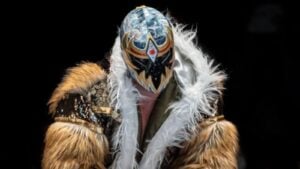
In January 2011, at the height of his fame, Urive signed with WWE, and the promotion repackaged him as Sin Cara — Spanish for “faceless.”
It’s remembered today as one of the more troubled main-roster experiments of that era. Urive struggled to adapt to WWE’s pacing and presentation, and the promotion controversially had a second performer, Hunico, occasionally portray the character under the same mask during a real-life legal and creative dispute.
A level of confusion that undercut the mystique the Místico name had spent years building. Urive was released from WWE in 2014.
One retrospective on the entire arc didn’t soften how far the fall had gone during those years, describing the post-WWE version of the character as having become, in the wrestling world’s eyes, a punchline, a washout, and an internet meme, following years of highlight-reel botches and mockery.
After his release, Urive continued working as Sin Cara in the Mexican independent scene before signing with AAA in 2014 under yet another name, Myzteziz.
Rebuilding as Carístico
Urive left AAA in October 2015 and returned to CMLL under the name Carístico, working there for years as one of the promotion’s steady veteran hands rather than its top marquee act — a role complicated by the fact that CMLL had, in the meantime, handed the Místico name and mask to a different wrestler entirely.
Carlos Muñoz González (also known as the first Dragon Lee), who’d taken over the persona back in 2012 while the original was still tied up in WWE.
Urive continued performing as Carístico through this time. He was rebuilding his reputation match by match, while the “second” Místico built his own legacy under the name for nearly a decade, including title runs and record-setting stints of his own.
[Photo: AEW]
Getting the Name Back
Everything changed on August 25, 2021. Místico II — Muñoz — abruptly resigned from CMLL, and the promotion wasted no time handing the name back to its originator.
CMLL’s own announcement leaned fully into the moment, declaring the character’s return: Místico Reborn! Carístico will once again carry the character that led him to international fame — the character that revolutionized lucha libre returns.”
Both Rush and Dragon Lee, Muñoz’s brothers, publicly congratulated him on his own departure and new chapter, a rare public acknowledgment of the mask-passing tradition playing out in real time on social media.
“Místico has stopped being a part of CMLL. The member of the Muñoz dynasty presented his resignation this Wednesday, according to sources close to the wrestler consulted by Más Lucha.
There is no certainty about the name that the wrestler from Tala, Jalisco will use from this moment on. However, the name “Dralístico” is in the process of registration in favor of the Muñoz family.”
MISTICO REBORN!
Carístico will once again carry the character that led him to international fame! The character that revolutionized Lucha Libre returns!
Getting the name back didn’t mean Urive simply picked up where he left off in 2011 — he’d spent a decade rebuilding trust with CMLL’s audience under a different name, and the reclamation of Místico became its own storyline about legacy and endurance in a business that rarely lets performers get a second chance at their signature identity.
[Photo: AEW]
Crossing Into AEW
Místico made his AEW debut on October 20, 2023, beating Rocky Romero in a two-out-of-three-falls match on Rampage — his first appearance for an American promotion since the Sin Cara years.
That January, he was part of a wider CMLL contingent, alongside Hechicero, Máscara Dorada, and Volador Jr., introduced to AEW audiences during a Jon Moxley angle on Dynamite.
He’s remained a regular presence on AEW programming since, forming El Sky Team with Máscara Dorada and Neón, a partnership that’s produced championship gold in both companies.
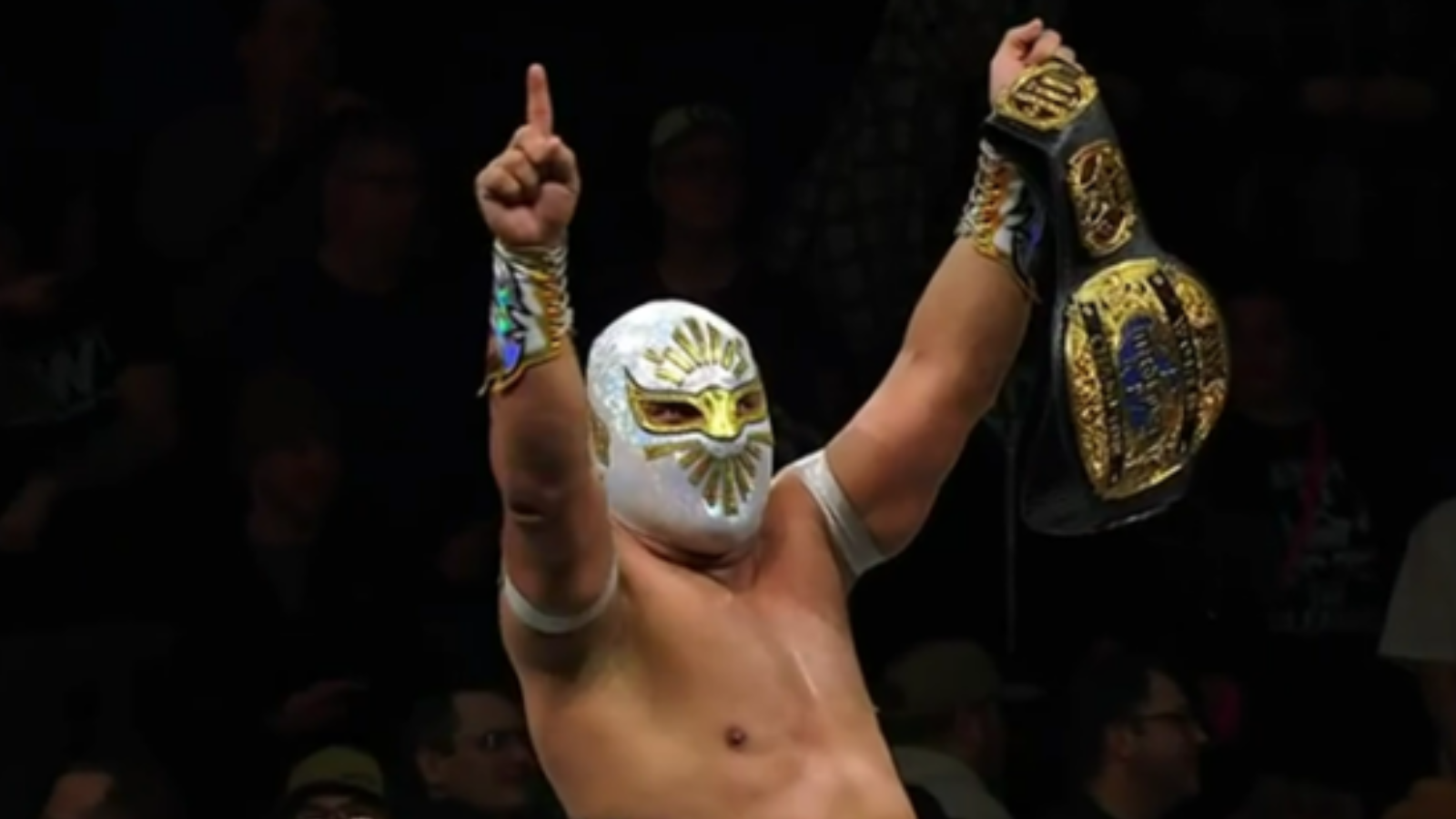
The trio held the CMLL World Trios Championship, while Místico and Dorada also captured the ROH World Tag Team Championship in June 2026, beating Sammy Guevara and The Beast Mortos.
His most talked-about American program came in the summer of 2025, when MJF targeted him ahead of AEW’s Grand Slam Mexico show, mocking him on air as the same “sloppy Sin Cara” MJF remembered from watching WWE as a kid, and threatening to unmask him in Mexico City itself
MJF and his Hurt Syndicate stablemates never actually pulled off the unmasking, though they did unmask Místico’s own partners, Komander and Máscara Dorada, in the buildup — a deliberate insult in lucha libre terms that kept the rivalry personal.
Mistico Hoy Dia
Even in his forties, Místico has held the CMLL World Light Heavyweight Championship, along with tag and trios gold across both CMLL and AEW, proving that success wasn’t tied to age.
AEW President Tony Khan has shared his admiration for Mistico. It is that appreciation that has likely contributed to him being a regular part of AEW’s cross-promotional Mexico programming even through injury setbacks, including a Japan-sustained injury in early 2025 that briefly slowed but didn’t stop him.
At this point in Mistico’s career, while he isn’t the top luchador in wrestling and he’s not one of the flashiest luchadores in the ring anymore, he could still be considered among the faces of modern-day lucha libre. Místico is a wrestler who lost his own name for a decade and somehow got it back.
As a wrestling enthusiast for over 30 years, my fondness for professional wrestling explores the irrational in a rational way. I will explore the details inside and outside the ring and hopefully have a laugh with you in the process. I've had the fortune to interview wrestlers from Lucha Underground, TNA, Ring of Honor, GFW, and former WWE talent as well. Feel free to follow me on Twitter @TheMarcMadison