
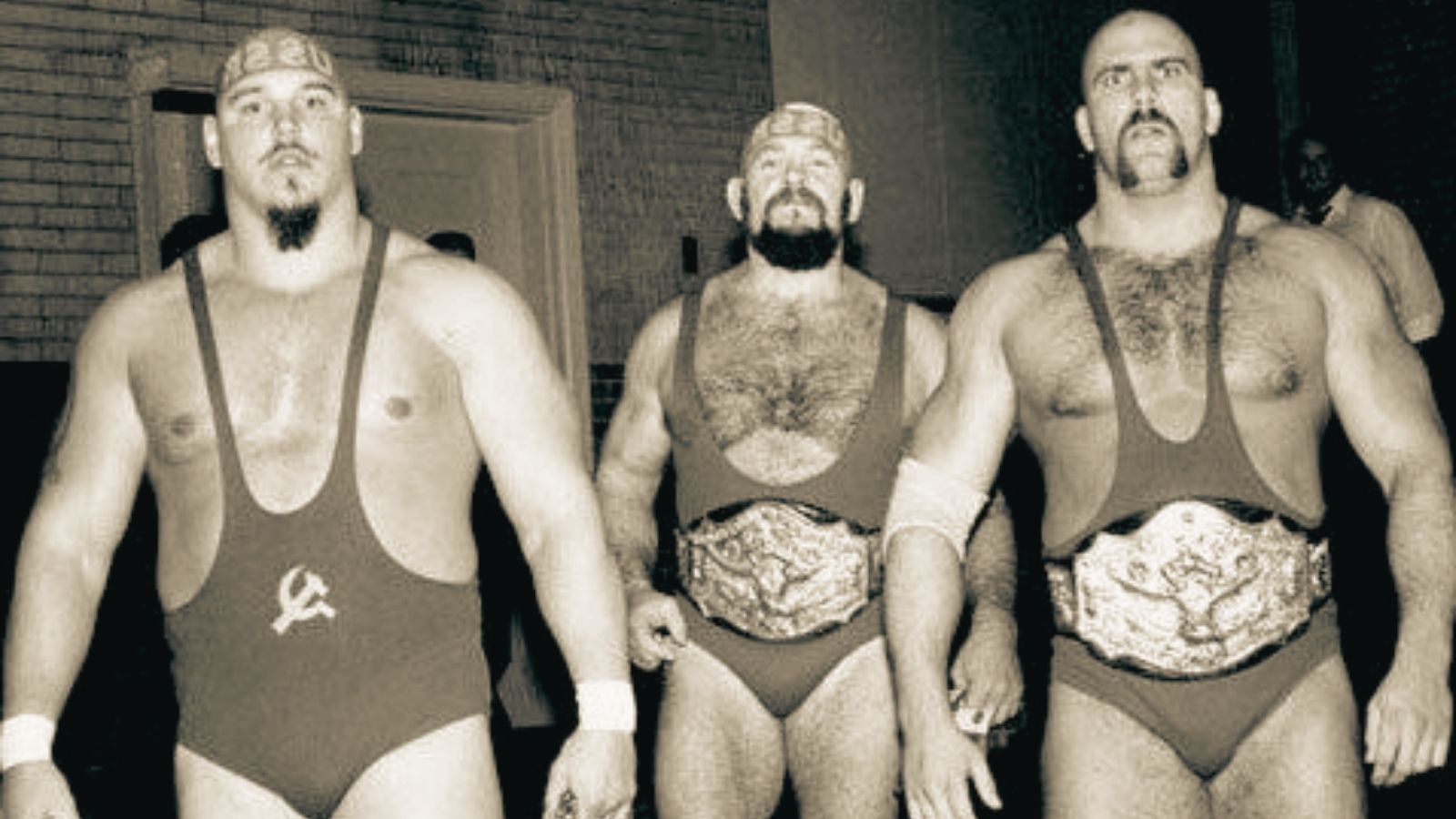
The Russians in Jim Crockett Promotions and the NWA worked because they were simple, visual, and effective: Ivan Koloff as the veteran enforcer, Nikita Koloff as the explosive second-generation threat, and later additions like Krusher Khruschev and Vladimir Petrov to keep the act fresh as the territory expanded.
Their run stretched from the mid-1980s until the faction’s breakup in the late 1980s, with the group cycling through title wins, key feuds, and then a gradual collapse once Nikita split off and the supporting cast changed.
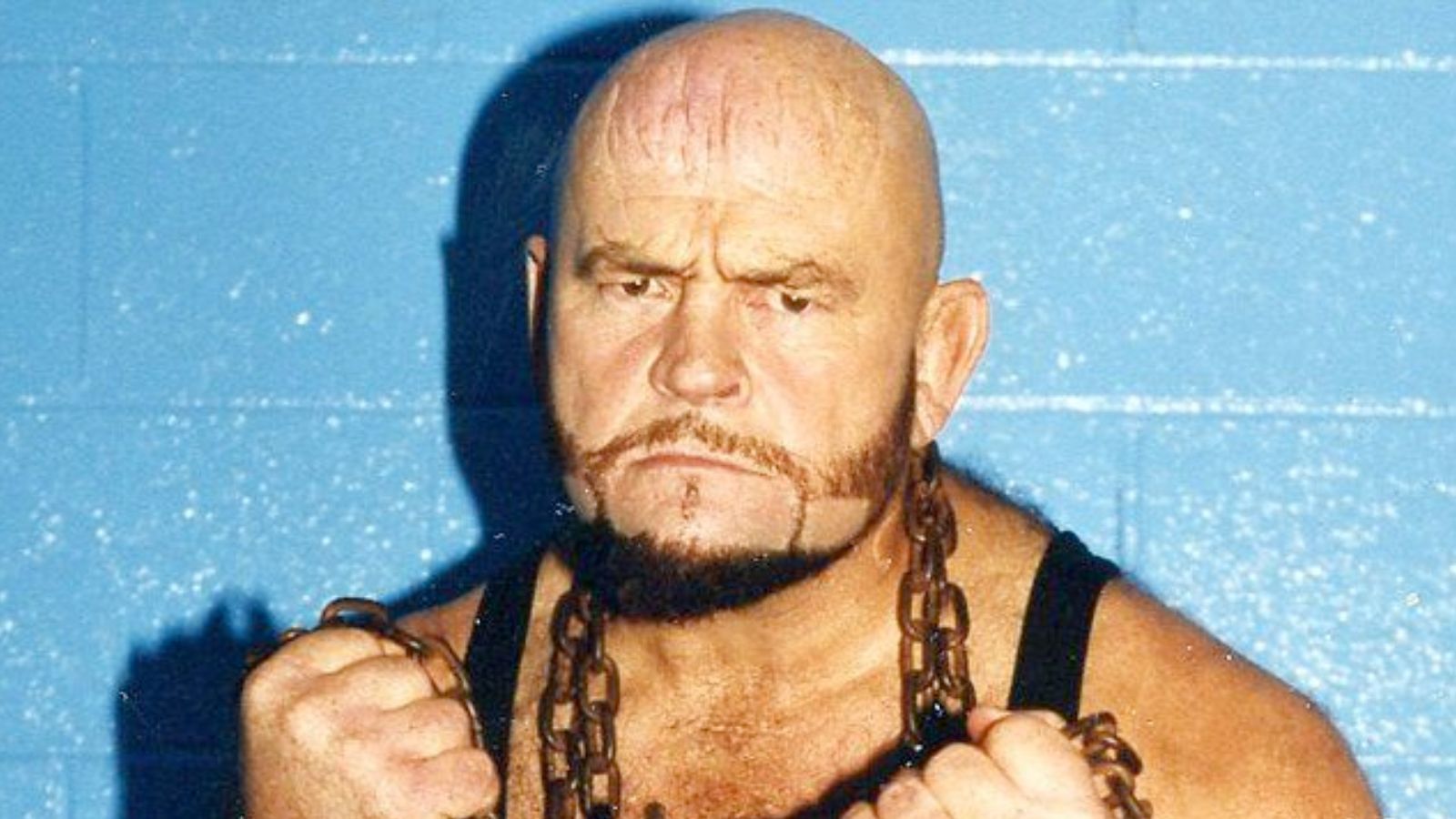
Ivan Koloff’s first NWA run
Ivan Koloff had already spent years building his reputation before the Russians became a centerpiece act in Crockett territory.
By the early 1980s, he was an established NWA hand, and by 1981, he had already won the NWA World Tag Team Championship with Ray Stevens, showing he was more than just a one-note foreign heel.
WWE’s historical profile notes that after moving through Georgia, Florida, and the Mid-Atlantic, Ivan used the “Russian Bear” identity to become one of the NWA’s most reliable villains and later served as the anchor for the family-style Russian act with Nikita.
Ivan’s importance was not just that he was hated; it was that promoters trusted him in main-event programs and around belts.
In the NWA, that mattered because the territory system rewarded wrestlers who could draw over time, not just pop one crowd.
His presence gave the faction instant credibility, and his connection to Nikita made the whole act feel like a Cold War family unit rather than just another tag team.
The Russians – Nikita enters the act

Nikita Koloff changed the scale of the act. The storyline introduced him as Ivan’s nephew, and the pair quickly became one of the most dominant and disliked teams in the Mid-Atlantic, winning the NWA World Tag Team Championship twice in 1985 and also holding the NWA World Six-Man Tag Team Title with Don Kernodle and later Krusher Khruschev.
The Ivan-and-Nikita pairing became one of the defining tag acts of the era, especially once their matches with Dusty Rhodes, Manny Fernandez, and the Rock ‘n’ Roll Express took off.
The key to Nikita’s rise was that he looked like a monster and worked like one. WWE’s historical feature says he became one of the most despised competitors in wrestling because of his association with Ivan, and it also highlights how quickly he moved into major programs, including the best-of-seven series with Magnum T.A. for the U.S. Title in 1986.
That series became one of Jim Crockett Promotions’ signature stories, and Nikita’s eventual title win made him feel like more than a sidekick; he became a top-line attraction in his own right.
Other members
The Russians were never just Ivan and Nikita. Don Kernodle was part of the original formation in late 1984, and when he was dropped, Krusher Khruschev came in to keep the act rolling and add a harder edge to the group.
The faction later brought in Vladimir Petrov and, briefly, other rotating Russian-themed partners, such as the Russian Assassins, demonstrating that the gimmick extended beyond the original family hook.
This mattered because the NWA’s booking style relied on depth. When one member needed to shift roles or leave, the stable could absorb it and keep the feud machine going.
The Russians used that model well: Ivan was the constant, Nikita was the breakout star, and the others filled out six-man tags, TV angles, and house-show main events.
Feuds and title runs
The Russians’ best stretch came during the long run against Dusty Rhodes, Magnum T.A., the Rock ‘n’ Roll Express, and the Road Warriors.
Nikita’s best-of-seven series with Magnum became a centerpiece of the Great American Bash, and the rivalry peaked when Nikita won the U.S. Title after a brutal series that turned him into a major singles star.
He captured the title by winning the deciding match in the series.
They also delivered in tag-team form. The Koloffs and their partners won the NWA World Tag Team Championship twice in 1985, and the faction kept showing up in the top programs even after the belts changed hands.
The feud with the Road Warriors was especially effective because it matched two powerhouse teams with a simple visual logic: the Russians as cold, methodical bruisers versus Hawk and Animal as chaotic force.
The Russian Team’s biggest NWA feuds were with the Rock ’n’ Roll Express, Dusty Rhodes, Magnum T.A., and the Road Warriors, with Don Kernodle also tied into the group’s early breakaway angles.
Those rivalries carried the faction through its peak and then helped dismantle it once Nikita started drifting toward the babyface side.
Core rivalries
Rock ’n’ Roll Express: This was one of the defining tag-team feuds of the 1980s NWA, and it centered on the Russians winning and losing the NWA World Tag Team Titles in 1985.
The contrast was simple and effective: the Russians were heavy, methodical heels, while the Express were fast, sympathetic underdogs.
Dusty Rhodes. Dusty was the major American hero opposite the Russians, and the promotion used that clash to make the faction feel like a national threat.
The feud became even more important when Nikita eventually broke away from the Russian side and aligned with Rhodes.
Magnum T.A: Nikita’s best-of-seven series with Magnum was one of the faction’s most important singles programs and helped turn Nikita into a headline-level babyface later on. That feud elevated Nikita beyond the Russian stable and made him a star in his own right.
Road Warriors: The Russians and the Road Warriors had the kind of match-up that sells itself: two physically imposing tag teams with real intensity.
This feud as a major program in the Crockett-era tag scene, and it kept the Russians relevant in top-card tag competition.
The split
The beginning of the end came when Nikita stopped being just Ivan’s lieutenant. The magazines and TV stories slowly shifted him toward a more sympathetic role, especially after the Magnum T.A. angle and then the real-life car accident that ended Magnum’s career.
Nikita eventually turned on the Russian side and aligned with Dusty Rhodes, which transformed him from a hated Soviet villain into one of the promotion’s most popular babyfaces.
That turn was the decisive blow to the faction’s identity. Ivan could still carry the heel presentation, but the act depended on Nikita as the younger, more athletic centerpiece. Once he was gone from the Russian side, the group lost its edge and its future at the same time.
Ivan tried to keep the Russians alive by reshuffling the lineup. After the team appeared broken, the act continued with Ivan and newer partners, including Vladimir Petrov and, later, Dick Murdoch, in a temporary twist.
However, those versions lacked the same heat and star power. The stable name survived for a while, but it was no longer the same unit that had dominated the Mid-Atlantic scene.
A later quote attributed to Ivan on NWA television captures the way the angle was framed in kayfabe:
“My nephew Nikita can torture and punish you and teach you more manners.”
That line summed up the presentation perfectly: Ivan as the stern veteran, Nikita as the feared weapon akin to Ivan Drago in the film Rocky IV, and the entire act built around this dominance.
Nikita’s departure
Nikita’s departure was not a clean exit so much as a character collapse and reinvention. Once he aligned with Rhodes, he was no longer part of the Russian machine, and his stock rose because fans now saw him as a former enemy trying to do the right thing.
Koloff became the most beloved and popular Russian character in the later days of the NWA. This would be after the turn, which is a strong sign that the act had succeeded so well in one form that it could be reinvented in another.
That reinvention mattered to the company’s business. Nikita was still presented as a major player, but now the audience was encouraged to cheer with the same intensity that they had once booed.
Cold War Ended
The faction’s dissolution was gradual rather than dramatic. Krusher Khruschev left, Petrov did not replace the missing chemistry, and Ivan’s later combinations could not restore the original momentum.
By 1988, the Russian Team label was effectively finished as a major force, even though individual members continued wrestling.
That ending makes sense in hindsight because the act was built on a very specific historical mood. It worked best in the Cold War environment, when anti-Soviet imagery was immediate and easy to sell. As the decade closed, the same presentation had less force, and the group’s core story had already been spent.

Legacy and numbers
The numbers show why the act mattered. The Russian Team entry lists a 1984 debut and a 1988 disbandment, giving the faction roughly 4 years of relevance during one of wrestling’s busiest boom periods.
Within that span, the group captured the NWA World Tag Team Championship twice in 1985, held the NWA World Six-Man Tag Team Title, and fed into one of the most important U.S. Title programs of the decade through Nikita’s run with Magnum T.A., and later his face turn.
More than the belts, though, the Russians worked because they were flexible. Ivan gave the act legitimacy, Nikita gave it momentum, and the rotating cast of partners kept it alive long enough to matter.
When Nikita left and the lineups changed, the group stopped being an actual force and became a memory of one of the NWA’s most effective heel concepts.
Once Nikita turned babyface, the faction’s most important story became the internal split. Ivan and Krusher Khruschev were forced into feuding with Nikita and Dusty Rhodes, which marked the end of the group’s original identity.
After that, Ivan kept the Russian theme alive with Vladimir Petrov, and later the Russian Assassins, but those acts functioned more like extensions than a true continuation of the original trio.
The final phase of the group was really a series of overlapping feuds that showed the concept was losing momentum.
Don Kernodle’s removal from the original unit fed directly into the group’s evolution. After the Russians lost the belts, Kernodle was fired from the team, and the act shifted toward Ivan, Nikita, and later Krusher Khruschev, which made the stable more centered around the Koloffs.
Don Kernodle’s exit from the Russians was caused by the angle turning on him after the team lost the NWA World Tag Team Titles, followed by a booking change that replaced his planned babyface run with other directions.
In other words, he was initially positioned within the Russian alliance, then got turned on by Ivan and Nikita in 1984, and later the faction moved on without him.
What happened
Kernodle was part of the original Russian unit with Ivan Koloff, and the group was later expanded to include Nikita Koloff.
After the Russians lost the tag titles, Ivan and Nikita turned on Kernodle, which was the storyline reason he was removed from the group and shifted into a babyface role.
Slam Wrestling notes that this turn became Kernodle’s first major fan-favorite run, and he even used the angle to bring his father into the arena for an emotional post-match moment.
Kernodle himself said that Dusty Rhodes, after becoming booker, “had other ideas,” which killed plans to re-team him with Sergeant Slaughter.
That is the clearest explanation for why his run with the Russians ended meaningfully: the angle evolved, but the follow-up plans changed before they could fully pay off.
A Mid-Atlantic Gateway interview excerpt also shows Kernodle describing the post-angle shift as part of a deliberate babyface turn, not just a random breakup.
In plain terms
So the short answer is: Kernodle was dropped because the Russians’ storyline moved on after the title change, and the booking team chose a different direction for him.
He did not leave because the act failed immediately; he left because the feud structure changed, and Nikita became the bigger long-term focus.wikipedia+1
The final split came when Nikita left the Russian Team and joined Dusty Rhodes, forcing Ivan and Krusher to feud with them instead.
A timeline on the faction specifically notes that Nikita’s departure pushed Ivan and Krusher into a new feud direction and effectively marked the beginning of the end for the original Russian unit.
The Russian Team worked because every feud had a clear emotional hook and a strong visual identity. They were not just another heel tag act; they were the villains fans were meant to hate in the middle of a Cold War-era wrestling boom.
The result was a stable that could hold tag gold, produce major singles stars, and fuel some of the most memorable programs in Jim Crockett Promotions. Their legacy is tied as much to the feuds they created as to the championships they won.
The Russians worked because every feud was easy to understand and easy to promote. They brought belts, blood, and strong territorial TV angles, and that made them one of the most durable heel groups in the late Crockett-era NWA.
A strong summary line from the historical record is that they feuded with Dusty Rhodes, Magnum T.A., the Rock ’n’ Roll Express, and the Road Warriors while helping define Nikita’s rise and the group’s collapse.