
As we stand on the anniversary of the January 6th insurrection, many people have politics on their minds when considering Pro Wrestling and Politics.
Politics affects many aspects of our lives, from our governance to our jobs to our entertainment, and pro wrestling is no different.
While some may look at pro wrestling as something divorced from real-world politics, there have been many times the worlds of pro wrestling and real-world politics have crossed paths.
Today we look back on the long and sordid history of Politics and Professional Wrestling, from its roots in the American Civil War through to today.
Pro Wrestling and Politics – The Civil War & The Dawn of an Industry
The dawn of professional wrestling in the United States came after, and as a direct result of, the US Civil War. Soldiers on both sides would engage in grappling competitions to entertain themselves while in camp.
Over the many hours not spent actively fighting, some of these soldiers got pretty good at wrestling. When the Confederate States of America surrendered in 1865, a great majority of soldiers would go on to find work on farms or in their hometowns.
However, a not insignificant portion of the now redundant soldiers would find gainful employment plying their bone-bending skills on the burgeoning carnival circuit.
As carnival wrestlers, they would participate in exhibition matches against each other, but they would also offer cash prizes to members of the public who could best the carnival’s own talent.
If you were good at grappling, you could make a pretty good living at it. As an added appeal to those in the North, Abraham Lincoln had a noteworthy career in wrestling prior to leading the North to victory.
And so it came to pass that wrestling became a viable profession in America. That’s why it’s called professional wrestling, see.
However, having worked for a carnival myself, I can assure you that all carnivals are crooked in some way or another.
In the early carnival days, promoters were often faced with the reality that human bodies are fragile things. If a wrestler under your employ got injured, you were losing a revenue stream. So what’s a savvy businessman to do?
Answer: Cheat.
Under traditional wrestling rules, pin falls are decided by a 5-count, and hooking the leg to score a pin fall is illegal.
Also, while not in the rules, it’s generally expected that competitors refrain from genuinely trying to hurt their opponent.
Carnival wrestlers would amend those rules without making the amendments clear to challengers from the public.
Wrestlers who hooked the leg to score pin falls became known as “hookers” and those who would put the hurt on unsuspecting challengers became “shooters.”
These are the very bones of modern pro wrestling, and they came to be as a result of political actions taken to start the American civil war.
WWII and The Gimmick
The idea of a performer having an identifiable, idiosyncratic style is as old as performance itself. Ditto for the concept of a performance combatant (or sports entertainer, if you will) like a gladiator having a gimmick.
Roman gladiators would find an aspect they were good at and make it their brand. Gladiators from outside Rome would often simply play up the fact that they were foreigners.
As professional wrestling grew out of the carnivals and into the sporting halls, wrestlers from around the world would come to challenge the Americans.
Those who discovered it would be more profitable to ply their trade in the United States would also go on to play up their foreignness.
They would also act antagonistically towards the audience, so that a bigger audience might come to see them risk losing.
These actions would lay the ground work for the “Foreign Heel” gimmick. However it wasn’t until after World War II that the modern pro wrestling gimmick was born.
The defeat of Nazi Germany and Imperial Japan led to a postwar economic boom in the United States, and among the many things Americans bought with their newfound wealth were televisions.
Wrestling was a natural fit for television, as it’s visually exciting and cheap to produce. Plus, promoters found that broadcasting wrestling on television led to an increase of house show ticket sales.
This was around the time “Gorgeous” George Wagner perfected his act, and he was getting a lot of attention for his antics.
Understandably, not many of the men who performed as wrestlers were willing to copy George by pretending to be gay.
However, some of them were willing to raise the ire of audiences by pretending to represent the former Axis or Soviet Russia. Fritz Von Erich and Boris Malenko began their careers in the 50s by pretending to be Nazis, however both would abandon the act in favor of something more palatable by the 60s.
This was also when one Mitsuhiro “Rikidōzan” Momota would first visit America as part of a charity wrestling tour.
There he noticed that American audiences took great pride in seeing American talent overcome foreign challengers. Momota had been looking for something to raise spirits in his war-torn adoptive homeland of Japan, and pro wrestling seemed like just the thing.
He would invite some of the wrestlers he met in America to come work in Japan, where he would do much the same thing, but from a Japanese perspective.
It certainly worked, as Japan is home to the 3rd largest pro wrestling promotion in the world, and Rikidōzan is known as “the father of puroresu.”
But alright, maybe that’s not what anyone had in mind when they pictured the intersections of Pro Wrestling and Politics. Let’s get a bit more modern:

Sgt Slaughter, Iraqi Sympathizer
While pro wrestling would occasionally touch on things that were going on in the realm of politics, it was usually tangential to the storyline.
That started to change when Sgt Slaughter returned to the WWF following Wrestlemania VI. The fall of the Soviet Union resulted in face turns for many wrestlers working the villainous Russian gimmick, including the WWF’s Nikolai Volkoff.
When Sgt Slaughter returned to the WWF in 1990, his storyline revolved around his hawkishness regarding the fans’ swift acceptance of Volkoff as a babyface. However, after Iraqi forces invaded Kuwait in August of 1990, Slaughter began supporting the Iraqi cause.
Initially, this was not due to any love for Iraq, but due to Slaughter seeing Americans become weak in the wake of the Soviet Union’s fall.
Meanwhile, by invading Kuwait, the Iraqi government was showing the kind of brutality Sgt Slaughter liked. In his mind, the American people should have been more like the Iraqi people.
He began associating with his old AWA rival General Adnan and wore a Keffiyeh during his entrances and promos, during which he would talk trash about the US of A.
Slaughter was a heat magnet in this role, and it only made sense to put the WWF championship on him, toppling The Ultimate Warrior at the 1991 Royal Rumble.
According to the storyline, he also liked to desecrate American flags in celebration of his victories, though the most they could get Sarge to do on camera was burn a Hulk Hogan shirt.
Rumors of his desecration of the American flag were more than a Real American like Hulk Hogan could bear, and so a match between the two was set for WrestleMania VII, where Hogan would have what many would consider his last viable run as top babyface.
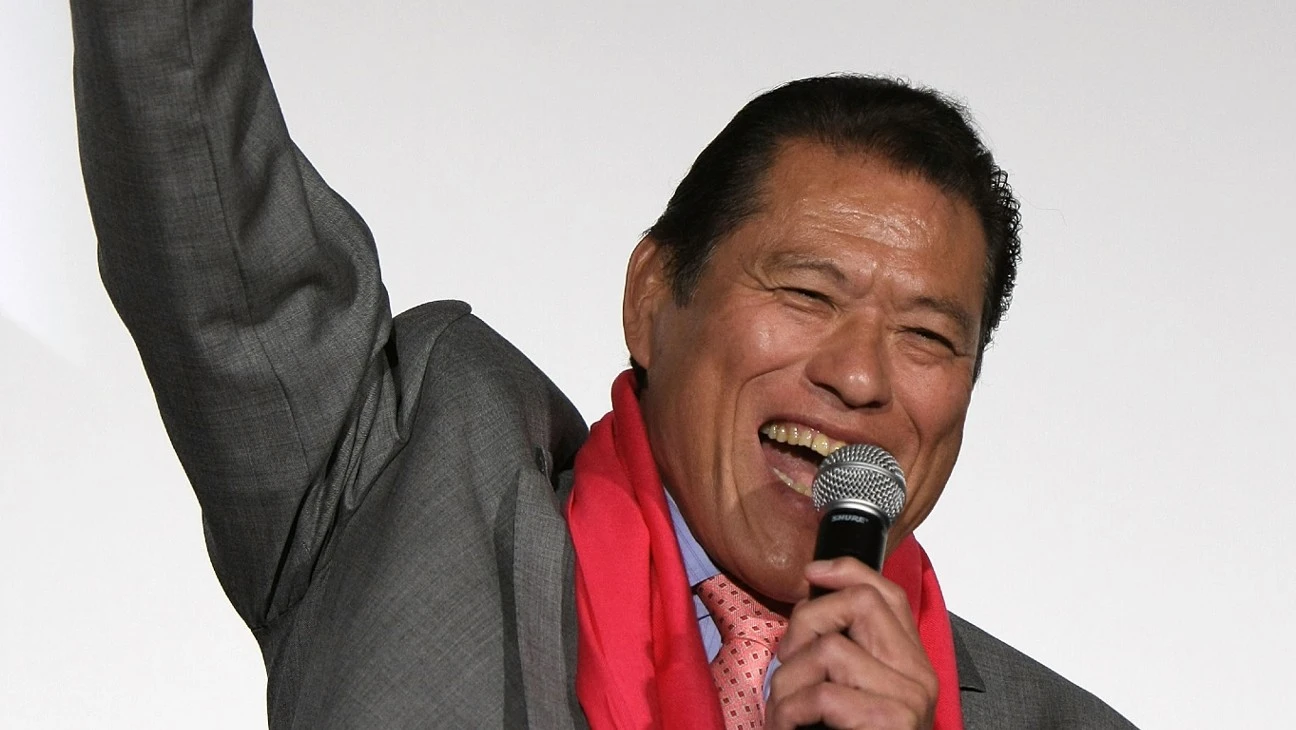
The Pyongyang International Sports and Culture Festival for Peace
In 1989, NJPW founder and Puroresu superstar Antonio Inoki stepped away from his in-ring career to enter politics.
Founding his own party, the Sports and Peace Party, he ran a successful campaign for the Japanese House of Councillors.
In 1990, he personally organized a pro wrestling event in Iraq with the intent to entice Saddam Hussein to release the 41 Japanese nationals held captive by the Iraqi government.
This accomplishment was enough to secure his seat in the 1992 House of Councillors election. However, his second term of office was mired in scandal, and he knew he would have to pull off something even bigger if he wanted to keep his seat in the 1995 election.
Inoki then reasoned that since pro wrestling led to more peaceable relations between Japan and Iraq, maybe he could replicate that success with an even more belligerent dictator. Inoki had set his sights on North Korea and Kim Jong Il.
Being the owner of New Japan Pro-Wrestling, Inoki naturally picked wrestlers from his promotion to participate in the event.
However, he also approached Eric Bischoff and WCW (with whom NJPW had a working relationship) to send some American talent on the endeavor. Bischoff was only too happy to oblige.
It was 1995, and WCW was about to launch a new show to go head-to-head with the WWF on television. Bischoff reasoned that successful show in the famously isolated nation of North Korea would give them an awful lot of publicity for WCW ahead of the launch of Nitro.
He approached top WCW stars about performing in North Korea, and many were understandably hesitant to accept.
Ultimately the only top stars he could convince to go were Ric Flair, Road Warrior Hawk, and The Steiner Brothers, along with 2 Cold Scorpio, Chris Benoit and Scott Norton.
The event we in The West would come to know as Collision in Korea took place over two days at Mayday Stadium in Pyongyang, and drew 315,000 people.
Though it still holds the record for highest attendance at a pro wrestling show, one wouldn’t know it from watching the event.
The crowd had absolutely no idea what it was they were seeing, and most were frightened by the presence of Japanese and American people on their soil.
The crowd only got involved for the main event, cheering on Inoki as he put the hurt on Ric Flair. In the end, it was largely seen as a failure.
Japanese press presented the event as yet another scandal in Inoki’s political career. What little American coverage it received painted it as a bizarre, ill-advised circus show designed by Kim Jong Il.
To a certain extent, it was, as North Korean planes dropped propaganda pamphlets containing images of a bloodied Flair on Seoul the next day. Inoki lost his seat in the following election.

Bob Backlund Runs for President
In 1992, Bob Backlund returned to the WWF after an 8 year period of semi-retirement. At the time, Backlund held the second-longest reign with the WWF championship.
However, His championship run happened before Vince McMahon’s expansion in 1984, and he left right at it’s beginning.
Thus, for much of his WWF comeback, he found himself floundering in the midcard, despite a then-record 61:10 spent in the 1993 Royal Rumble.
This changed with the departure of Hulk Hogan and the beginning of The New Generation era. Backlund prided himself on never needing a gimmick, but that wouldn’t cut it in the mid 90s WWF.
That’s when they stumbled into the perfect gimmick. Bob Backlund would go from a whitemeat babyface to a half-crazed veteran wrestler with a chip on his shoulder and a bone to pick with all the “New Generation” talent.
This gimmick got over so well that he successfully challenged WWF Champion Bret Hart in 1994. Sure, he only held the belt for 3 days, and he’d never compete in the main event again, but he defeated the face of The New Generation to do it.
Then, on the May 5, 1995 episode of RAW, Bob Backlund did the unthinkable, and announced his intentions to run in for President of the United States in 1996.
Vignettes presented as campaign commercials aired on WWF television throughout 1995 in which Backlund preached conservative values and outlined his policies for America.
This angle would continue on television throughout 1996, though mostly to explain Backlund’s absence from in-ring competition, before WWF dropped the angle and Backlund quietly transitioned to a managerial role toward the end of 96.
Nobody from the time has commented on the “Backlund for President” angle in the intervening years, though one could surmise it was inspired by Jesse Ventura’s 1990 campaign for mayor of Brooklyn Park, Minnesota.
When Ventura announced his run for Governor of Minnesota in 1998, WCW attempted a political angle of their own, when Hulk Hogan announced he would run for president.
The financial and logistical challenges posed by making it a realistic run proved too much for WCW to handle, and Hogan returned to the ring 3 weeks later.
9/11 and The Second Gulf War
The tragic events of September 11th, 2001, seemingly brought America to a halt, as people around the world took a moment to reflect on what had happened.
This was not so for Vince McMahon, as WWF SmackDown taped on Tuesdays, and the show must go on. When the show went to air the following Thursday, viewers were treated to Vince and his roster cutting patriotic promos about their feelings regarding the attacks on the World Trade Center and The Pentagon.
The events of 9/11 would even affect the title picture, as the company changed plans by putting the championship on American Olympic hero Kurt Angle.
However, the 9/11 attacks would also awaken something darker in the hearts of many in America and around the world: Islamophobia.
In the wake of those tragic events, many Arab and Muslim people around the world found themselves subject to suspicion and even abuse in ways they never had before.
This ramped up even further with President George W. Bush’s War on Terror and the 2003 invasion of Iraq. In 2004, WWE would introduce a new character who played on this sentiment.
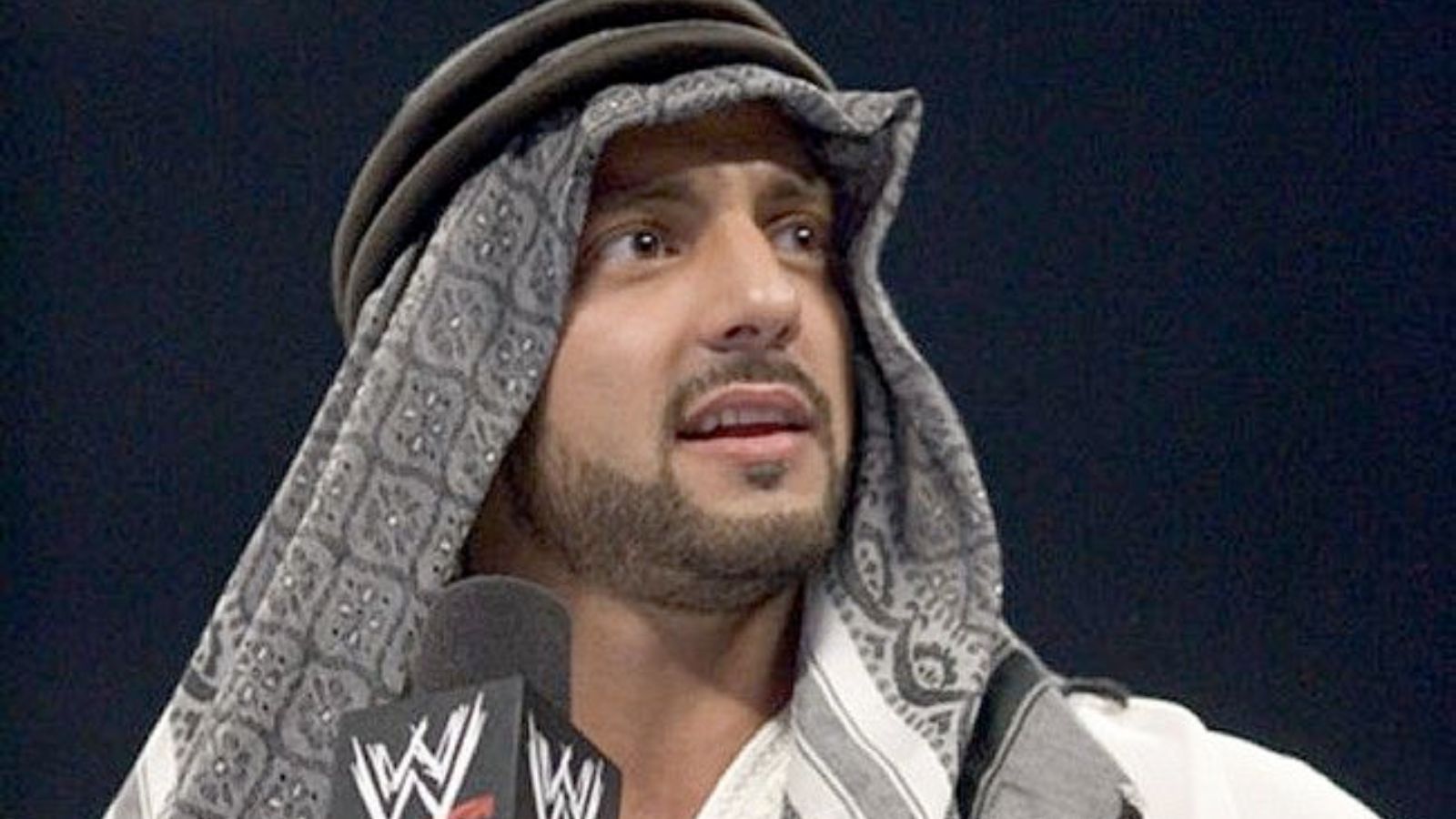
His heel promos usually consisted of Hassan cutting off other wrestlers to berate the American public for their treatment of Arab people, followed by a translation by his manager, Daivari.
Muhammad Hassan represented something genuinely new in wrestling; a heel who had a point. However, persistent complaints by Muslim-American advocacy groups led the company to remove much of his Muslim characterization, even moreso when they discovered that Mark Copani, the man who portrayed Hassan, is Italian.
However, the wheels truly came off on the July 7th, 2005 episode of SmackDown. In the episode, Daivari lost in swift and brutal fashion to The Undertaker.
Hassan came out to save his manager, but did so by summoning 5 masked men in paramilitary gear from the crowd to beat down and abduct The Undertaker.
If the angle wasn’t tasteless enough, it became even more so when the episode aired the same day as a terrorist bombing in London.
Facing backlash from fans and the media, WWE retired the Muhammad Hassan character and released Copani from his contract. Copani announced his retirement from wrestling shortly thereafter.

Stand Up for WWE
In 2010, Linda McMahon, wife of Vince McMahon and then-CEO of WWE, announced her intent to run for Connecticut State Senate.
This invited a great deal of media coverage and scrutiny towards WWE programming, namely their tasteless angles, like Katie Vick and JBL’s border patrol, and the highly publicized deaths of prominent wrestlers like Chris Benoit and Owen Hart.
Seeing as Linda was CEO of the company, much of this had happened under her watch, and it was very difficult for her (and Vince, especially) to defeat the allegations leveled at them.
And so it came to pass that Vince would seek to redeem his wife in the eyes of the American public in the only way he knew how: Tactlessly.
Thus began the “Stand Up for WWE” campaign, asking the fans to post on social media (and even write letters to the government and media) in defense of WWE as wholesome, family entertainment.
While it’s undeniably true that WWE programming often relies on what is edgy or in poor taste to drive ratings, they have also done a fair deal of good.
WWE promotes a fair deal of charitable causes, along with annual Tribute to The Troops shows and campaigns encouraging election participation.
They’ve also taken steps to curb the number of wrestlers dying young though their wellness program. At the time, these structural changes to how WWE operates might have been enough to sway one’s opinion of the company.
After all, this was over a decade before the sex trafficking scandals came to light. The campaign was largely mocked by fans and critics alike, who saw through the transparent attempt to shout down the critics.
Linda McMahon lost the 2010 senate race, and failed again in 2012 before Donald Trump selected her as a member of his cabinet in 2017, and then again in 2025.
Speaking of Trump…
Aside from Abraham Lincoln and Dr. Martin Luther King, it’s hard to think of a person who has so uniquely divided the American public than the 45th/47th President.
There are a great many supporters and detractors when it comes to Donald Trump, but we’ve come to understand a certain type of person who supports the former president.
Namely, a certain piece of headgear, and a slew of unhinged ideas and opinions. Thankfully, the overwhelming majority of people in America and the rest of the world are not that type of person.
The pro-Trump crowd are often despised, and for good reason. However, when such a group is able to gain a level of infamy whereby mere association with them is enough to garner a reaction, the dollar signs start rolling in a pro wrestler’s eyes.
What we see with the MAGA crowd is an object lesson in how to get heat. Some Trump supporters even admit that much of what they do is to get under people’s skin.
As the look and behavior of the Trump movement took place, a number of wrestlers began to adopt those mannerisms and affectations as a way to garner heat from more politically moderate crowds.
When now disgraced NXT star Patrick Clarke was transitioning from a standout performance on Tough Enough to NXT, he adopted the persona of a typical Trump supporter.
While that gimmick never saw TV, the same cannot be said for Ring of Honor’s The Cabinet. Caprice Coleman, Kenny King, and Rhett Titus came together in 2016 with the promise to Make Wrestling Great Again.
Sam Adonis also used the gimmick in CMLL until 2021, when the consequences of continuing the gimmick began to drastically outweigh the benefits.
Thankfully, while some wrestlers may privately endorse Donald Trump’s actions and beliefs, there aren’t currently any wrestlers working such a gimmick in any major wrestling promotion.