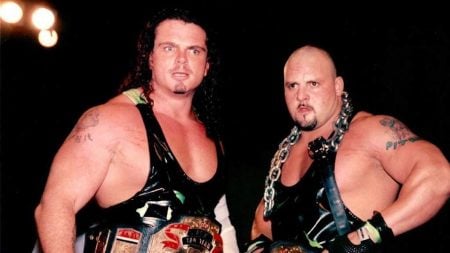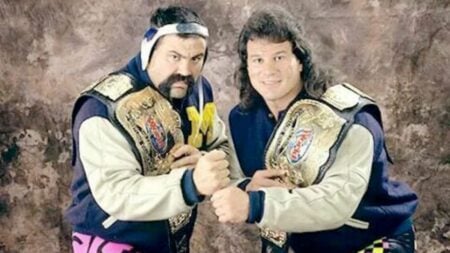


The Midnight Express remains one of professional wrestling’s most celebrated and influential tag teams, a group whose work in the ring and on the microphone shaped the art of tag team wrestling for decades.
Formed in the early 1980s, the Midnight Express was synonymous with precision teamwork, heat-drawing promos, and classic feuds that still resonate today.
Over the years, various incarnations of the team would compete in promotions across the United States, but their core identity as heel tacticians and showmen remained consistent.
This biography takes a detailed look at the Midnight Express — their most notable matches and titles, enduring rivalries, individual post-team careers, and the teams who walked in their footsteps.
The Formation of The Midnight Express –
Members
The Midnight Express began in the Memphis wrestling territory in 1983, originally comprised of Dennis Condrey and Randy Rose. Norvell Austin was added to the group, making it a trio.
These early versions of the Express operated under the heelish philosophy of quick tags, rule-breaking, and fast-paced offensive bursts that would become synonymous with the name.
“We were artists. Our canvas was that ring.”
— Dennis Condrey
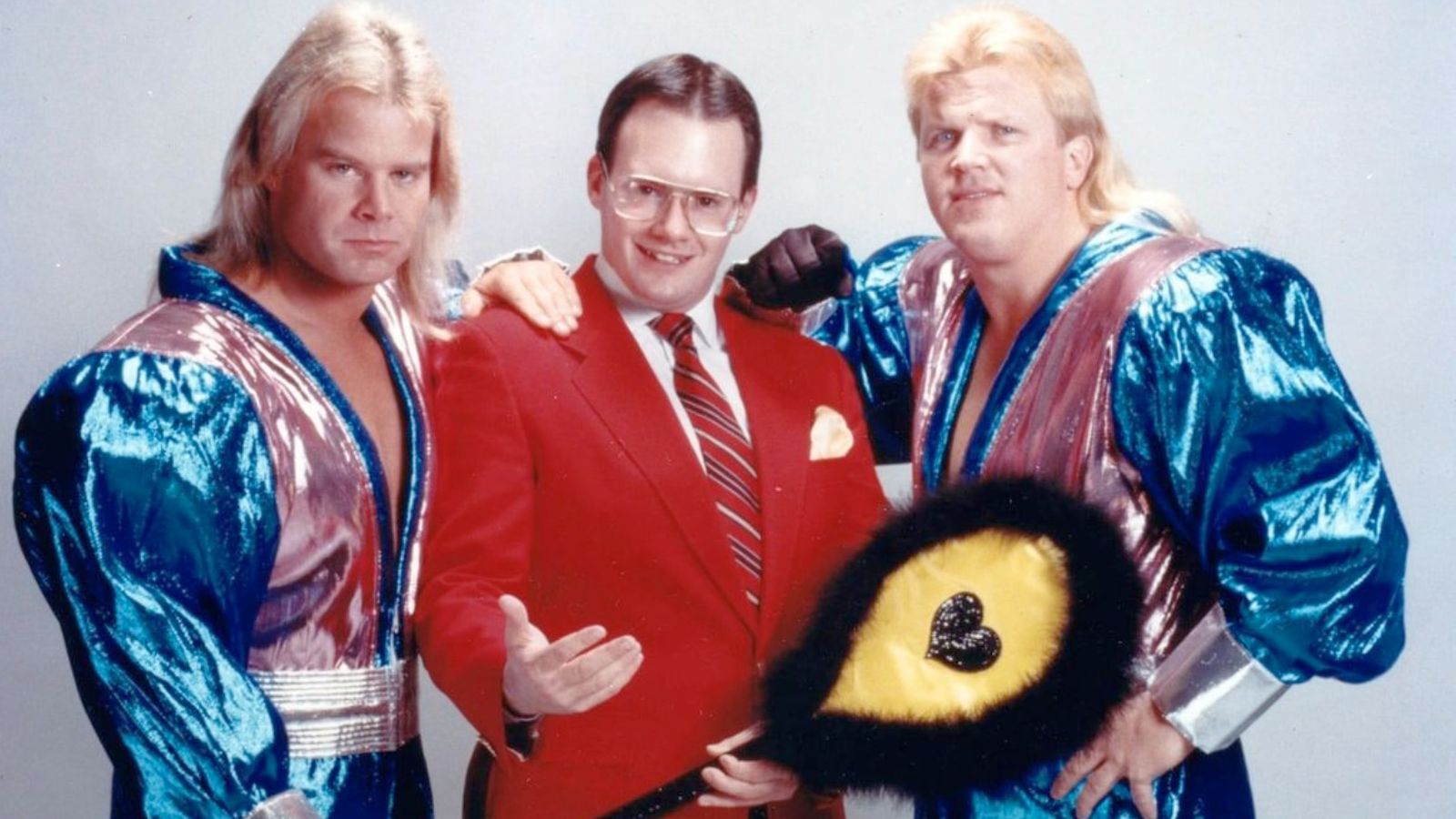
The Midnight Express was not a singular entity but rather a brand — a name applied to various incarnations of wrestlers, often under the leadership of mastermind manager Jim Cornette.
The original concept formed in the early 1980s in Southeastern Championship Wrestling when Dennis Condrey teamed with Randy Rose.
It wasn’t until the mid-1980s, however, when the most iconic incarnation took shape: “Beautiful” Bobby Eaton and Dennis Condrey, managed by Jim Cornette.
This version of the team, which debuted in Mid-South Wrestling, was the true genesis of The Midnight Express legend.
The name, according to Austin, was inspired by the 1978 movie Midnight Express, giving the group a sleek, cool-sounding brand. Austin said in a 2015 interview:
“It just sounded like a team that could win titles and kick a**, so that’s what we went with.”
(Memphis Wrestling History)
Shortly after, the most famous version of the team emerged when Condrey and Eaton, managed by Jim Cornette, left Memphis and debuted in Mid-South Wrestling in 1984.
Cornette’s sharp-tongued promos, paired with the team’s in-ring mastery, helped the Midnight Express stand out as one of the hottest acts in the National Wrestling Alliance (NWA).
When Condrey departed abruptly in 1987, Stan Lane — a former Fabulous One — stepped in, and the team didn’t miss a beat. Lane, Eaton, and Cornette carried the Midnight Express through its most successful and memorable years.
Jim Cornette: The Mouthpiece of Mayhem
No discussion of The Midnight Express is complete without mentioning Jim Cornette. His tennis racket-wielding, suit-wearing, insult-hurling persona was just as much a draw as the wrestlers themselves. Cornette provided the heat, doing promos that infuriated fans to the point of riots.
“You hillbillies wouldn’t know talent if it slapped you with a gold record! The Midnight Express is pure class, and I am the mastermind!”
— Jim Cornette
Cornette wasn’t just window dressing — he was a master strategist both on and off screen. He contributed heavily to their booking, match layouts, and feud development.
“Cornette could talk people into the building; we just had to give them a reason to stay.”
— Stan Lane
His managerial style made the audience want to see the team lose, which is the hallmark of any successful heel act.
The Rivalries: Artistry in Conflict –
Their feuds with the Rock n’ Roll Express, Fantastics, Southern Boys, and original Midnight Express were all special in their own way.

The Rock ‘n’ Roll Express
– A Rivalry That Lasted A Lifetime
Arguably the most legendary tag team feud of the 1980s, The Midnight Express vs. The Rock ‘n’ Roll Express (Ricky Morton and Robert Gibson) is a masterclass in heel-face psychology.
The Midnight Express were brash and arrogant; the Rock ‘n’ Roll Express were crowd favorites with teen girl appeal.
Their clashes in Mid-South Wrestling and Jim Crockett Promotions were box office gold. Every tag match between the two told a compelling story — the heat on Morton, the hot tag to Gibson, and near falls that kept fans on the edge of their seats. Their 1985 feud even drew a 9.0 rating on TBS.
A key Match in this feud was for the NWA World Tag Team Championship Match, Starrcade ’85: This match, while short, exemplified the classic formula. It ended in controversy, setting up a rematch that packed houses across the Southeast.

The Midnight Express vs. The Fantastics – A Technical Battle
In 1988, Bobby Eaton and Stan Lane (after Condrey’s departure) rekindled the Express magic. Their rivalry with The Fantastics (Tommy Rogers and Bobby Fulton) was filled with brutal brawls and surprisingly athletic exchanges.
One of their most notable clashes was at Clash of the Champions I, a wild brawl that went all over the arena and ended in a disqualification. Though not technically clean, it showed the team’s ability to brawl, bump, and engage the crowd in a white-hot atmosphere.
The Midnight Express and The Southern Boys, and The New Breed
Later rivalries, especially those involving the Eaton/Lane version, included dynamic exchanges with rising babyface teams like The Southern Boys (Tracy Smothers and Steve Armstrong). These feuds helped elevate younger teams while keeping The Express strong.

The Infamous Original Midnight Express vs. Midnight Express Feud
By 1988, The Midnight Express was at the height of its popularity in the National Wrestling Alliance (NWA), with “Beautiful” Bobby Eaton and “Sweet” Stan Lane tearing up the tag division under the fiery management of Jim Cornette.
Meanwhile, Paul E. Dangerously (later known as Paul Heyman) was a rising force on the microphone, known for his brash arrogance and modern take on the classic heel manager.
Paul E. Dangerously debuted his own team, claiming they were the “Original Midnight Express.” This version consisted of Dennis Condrey (a founding member of the Cornette-led Express) and Randy Rose, who had teamed with Condrey years earlier in the Alabama territories and AWA under the Midnight Express name.
The angle was a rare heel vs. heel feud in its genesis, but it quickly became clear that Cornette’s version had become so popular that they were turning babyface organically. The fans had grown to love the chemistry, athleticism, and over-the-top antics of Lane, Eaton, and Cornette.
At Starrcade 88′, Bobby Eaton & Stan Lane won by disqualification due to outside interference from Dangerously, which kept the feud burning.
Plans were in place for a lengthy, heated program with multiple rematches and possibly a stipulation match for exclusive rights to the “Midnight Express” name.
Unfortunately, real-life issues derailed the storyline. Dennis Condrey abruptly and mysteriously left the promotion just days after the Starrcade match.
His exit shocked everyone, including his partner Randy Rose and the NWA bookers. With Condrey gone, the planned continuation of the feud—including a high-stakes six-man tag at Chi-Town Rumble (1989)—was scrapped. Rose was quickly written off TV, and Dangerously shifted into other programs.
The Midnight Express vs. Midnight Express feud was innovative—a meta angle steeped in kayfabe, nostalgia, and manager-driven storytelling.
Had it continued as planned, it might have become one of the greatest feuds of the late ’80s. The promos alone between Cornette and Dangerously were electric, and the matches had a raw, personal edge that fans bought into.
In later interviews, Jim Cornette lamented the lost opportunity:
“We had a year’s worth of business on the table. The matches, the stipulations, the blow-off. And then poof—Dennis vanishes. No warning. Broke Randy’s heart too.”
Paul E. Dangerously, in shoot interviews, also reflected on it:
“It was the perfect mix of reality and fiction. It was the old school versus the new wave. And had we pulled it off, it would’ve been talked about like The Horsemen and Dusty or Rock ‘n’ Roll vs. Express.”
Although brief, the feud added a new layer to the mythology of The Midnight Express. It showed how powerful the team’s identity was—so strong, in fact, that multiple men could claim it, fight for it, and fans would still care.
It elevated Paul E. Dangerously, putting him toe-to-toe with Cornette in the eyes of the fans, it highlighted Stan Lane’s agility and charisma in singles-style performances, and it gave Randy Rose rare national exposure, albeit short-lived.
And most importantly, it established that Bobby Eaton was the glue. Despite all the variations, his technical genius and timing kept The Midnight Express cohesive in every incarnation.
The feud was laced with reality. Paul E. Dangerously argued that Cornette had “stolen” the team’s name and that his Midnight Express were the legitimate originators. Cornette countered by pointing to the success of his version and accused Dangerously of riding their coattails.
“You’re not the original anything! You’re a second-rate, loudmouth, Wall Street wannabe with a fax machine and no soul!”
— Jim Cornette to Paul E. Dangerously, NWA 1988
Dangerously would retort:
“Jim, you were nothing without Dennis Condrey, and now that he’s back with me, the world’s going to see what real tag team wrestling looks like.”
This verbal war built anticipation for a generational tag war—two versions of the same team, led by two of the business’s most volatile managers.
Throughout their run, The Midnight Express were championship mainstays: NWA United States Tag Team Championship (3x — Eaton/Lane), NWA World Tag Team Championship (1x — Eaton/Condrey), Mid-South Tag Team Championship (1x), AWA Southern Tag Team Championship (Multiple reigns)
Their most famous matches often came on pay-per-view and Clash of the Champions events:
At Starrcade 1986 in a Scaffold Match vs. The Road Warriors. In one of their most dangerous matches, Condrey & Eaton lost to Hawk & Animal in a brutal scaffold bout that drew a huge buy rate and showcased the intense heat between the teams.
Next, at Clash of the Champions IV in 1988 for the U.S. Tag Team Title, Lane & Eaton put on a technically brilliant tag team bout against the Fantastics, a feud that elevated both teams and remains a textbook example of tag team psychology.
Finally, at the Great American Bash 1988 for the World Tag Titles vs. Arn Anderson & Tully Blanchard, it was a hotly contested match for the NWA World Tag Team Titles, which the Midnight Express ultimately won, making them the first team to simultaneously hold both the U.S. and World tag titles.
The Final Stop for the Midnight Express
By 1990, friction between Cornette and WCW management led to the breakup of the team. Cornette left to form Smoky Mountain Wrestling, and the Eaton/Lane version of The Midnight Express disbanded.
Bobby Eaton stayed with WCW and had a brief singles career, even joining The Dangerous Alliance. Stan Lane would go on to become a WWF broadcaster.
Dennis Condrey and Randy Rose resurfaced in various territories but never reached the same height as their Express days.
Life After Midnight

Bobby Eaton
Often considered one of the most underrated workers of all time, Bobby Eaton’s singles run included a brief feud with Ric Flair for the NWA Title and a TV Championship reign.
His time in The Dangerous Alliance saw him paired with Paul E. Dangerously, Steve Austin, and Rick Rude. Eaton also teamed with Steven/William Regal to form The Blue Bloods where Bobby competed as “Robert”, the Earl of Eaton.
“Bobby Eaton could have a great match with a broomstick.”
— Jim Ross
Though never a world title contender, Eaton remained a respected veteran and mentor, especially during WCW’s later years.
“I never had a bad match with Bobby Eaton. And if I did, it was my fault.”
— Ric Flair
Sadly, Eaton would pass away at the age of 62, leaving behind four children as his wife would also pass away in 2021. Eaton was undoubtedly the ‘glue’ of this team and is long remembered for his place in tag team wrestling history.
Dennis Condrey
Condrey’s post-Express career was largely regional. He appeared in AWA, Smoky Mountain Wrestling, and various independent circuits, but couldn’t replicate his NWA success. He remains respected for his ring psychology and toughness.
Today, Condrey can still be seen as part of various wrestling conventions, reminding everyone about the legacy of the ‘Loverboy’.
Stan Lane
Lane had earlier success with The Fabulous Ones (with Steve Keirn), and after The Express, transitioned smoothly into broadcasting.
He worked for WWF and hosted “WWF Mania” in the early ‘90s. Lane’s charisma, looks, and promo ability made him a natural fit for commentary.
Lane’s wrestling career ended in 2008 but his place alongside the likes of Steve Keirn and Bobby Eaton remind everyone of his place in tag team wrestling as “Sweet” Stan.

Randy Rose & Norvell Austin
These early members faded more quickly from the spotlight. Austin deserves credit as one of the first African American heels in Southern wrestling, helping to break barriers. Rose had a solid career in the AWA but was always more of a supporting act.
Rose reportedly competed until 2015. While his time as part of the Midnight Express is short-lived, it shouldn’t be negated.
For Norvell Austin, his time not only as a member of the Pretty Young Things with Koko B. Ware but also as part of the Midnight Express is key.
In fact, even Austin’s teaming with Sputnik Monroe prior as part of a ‘mixed race’ tag team was also trailblazing. As a part of the Original…original Midnight Express with Dennis Condrey and Randy Rose, Austin captured the AWA Southern Tag Team titles. Austin competed until 2004.
The Midnight Express: THEE Blueprint for Tag Team Wrestling
The Midnight Express were more than just a team — they are a template. Their influence is visible in teams like FTR, The Young Bucks, and others who combine technical prowess with character-driven storytelling.
FTR (Dax Harwood and Cash Wheeler) have openly credited The Midnight Express for inspiring their “no flips, just fists” philosophy, and Jim Cornette’s promos have been sampled and mimicked across decades of heel managers and talkers.
Their ability to work different styles — technical, brawling, comedy, southern tag structure — made them perennial favorites among smart fans and traditionalists alike.
Although not inducted together into the WWE Hall of Fame, they have been honored by: Wrestling Observer Newsletter Hall of Fame (Inducted 2009), Professional Wrestling Hall of Fame and Museum and NWA Hall of Fame (Posthumous recognition for their impact).
The Midnight Express were not just a tag team — they were an era. Whether it was the nuclear heat they generated with Cornette, the perfect timing of Eaton’s leg drops, Condrey’s tough realism, or Lane’s slick agility, they were the total package.
Their feuds remain a masterclass in storytelling, and their legacy as one of the greatest — if not the greatest — tag teams in professional wrestling history is secure.
They didn’t just express the midnight; they defined it.