

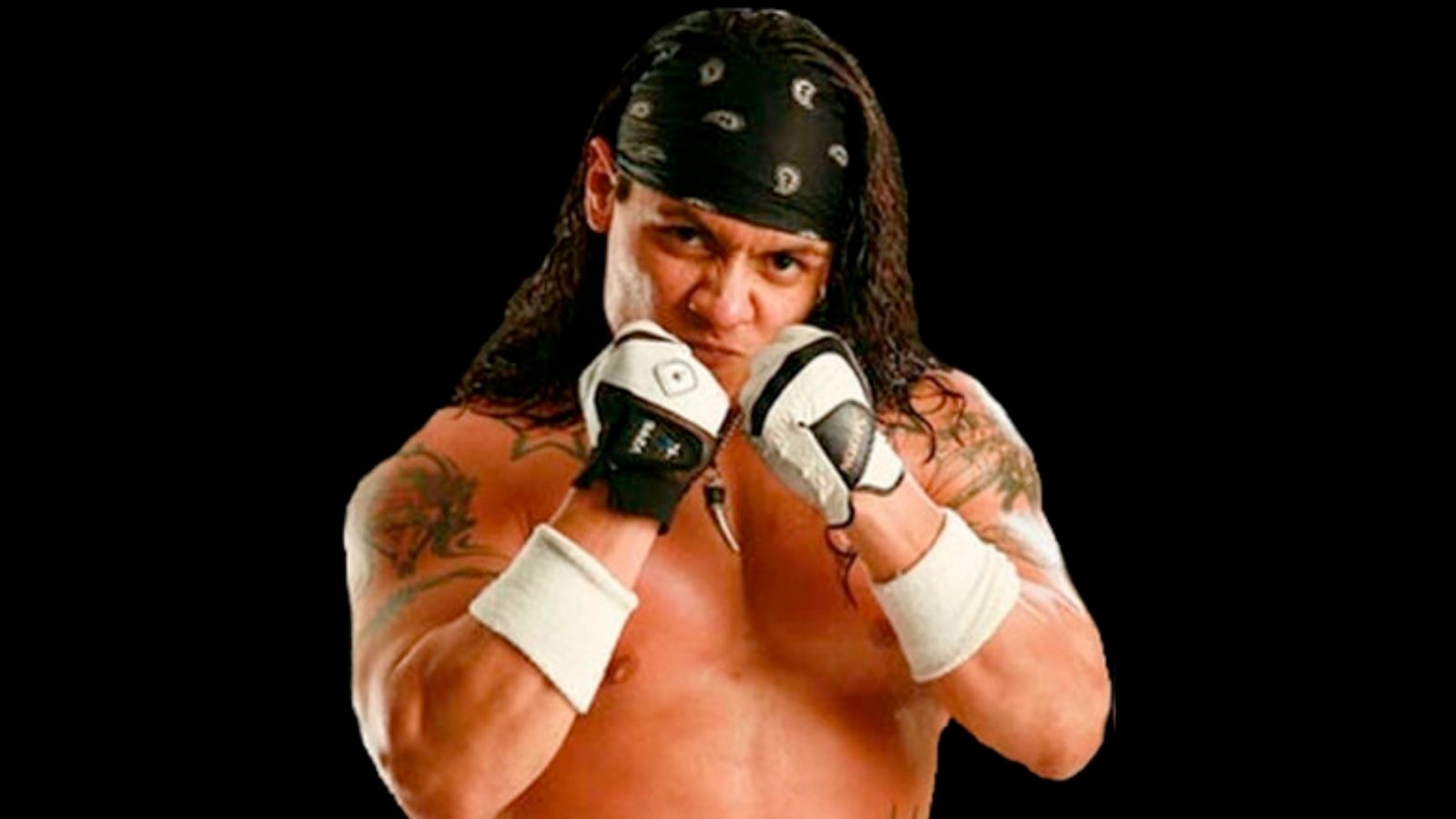
Juventud Guerrera, affectionately dubbed “Juvi,” carved out a legacy as one of the most electrifying and dynamic cruiserweights in wrestling history.
Known for his high-flying arsenal, bold charisma, and unique blend of lucha libre and American styles, Juventud became a bridge between cultures and generations in professional wrestling.

Juventud Guerrera – The Emergence of The Juice in AAA
Juventud Guerrera, son of lucha libre legend Fuerza Guerrera, debuted in AAA in 1992 and quickly built a reputation for his fast-paced, high-flying style.
He became part of the vanguard that helped popularize lucha libre to North American audiences during AAA’s working relationship with WCW and ECW in the mid-90s.
Juventud Guerrera, born Eduardo Aníbal González Hernández, began his career in the early 1990s. He gained attention quickly in Mexico’s AAA (Asistencia Asesoría y Administración) promotion, led by Antonio Peña.
His matches against Psicosis and Rey Mysterio Jr. during this time helped define the next generation of lucha libre.
One of the most memorable AAA matches came at When Worlds Collide (1994) — a cross-promotional event between AAA and WCW.
Though Juventud did not wrestle on the main card, his reputation grew thanks to his work on AAA television and in the burgeoning U.S. lucha scene.
During his time in AAA, he had a few notable feuds. One of which was with Rey Mysterio Jr. Their AAA feud was fierce and innovative, showcasing a mix of lucha traditionalism with a modern aerial style.
It would evolve across multiple promotions, beginning in Mexico and carrying over into ECW, WCW, and even WWE. Their chemistry became the blueprint for North American cruiserweight wrestling.
His rivalry with Rey Mysterio Jr., Psicosis, Dean Malenko, Chris Jericho, and Eddie Guerrero helped establish WCW’s cruiserweight division as a major attraction.
He left AAA in the mid-90s to wrestle in the U.S. and Japan, but returned periodically. In his later stints with AAA (2004, 2008), Juventud re-emerged as a veteran figure, aligning with or opposing newer stars like La Parka, Cibernético, and Charly Manson. He also briefly formed a faction called “Mexican Powers” in AAA’s storylines.
The Juice Gets EXTREME
In 1995 and 1996, Paul Heyman was looking to differentiate Extreme Championship Wrestling from both WWF and WCW. One method was to showcase international talent, particularly Mexican luchadors, in a style that meshed high-flying acrobatics with ECW’s trademark chaos.
This period helped introduce Juventud Guerrera to American audiences, along with fellow AAA stars like Rey Mysterio Jr., Psicosis, and La Parka.
Juventud only wrestled for ECW briefly, but his appearances were impactful and memorable — and laid the groundwork for his WCW signing later that same year.
On March 9th, 1996, at the ECW Arena in Philadelphia, PA, Juventud Guerrera and Rey Mysterio Jr. faced one another at ECW Big A** Extreme Bash (1996) here.
An essential watch for fans of modern high-flyers. This match is often credited with influencing WCW’s cruiserweight style later that year.
This match was one of the most lauded ECW matches of 1996. Juventud and Rey brought AAA’s breathtaking pace and crisp execution to the ECW faithful.
The crowd, known for its brutal honesty, gave the bout a standing ovation. Juventud took the win in a back-and-forth aerial clinic — a stark contrast to ECW’s usual hardcore fare.
“You had to earn your respect in ECW. Rey and I didn’t speak English great, but we spoke wrestling. That night, they got it.”
— Juventud, Wrestling Epicenter Interview, 2006
The match played a key role in both men being scouted by WCW shortly after.
A second ‘rivalry’ that showcased Guerrera’s style was against fellow luchador Psicosis. The two would face each other during house shows in the Spring of 1996.
Juventud and Psicosis wrestled several times during ECW’s March 1996 house show loop, mostly in Pennsylvania and New York. Their matches were often billed as “International Showcase” bouts and featured explosive openers.
Their chemistry, honed in AAA, translated well to ECW. Psicosis played more of a grounded, brutal rudo (heel) to Juventud’s tecnico (face), with Juventud showing underdog fire.
“Psicosis and I knew how to go full speed from AAA. In ECW, it was even crazier because the fans expected intensity.”
— Juventud, [Wrestling Review Magazine, 1997]
Even though Juventud’s ECW run only spanned a handful of matches, it was instrumental for several reasons:
ECW gave Juventud his first real American exposure. The fan reaction in Philadelphia proved lucha libre had a place in U.S. wrestling beyond stereotypes.
The second, Eric Bischoff and Kevin Sullivan, both reportedly kept a close eye on ECW’s use of luchadors. Juventud’s ECW performances led directly to his WCW contract later in 1996, where he debuted during WCW’s cruiserweight boom.
Finally, Juventud’s mix of speed, aerial maneuvers, and reckless spots matched ECW’s tone. He helped show that lucha libre could be more than just acrobatics — it could be physical, intense, and gritty.
While he never had major storylines or won titles in the promotion, his brief feud with Rey Mysterio and series of matches with Psicosis were among the first of their kind in the U.S. — high-speed, hybrid-style lucha libre matches in front of a hardcore audience.
Those performances earned him respect, a national platform, and a WCW contract. In many ways, ECW was Juventud Guerrera’s gateway to mainstream success in North America.
The Move to World Championship Wrestling
Between 1996 and 2000, Guerrera debuted in WCW (World Championship Wrestling) as part of Eric Bischoff’s initiative to introduce cruiserweight talent to a wider audience.
Alongside Rey Mysterio, Psicosis, La Parka, and others, Juventud helped create a new style of match that contrasted the heavyweight-oriented main events.
While in the promotion, he had several key matches and rivalries. One of which was one rekindled during his time in AAA with Rey Mysterio Jr. Their chemistry, already honed in AAA, translated to WCW.
One of Juventud’s most well-known storylines came in early 1998 when he feuded with Chris Jericho, leading to a Title vs Mask match at SuperBrawl VIII (Feb 22, 1998).
Juventud lost and was forced to unmask, a major moment in lucha libre tradition. Jericho mocked him by calling him “Quasi Juice” and ridiculing the sacred nature of lucha identity.
“It was a tough thing to do, but it helped get me more recognized by the fans who didn’t know what I looked like. It gave me a second life in a way.”
— Juventud, Wrestling Epicenter interview, 2006
His matches against Billy Kidman were also highly regarded. A classic cruiserweight rivalry in 1998–99. Their matches were consistently praised for their pacing and high spots.
Juventud Guerrera’s success wasn’t relegated to simply singles or working alone. He not only was a 3X WCW Cruiserweight Champion, but also captured the WCW World Tag Team Championships alongside one-time rival, Rey Mysterio Jr.
Towards the end of WCW’s time, Juventud was a part of a faction. In late 1999, Guerrera became part of the Filthy Animals, a stable with Rey Mysterio Jr., Konnan, and Billy Kidman.
The group was a precursor to modern “cool heel” stables, embracing hip-hop street culture while putting on fast-paced matches. While entertaining, many insiders feel WCW misused the group creatively. He would depart the company in 2000.
A Global Journey of Reinvention
After Juventud Guerrera’s departure from WCW in late 2000, his career entered a nomadic yet creatively rich phase.
No longer on mainstream U.S. television, Juventud made a name for himself across several continents — working promotions in Mexico, the U.S. independent scene, and Japan — constantly evolving while waiting for the next big break.
In 2001, Juventud joined Xtreme Pro Wrestling (XPW), a California-based hardcore promotion that styled itself after ECW but pushed more adult themes.
Juventud was one of the top lucha-style performers in XPW’s roster and brought a different flavor to the often blood-and-guts product.
One standout match occurred at XPW Redemption (2002), where Guerrera faced longtime rival Psicosis. The bout stood out for its high-flying intensity amid a card filled with weapons and brawling.
Though his time in XPW was short-lived due to internal issues within the promotion, Juventud gained valuable ring time during a transitional phase.
“XPW was wild. It wasn’t what I was used to, but I needed to wrestle and stay sharp. That was important.”
— Juventud Guerrera, Wrestling Perspective Interview, 2003
After XPW, Juventud returned to his roots in Mexico by rejoining AAA (Asistencia Asesoría y Administración), where he had previously been one of the company’s original stars in the early ’90s.
Upon returning, he rekindled rivalries with La Parka, El Hijo del Santo, and Cibernético, often blurring the lines between técnico and rudo.
During this period, Juventud also became a founding member of Los Guapos VIP, a satirical heel faction parodying metrosexual male models, alongside Shocker and Scorpio Jr.. The group helped him refine his heel charisma — a trait that would become key to his WWE run in 2005.
Guerrera remained active internationally, wrestling frequently in Japan. He had successful stints in Pro Wrestling NOAH and Zero-1, where he adapted well to the Japanese strong style and continued to hone his ring craft.
In NOAH, Juventud faced talent like Naomichi Marufuji and Takeshi Morishima, demonstrating that his style could blend with technical and hard-hitting performers in Japan.
“Juventud is underrated when it comes to working different styles. He fit in surprisingly well in NOAH.”
— Dave Meltzer, Wrestling Observer Newsletter, 2004
He also had a brief run in All Japan Pro Wrestling (AJPW) in 2004, where he tagged with and faced off against both local and international stars, further showcasing his range.
In 2003 and 2004, Guerrera made limited but impactful appearances in Ring of Honor (ROH), one of the U.S.’s top independent promotions.
Though Juventud wasn’t signed full-time, these appearances helped maintain his presence in the North American indie scene, particularly with hardcore wrestling fans.
Life Between the Spotlight
Despite being off major U.S. television, Juventud remained prolific. He appeared in independent shows across Latin America and the U.S., working with promotions like Revolución Lucha Libre in Chile and IWA Puerto Rico, where his name value still drew crowds.
His performances remained consistently strong, even as occasional personal issues — including backstage conflicts and controversial behavior — sometimes distracted from his in-ring work.
FINALLY, The Juice Has Joined The WWE
Juventud returned to the national spotlight in 2005, debuting on WWE SmackDown as part of the controversial but popular Mexicools faction, alongside Super Crazy and Psicosis. The trio entered riding lawnmowers and cut promos mocking WWE’s racial stereotypes — a satirical response to past booking of lucha talent.
“We took something that could’ve been offensive and made it cool. We turned heads.”
— Juventud on the Mexicools’ debut, WrestleZone, 2016
However, Juventud’s time in WWE was cut short. Reports of backstage friction and concerns over his in-ring style led to his release in January 2006. I
n a 2006 interview with SLAM! Wrestling, he stated:
“I loved performing there, but you have to play politics, and that wasn’t my strength.”
Despite solid in-ring work, Juventud’s time in WWE was short-lived. Reports suggest backstage issues, including not adhering to agent direction and executing risky maneuvers (such as the 450 splash), led to his release in early 2006.
After his WWE exit, Juventud returned to AAA, where he aligned himself with Konnan’s La Legión Extranjera (The Foreign Legion), a heel faction. He battled stars like Cibernético and El Zorro, and helped bring more international attention back to the promotion.
Juventud later wrestled in Pro Wrestling NOAH, TNA (now known as Impact Wrestling), CMLL, and various independent promotions worldwide. He also appeared in Lucha Libre USA and The Crash in Tijuana.

Later Appearances & Life After Wrestling
In 2021, Juventud appeared on AEW Dynamite as part of Chris Jericho’s “Labors of Jericho” storyline. Their match on August 4, 2021, was a nostalgic nod to their WCW rivalry and marked Juvi’s first major U.S. televised match in years.
Beyond the ring, Juventud has released music, trained younger talent, and launched his own YouTube podcast titled “JUVI TV.” He’s been candid about his ups and downs in the wrestling business and continues to advocate for lucha libre’s global recognition.
Legacy and Impact
Juventud Guerrera’s career spanned multiple eras and promotions, helping redefine cruiserweight wrestling in North America. He was a vital figure in the WCW cruiserweight revolution that influenced WWE’s later light heavyweight and cruiserweight divisions.
Wrestlers like Sami Zayn (El Generico), Ricochet, and Mustafa Ali have cited lucha libre and the WCW cruiserweight era as major influences — a legacy Juvi helped shape.
As Rey Mysterio once said in a WWE.com interview:
“Juvi and I, we brought that energy from Mexico to the U.S. and gave fans something different. We took risks — every night.” (WWE Interview, 2019)
Though at times controversial, Juventud’s fearless style, vibrant persona, and contributions to both lucha libre and global wrestling make him one of the most important cruiserweights of his generation.
To date, Guerrera’s accomplishments include: 3-time WCW Cruiserweight Champion, one-time WCW Tag Team Championship (1x) – w/ Rey Mysterio Jr, a two-time WWE Cruiserweight Championship, AAA Welterweight Champion, and Toryumon X NWA International Junior Heavyweight Champion.
Juventud Guerrera’s story is one of resilience, reinvention, and impact — a true “Juice” that powered the world of pro wrestling for over three decades.