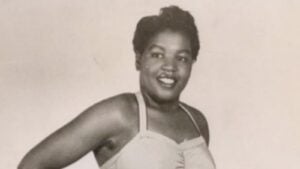



Babs Wingo stands at the beginning of a story most wrestling fans have never been told. Long before television, global brands, or hashtags celebrating women’s wrestling, there was a young Black woman from Ohio stepping into rings she was never meant to enter.
She didn’t arrive with the fanfare of a Mae Young or the mythology of a Mildred Burke. She came with something quieter but far more revolutionary: the courage to walk into a segregated industry and refuse to be invisible.
When Queen of the Ring introduced Babs to a new generation, it offered only a glimpse of her impact. The film captured the spectacle and contradictions of the era, but it barely scratched the surface of the woman who helped desegregate women’s wrestling.
Babs was not simply part of the story; she was the hinge that opened the door for every Black woman who followed.
Her presence challenged promoters, audiences, and the sport itself to evolve. This is the story of the pioneer history forgot and the lineage she made possible.
Babs Wingo: The Pioneer History Tried to Forget
Before Babs ever laced a pair of boots, women’s wrestling was a maze of contradictions. It was athletic but unregulated, glamorous but built on exploitation, and for Black women, almost entirely inaccessible.
In the 1930s and 40s, most Black female wrestlers were confined to carnival circuits and tent shows, spaces where they were treated as attractions rather than competitors.
They wrestled beside freak shows and strongman acts, performing for crowds that viewed them as spectacle, rather than athletes.
Mainstream women’s wrestling, controlled largely by promoter Billy Wolfe, was a closed system. Wolfe built a national touring empire of white women wrestlers, complete with championships, storylines, and magazine coverage.
But it was deeply segregated. Black women were not allowed on the cards, in the locker rooms, or in matches against white women. The unwritten rule was simple: Black women could entertain, but they could not belong.
This was the world Babs stepped into, a world where the door wasn’t just closed; it had never been opened. Her arrival didn’t just challenge the system; it changed it. It forced the system to change.
When Babs Wingo stepped into the ring in the early 1950s, she did not come alone. Her sisters, Ethel and Marva, followed closely behind, forming one of the most important but least documented families in wrestling history.
The Wingos were not groomed by promoters or discovered through beauty contests, as many white women wrestlers were.
They came from working‑class Ohio, drawn into the sport through grit and the determination to carve out space where none existed.
Babs was the first to break through, signing with promoters willing, often reluctantly, to book a Black woman on integrated cards.
Her success paved the way for Ethel, whose power made her a natural heel, and for Marva, whose athleticism and charisma made her a standout. Together, the sisters formed a trio that challenged segregation simply by showing up and refusing to be sidelined.
Their presence forced promoters to confront a reality they had long avoided: Black women could draw crowds, tell stories, and compete at the same level as their white counterparts. The Wingos didn’t just enter wrestling; they expanded it.
Babs didn’t enter the ring with flashy moves or a loud persona. Her power came from a grounded, deliberate style that demanded to be taken seriously.
At a time when women’s wrestling was often treated as novelty entertainment, Babs wrestled with the discipline of a true athlete.
She favored holds, counters, and a steady, methodical pace, techniques that made her matches feel less like spectacle and more like sport.
She carried herself with a quiet authority that challenged expectations placed on Black women in the 1950s. She didn’t play into stereotypes or soften her edges for white crowds.
She wrestled with dignity and precision, forcing audiences to confront her humanity. Promoters may not have known what to do with her at first, but casual and avid fans did.
They saw a woman who belonged in the ring, not because she was allowed to be there, but because she earned it every time she stepped between the ropes.
Babs’ arrival forced promoters to confront a truth they had long avoided: a Black woman could wrestle at the same level as the white women they built their empires around. Some responded with curiosity, others with caution, and a few with outright resistance.
Billy Wolfe understood that Babs could draw crowds, but he also understood the risk she posed to his segregated system.
Booking her meant acknowledging that the color line he enforced was manufactured, not natural. Promoters booked her, but sparingly.
They put her on cards, but rarely in main events. They allowed her to wrestle white women, but often in regions where they believed backlash would be minimal.
Every time Babs Wingo stepped into the ring, she proved the limitations placed on her were never about ability; they were about control. And with every match, she loosened that control.
Babs’ influence extended far beyond the ropes. At a time when Black women were fighting for visibility in every corner of American life, her presence in a wrestling ring was a radical act.
She stood in front of crowds that had never seen a Black woman compete as an equal and forced them to reconsider what strength and femininity could look like.

For Black audiences, especially young girls, Babs Wingo offered something even rarer: a reflection of themselves in a space that had long excluded them.
The Wingo sisters collectively expanded that impact. Their visibility challenged the idea that Black women belonged only in the margins of entertainment.
Their matches became quiet acts of resistance, pushing against segregation without needing to announce themselves as activists. Their legacy is not measured in championships, but in the doors they cracked open.
Outside the ring, the Wingos navigated a world often more hostile than the matches themselves. Segregation shaped every aspect of their travel: hotels that wouldn’t house them, restaurants that refused to serve them, and venues where they had to enter through side doors despite being on the marquee.
They had to be twice as disciplined and twice as prepared as their white counterparts just to be considered “professional.”
Their pay was lower, their bookings were limited, and their safety wasn’t guaranteed. Yet they continued, not because the industry welcomed them, but because they refused to let the industry define their worth.
The impact of the Wingo sisters didn’t end when they stepped away from the ring. Their presence created a lineage that stretches from the segregated arenas of the 1950s to the global stages of today.
Every Black woman who has ever stepped into a wrestling ring: Sweet Georgia Brown (Susie Mae McCoy, Jacqueline also used this name in her early years), Jacqueline, Jazz, Naomi, Bianca Belair, Jade Cargill, Willow Nightingale, Mercedes Moné, Alicia Fox, Athena, Queen Aminata, Red Velvet, and many others stand on the foundation the Wingos built.
Modern wrestling’s celebration of Black women, their athleticism, charisma, and cultural influence, stands on the shoulders of pioneers who never received the spotlight they deserved. The Wingos didn’t just open the door. They built the threshold.
Despite her impact, Babs’ name is largely absent from pro wrestling history. Promoters who controlled the narrative had little incentive to highlight a Black woman who challenged their segregated system. Media coverage centered on white women.
Photographers ignored Black women. Even when Babs wrestled on integrated cards, promotional materials often omitted her image.
She wasn’t forgotten because she was unimportant. She was forgotten because the systems in place were never designed to tell her story.
Restoring Babs Wingo to her rightful place in wrestling history is not nostalgia; it is correction. It expands the story to reflect the truth: the sport has always been more diverse, more complex, and more courageous than the record suggests.
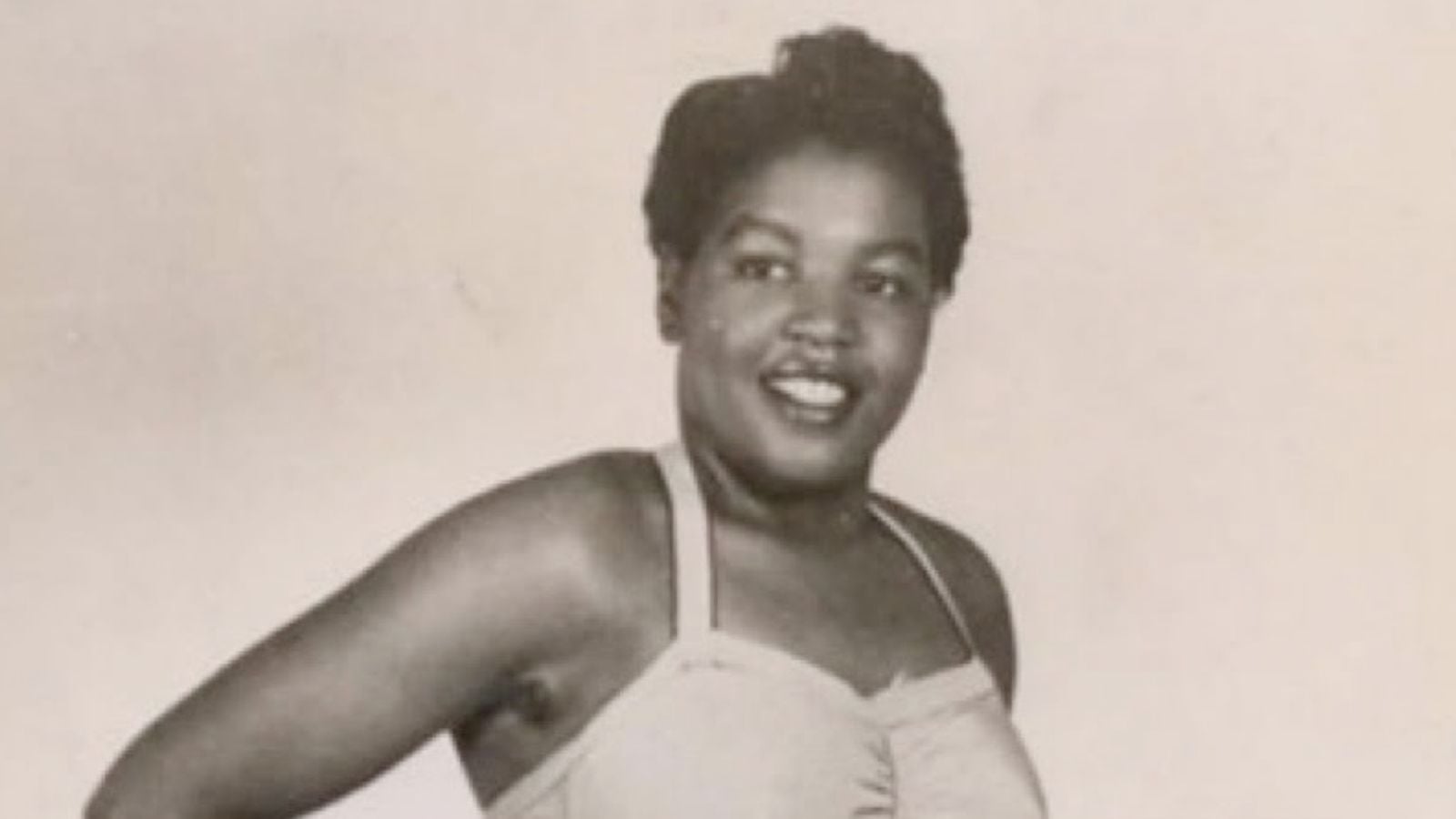
In 2021, WWE posthumously recognized Marva Scott, the youngest of the Babs Wingo sisters, by naming her one of the 51 greatest pro wrestlers of all time.
In 2024, more than half a century after Babs Wingo first stepped into the ring, she and her sisters were posthumously inducted into the Women’s Wrestling Hall of Fame.
Their daughters and grandchildren accepted the honors on their behalf, finally hearing the applause the sisters were denied in their own time.
Kim Goodwin Martin, Marva Scott’s daughter/Babs and Ethel’s niece, captured the moment perfectly: “My brother and I and our entire family are so happy that you all brought us here to be honored… thank you, thank you, thank you.”
The recognition was long overdue—but deeply deserved. Their legacy is no longer quiet or overlooked. It is finally being acknowledged.