
Tag team wrestling is usually where careers are built, not where made men go to experiment. This series flips that idea.
Every pairing in this blog is built around a simple premise: what happens when already-proven main event stars link up and share a corner? The focus isn’t on one promotion, one era, or one style.
Instead, it stretches across companies and decades, from territory days to the Monday Night War boom and beyond.
Some of these teams were short-lived attractions, others held major tag titles, and a few existed mainly to launch or deepen world title programs.
What unites them is status and impact. These weren’t prospects trying to climb the card; they were headliners, world champions, and franchise players testing how much bigger the stage could feel when they stood side by side instead of across the ring. These are super groups in wrestling history.
Super Groups in Wrestling History
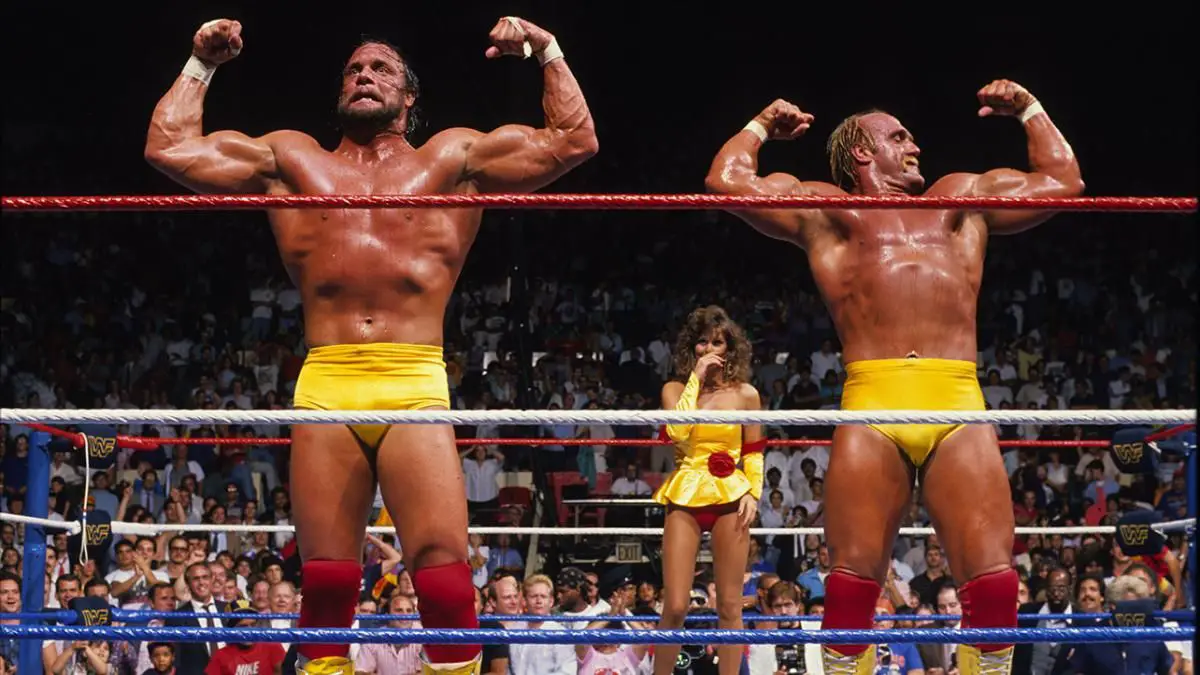
The Mega Powers – Hulk Hogan and Macho Man Randy Savage
The Mega Powers were built on chemistry and tension from day one. Hulk Hogan was the top babyface centerpiece of the WWF, while Randy Savage was the intense, volatile champion trying to prove he wasn’t second best.
Their alliance started as a feel-good super-team, but the story was always about jealousy. Savage slowly unraveled as he watched Hogan bond with Miss Elizabeth, culminating in the famous breakup where Savage snapped backstage and attacked Hogan.
The team didn’t rack up long-term tag accomplishments, but they didn’t need to. Their value was in how big the pairing felt and how effectively it set up WrestleMania V, turning a tag alliance into one of the defining world title programs of the era.

Sting and Lex Luger
Sting and Lex Luger represented two very different types of star power in late-80s and early-90s NWA/WCW. Sting was the energetic, face-painted fan favorite, while Luger projected power and arrogance even when he was technically a babyface.
As a team, they floated between friendship and distrust, sometimes on opposite sides of the heel/face divide even while holding tag gold together.
That uneasy dynamic was the hook: fans believed they could explode at any moment. They worked major programs with the Road Warriors and the Steiner Brothers, and later with Harlem Heat and the Outsiders when WCW reshaped its main event scene.
While neither man’s legacy is primarily as a tag wrestler, this pairing added depth to both characters and gave WCW a reliable big-match combo when singles programs needed a breather.

Triple H and Stone Cold Steve Austin – Two Man Powertrip
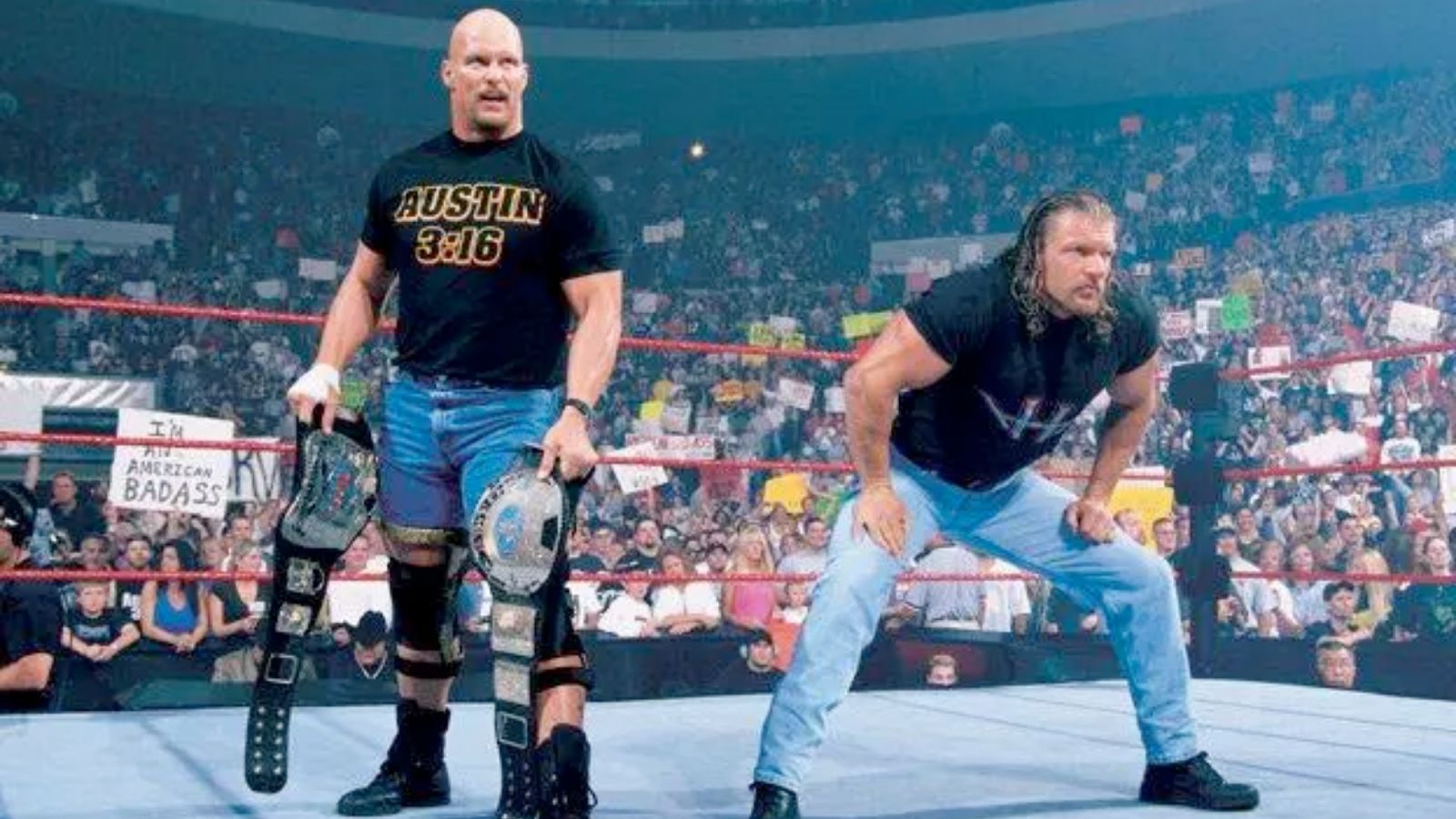
“Two-Man Power Trip” might be the most accurate label any wrestling team has ever had. When Triple H and Steve Austin joined forces in 2001, both were already established top guys with world title résumés.
Putting them together was less about tag team tradition and more about raw dominance. They held the WWF Tag Team Championship while Austin was world champion and Triple H wore the Intercontinental title, steamrolling babyfaces like the Brothers of Destruction.
The run was infamously cut short by Triple H’s torn quad, but for a brief stretch, they felt untouchable. They’re remembered less for longevity and more for sheer star power—two main-eventers abusing the tag belts as another tool in their campaign to control the company.

Kane and The Undertaker – Brothers of Destruction
The Brothers of Destruction were booked as a force of nature more than a conventional tag team. Undertaker had long been one of WWF’s top special attractions; Kane arrived as his monstrous, masked counterpart.
Their feud was white-hot, but when they came together, the appeal was obvious: two near-mythical big men crushing everything in their path.
They picked up tag titles in both WWF and later WWE, but the belts were almost secondary to the imagery—double chokeslams, synchronized sit-ups, and opponents physically overwhelmed by size and aura.
They clashed with Austin and Triple H, Edge and Christian, the Dudley Boyz, and others. As a team, their place in history rests on spectacle and drawing power; in terms of pure tag psychology, there are better teams, but in terms of presence, they’re in rare company.

Triple H and Shawn Michaels – Degeneration X
D-Generation X started as a faction, but at several points, Triple H and Shawn Michaels functioned as a top-tier tag team.
Their late-90s incarnation leaned on rebellious humor and shocking angles; their mid-2000s reunion leaned more on nostalgia and high-profile matches.
Unlike some of the alliances on this list, they did put time into structured tags—multi-segment TV main events, big pay-per-view bouts with teams like Rated-RKO and the McMahons’ proxies.
Their workrate was strong, but what really elevated them was name value and personality. Two established main-event singles wrestlers rarely commit that much television time to working as a duo.
In the broader tag-team pantheon, they’re more of a brand than a traditional unit, but their impact on merchandising and crowd reactions is hard to ignore.
Nikita Koloff and Dusty Rhodes – Super Powers
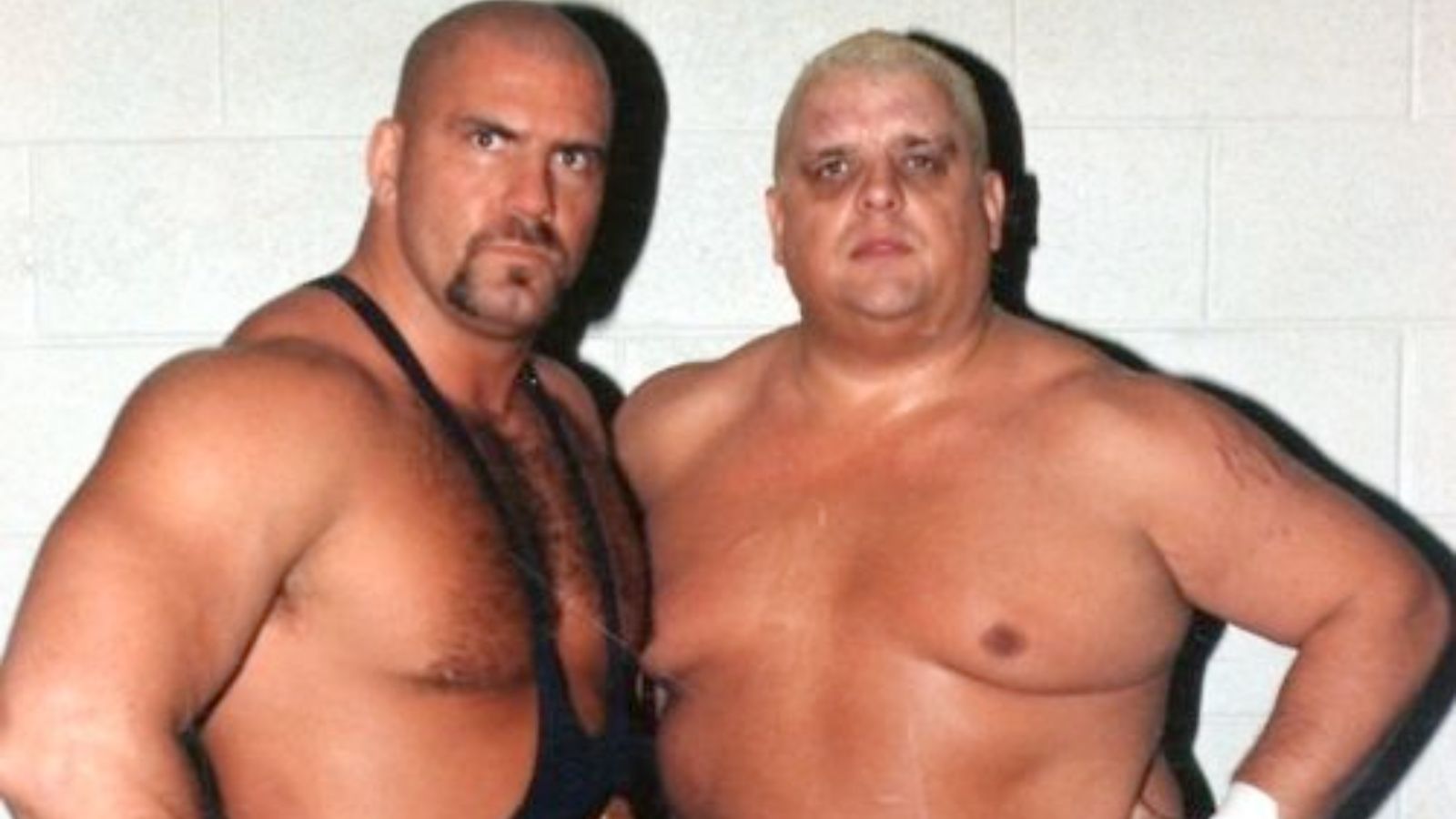
Nikita Koloff and Dusty Rhodes are a classic example of the “enemy turned partner” formula paying off. Koloff was introduced in Jim Crockett Promotions as a brutal Russian heel, while Dusty was the working-class American hero.
When they finally teamed, it felt like a major political and emotional shift. They held the NWA World Tag Team Championship and played a central role in supercards like the Great American Bash.
Their matches were built on contrast: Dusty’s charisma and familiarity, Nikita’s raw power and surprising crowd connection once he turned.
As a tag act, they weren’t together nearly as long as some pure teams, but their story resonates because it symbolized Cold War tensions being worked out in the ring.

Big Show and Chris Jericho – Jerishow
“Jeri-Show” looked like a random pairing on paper but ended up anchoring WWE’s tag division for a chunk of the late 2000s.
Big Show supplied the size and power spots; Jericho handled the talking and a lot of the connective tissue in the ring.
Their title run helped stabilize belts that had been bouncing around, and they were positioned as smug, smart heels who could dictate the pace against flashier babyface teams.
They feuded with DX, Legacy, and other main-roster acts, adding a layer of credibility to the tag scene simply by being established names working it.
Historically, they’re a strong example of how mixing a giant with a veteran technician can extend both men’s relevance without requiring a constant singles push.

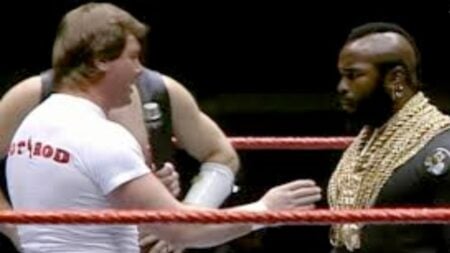
Roddy Piper and Ric Flair
Ric Flair and Roddy Piper, two of professional wrestling’s most magnetic and larger-than-life personalities, formed an unlikely yet electrifying alliance in the mid-1980s that transcended traditional tag team norms.
While primarily known for their legendary singles careers, their brief collaboration carved out a notable place in wrestling lore.
Flair, the charismatic “Nature Boy,” was the embodiment of technical wrestling excellence and flamboyant ring psychology.
Piper, on the other hand, brought raw intensity, sharp wit, and a rebellious attitude that captivated audiences. Together, they presented a formidable challenge to anyone in their path, combining Flair’s technical mastery and Piper’s unpredictable aggression.
Though their team-ups were sporadic and never centered around prolonged tag title runs, their combined star power elevated every feud and event they touched.
Their chemistry, both in promos and matches, made for compelling storytelling, often overshadowing traditional tag competition.
It was less about championships and more about moments of pure wrestling magic fueled by two of the business’s greatest mic men and performers, solidifying their legacy beyond their individual accolades.
Edge and Randy Orton – Rated RKO
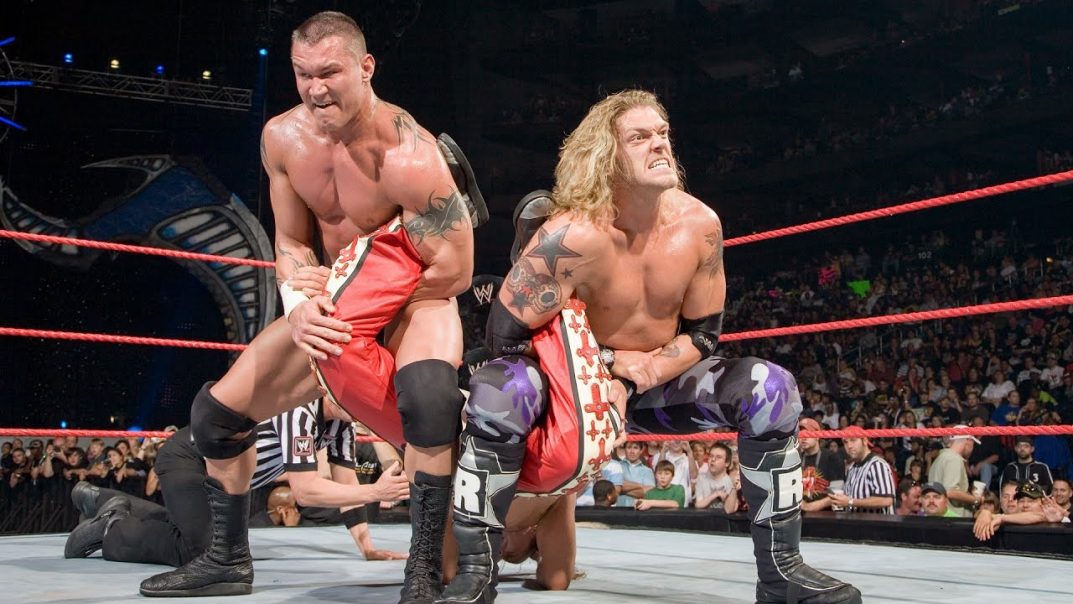
Rated-RKO formed at a time when both Edge and Randy Orton were climbing into full-time main event roles. Teaming them gave WWE a way to feed off mutual arrogance and shared resentment toward established legends.
They targeted Shawn Michaels and Triple H, effectively making their feud with DX the centerpiece of Raw for a stretch. In the ring, they blended Edge’s opportunistic brawling with Orton’s calculated pace and sudden strike offense.
Title runs and big TV matches cemented them as more than a storyline convenience. While both men ultimately became much bigger singles stars,
Rated-RKO is often cited as a turning point in Orton’s development and another example of Edge thriving in a tag environment after Edge & Christian’s earlier success.
The Rock and Mankind – The Rock n Sock Connection
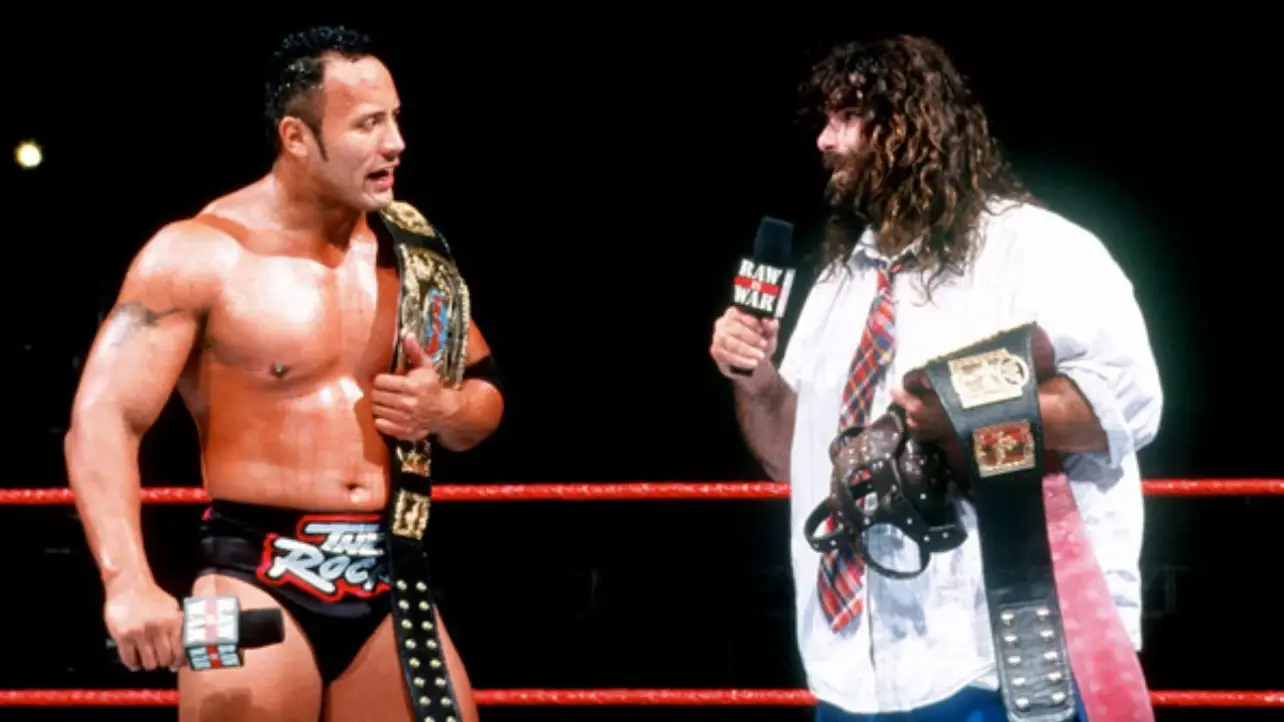
The Rock ‘n’ Sock Connection is one of the strangest and most successful odd-couple teams ever. The Rock was a surging main-event star; Mankind was the damaged, eccentric brawler desperate for connection.
Their backstage skits and in-ring banter got over just as much as their matches, but they also delivered when the bell rang, winning tag titles and working against top heel teams of the Attitude Era.
This pairing showed how character contrast can elevate both people: Rock’s cool arrogance was funnier next to Mankind’s earnest awkwardness, and Mankind’s vulnerability hit harder because someone that popular was constantly rolling his eyes at it.
They’re remembered as a comedy-leaning act, but in terms of pure crowd response, they belong in any serious discussion of influential late-90s teams.

AJ Styles and Chris Jericho – Y2AJ
“Y2AJ” was brief but memorable. When AJ Styles arrived in WWE after building a reputation in Japan and TNA, working with Chris Jericho gave him an instant measuring stick.
At first, they teamed out of grudging respect, putting on crisp TV matches that showcased AJ’s athleticism and Jericho’s veteran timing.
Fans quickly fantasy-booked them as potential long-term tag title anchors, but the story swerved into betrayal, with Jericho turning on AJ to set up a singles program.
Because of the short run, they won’t rank high historically as a pure tag team, yet their few matches together helped establish Styles as someone who could hang in WWE’s style while reinforcing Jericho’s ability to reinvent his character by playing jealous gatekeeper to the new guy.

Ultimate Warrior and Macho Man Randy Savage – The Ultimate Maniacs
When Ultimate Warrior and Randy Savage stood on the same side, it felt like a collision of two different brands of chaos.
Their most famous interactions are as rivals—especially the retirement match at WrestleMania VII—but there were periods where they aligned against common enemies, usually framed as uneasy alliances built on mutual intensity.
Warrior brought raw power and explosive bursts; Savage brought structure and storytelling within the match. As a team, they were never about long-term pursuits of the tag titles.
Instead, their value was in short, high-impact partnerships that raised the stakes of ongoing feuds. Historically, they’re remembered more for what they did against each other, but those brief alignments underlined how volatile both characters were, even with supposed allies.
Vader and Bam Bam Bigelow – Big Bad and Dangerous
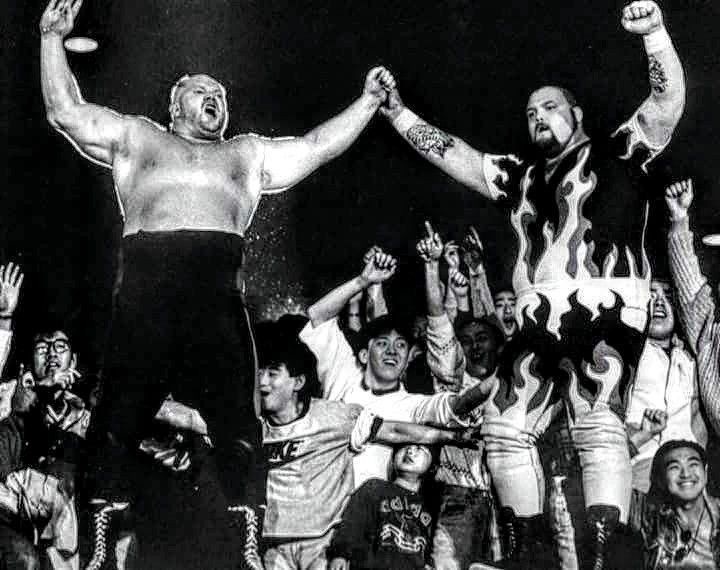
Vader and Bam Bam Bigelow teaming together felt unfair in the best way. Both men were super-heavyweights who could move like wrestlers half their size, known for moonsaults, top-rope splashes, and stiff strikes.
When promotions put them together, usually in Japan or WCW contexts, the selling point was simple: two monsters with no obvious weak link.
Their matches with other big-man teams or resilient babyface duos often turned into controlled chaos, with the drama centered on whether anyone could realistically withstand that much offense.
While they never had the sustained, decorated run of some classic tag units, the aura they projected as a combination is still talked about.
In the all-time rankings, they’re more cult favorites than consensus top-10, but they’re essential viewing for fans of heavyweight tag wrestling.

Scott Hall and Curt Hennig
Long before either man became best known for nWo shockwaves or Intercontinental singles runs, Scott Hall and Curt Hennig were a promising young team in the AWA.
They had the look promoters wanted—tall, athletic, clean-cut—and the fundamental skills to work longer, more methodical tags common to that era.
They captured the AWA World Tag Team Championship, using it as a launchpad: Hennig transitioned into a world title run, and Hall built the foundation for the persona he’d later refine as Razor Ramon.
Their time together is sometimes overshadowed by what they did separately, but as a duo, they represented that classic territory model where a strong tag run was the apprenticeship for future singles stardom.

Tommy Dreamer and Raven
Tommy Dreamer and Raven are defined far more by their rivalry than by any alliance, but that’s what made their occasional team-ups in ECW so compelling.
When they stood on the same side, it was usually as a temporary truce against a bigger threat, with the audience fully expecting it to fall apart.
Dreamer was the heart of ECW, bleeding and fighting through anything; Raven was the nihilistic mastermind tearing him down.
Any time they cooperated, the tension came from years of betrayal and mind games. They didn’t chase traditional tag team accolades.
Instead, their value as a pairing lies in storytelling—the idea that sometimes the bitterest enemies will unite for one match, and that the alliance itself is another weapon in their ongoing war.
Taken together, these teams show how flexible the tag concept can be. Some were built to stabilize divisions, some to elevate singles feuds, and others simply to create a moment where two stars shared the same corner.
Not all of them are top-ten all-time material purely as tag teams, but each pairing left a mark, either on a promotion’s storytelling or on the way fans think about what a super-team can be.