

On January 31st, 1999, Giant Baba passed away. Before he passed he had long created a legacy still talked about today.
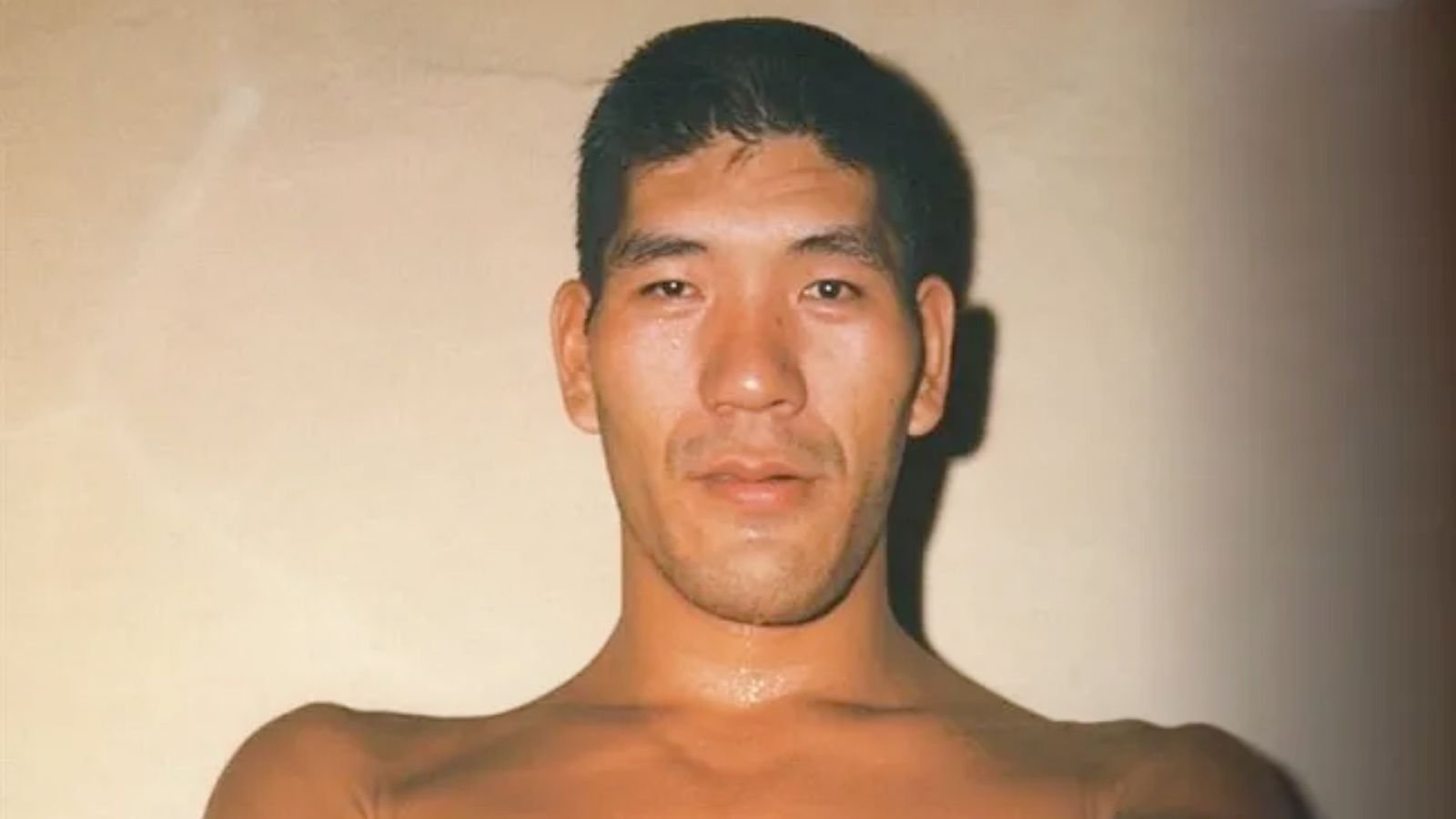
Shohei “Giant” Baba was born on January 23, 1938, in Sanjo, Niigata, standing out from childhood due to the gigantism that eventually took him to around 6’10”.
Before wrestling, he chased a very different dream: professional baseball. He signed with the Nankai Hawks as a pitcher in the 1950s, but issues including eye problems and uneven performance cut his career short, forcing him to rethink his future.
That setback led him to Rikidōzan, the father of Japanese pro wrestling. Baba entered the Japan Pro Wrestling Alliance (JWA) dojo and quickly became one of Rikidōzan’s most promising students alongside Antonio Inoki.
His sheer size, surprising mobility, and calm presence made him an immediate attraction in a country still rebuilding its spirit.
Giant Baba – A Rising Star in JWA
Baba debuted in 1960 and very quickly became a headline star, both in Japan and abroad. He worked for promoters such as Vincent J. McMahon Sr. in the United States.
He challenged NWA World Heavyweight Champion Buddy Rogers in the early 1960s, giving him valuable experience in the American territorial style that would later shape his booking.
In the Japan Pro Wrestling Alliance (JWA) he captured multiple major titles, including the All Asia Tag Team Championship three times and the NWA International Heavyweight Championship on three occasions.
He also won the World Big League tournament a record six times, cementing his status as a top singles ace on Rikidōzan’s old stage.
At his peak as an in-ring performer, opponents and peers praised him as more than just a giant; he was a skilled, dangerous main-eventer whose losses were rare and meaningful.
Success and Giant Baba Go Hand in Hand
Baba’s list of titles is lengthy and crucial to understanding his aura. In All Japan, he became synonymous with the PWF World Heavyweight Championship, holding it four times and serving as the promotion’s flagship singles champion throughout the 1970s.
He won the AJPW Champion Carnival a record seven times (1973, 1974, 1975, 1977, 1978, 1981, 1982), underscoring his status as the standard-bearer of the promotion.
Baba also captured the NWA World Heavyweight Championship three times, a rare honor for a Japanese wrestler in that era, which elevated both him and All Japan in the eyes of U.S. promoters and fans.
He also held the All Asia Heavyweight Championship once, plus multiple reigns with the NWA International Tag Team and other JWA-era belts.
These achievements, along with a streak of 3,000 consecutive matches from 1960 until a minor neck injury in 1984, built an image of a nearly tireless giant who would not miss a booking or let fans down.
Giant Baba’s in-ring peak came in the 1960s and 1970s, where he delivered surprisingly strong matches for a man his size, particularly against world-class technicians and foreign stars.
Some of his most notable rivalries and bouts include his NWA World Title matches against top American champions such as Jack Brisco and Dory Funk Jr., in which his victories reinforced the narrative that Japanese wrestling had reached global parity with the U.S. territories.
He took part in countless tag team matches alongside another Japanese icon in Jumbo Tsuruta. Together, the pair held the NWA International Tag Team Championship multiple times and defeated teams such as the Funk Brothers in 1975, making those belts effectively an AJPW property.
A long series of matches with The Destroyer, Bruiser Brody, Abdullah the Butcher, and Stan Hansen, which mixed spectacle and stiff physicality and helped define the AJPW “King’s Road” atmosphere before the Misawa era fully crystallized it.
While his mobility declined in later years due to the effects of gigantism, Baba remained a special-attraction worker, often opening with younger wrestlers well into the 1990s, giving fans a chance to see their beloved icon live on every tour.
Baba’s list of titles is lengthy and crucial to understanding his aura. In All Japan, he became synonymous with the PWF World Heavyweight Championship, holding it four times and anchoring the promotion as its flagship singles champion throughout the 1970s.
He also won the AJPW Champion Carnival a record seven times (1973, 1974, 1975, 1977, 1978, 1981, 1982), underscoring his status as the standard-bearer of the promotion.
Baba captured the NWA World Heavyweight Championship three times, a rare honor for a Japanese wrestler in that era, which elevated both him and All Japan in the eyes of U.S. promoters and fans.
His in-ring success included holding the All Asia Heavyweight Championship once, plus multiple reigns with the NWA International Tag Team and other JWA-era belts.
These achievements, along with a streak of 3,000 consecutive matches from 1960 until a minor neck injury in 1984, built an image of a nearly tireless giant who would not miss a booking or let fans down.
Giant Baba – The Booker, his clean finishes, long story arcs, and his Gaijin Loyalty
Many historians now regard Giant Baba as one of wrestling’s greatest bookers and promoters. He took significant inspiration from U.S. territories, but adapted those ideas to the Japanese context:
Baba insisted that big matches have decisive conclusions rather than constant disqualifications or overbooking, which gave AJPW bouts a reputation for sporting credibility and emotional payoff.
He patiently built stars such as Jumbo Tsuruta, Genichiro Tenryu, and later Mitsuharu Misawa, Toshiaki Kawada, and Kenta Kobashi, often having them lose key matches before finally breaking through, making their eventual triumphs feel earned.
Baba had a keen eye for foreign talent and was known for treating them exceptionally well—fair pay, decent hotels, and clear communication, earning undying loyalty from names like Dory and Terry Funk, Bruiser Brody, Stan Hansen, and many others.

Founding All Japan Pro Wrestling
By the early 1970s, JWA was crumbling under political and financial strain. Inoki attempted a hostile takeover and was fired; Baba chose a quieter path, simply declining to renew his contract in 1972.
Later that year, together with Rikidōzan’s sons Mitsuo and Yoshihiro Momota, he founded All Japan Pro Wrestling (AJPW), which ran its first show in October 1972.
For the first decade of AJPW, Giant Baba was everything: top star, booker, promoter, head trainer, talent scout, and company president.
He set a nationwide touring schedule of roughly eight tours per year and kept that pace for his entire tenure as owner, turning All Japan into a fixture in Japanese sports culture.
Baba’s relationships with his wrestlers were central to AJPW’s stability. He was known for “Handshake deals.”
These deals were used over paper contracts: A handshake from Baba meant more than a signed contract elsewhere; he was renowned for reliably paying talent and honoring agreed-upon finishes.
His first major student in All Japan was Jumbo Tsuruta, whom he groomed as his successor in the 1970s and early 1980s.
He also had a close, almost father-son relationship with Atsushi Onita, giving him chances and support beyond what many promoters would risk.
Despite a long-standing rivalry with New Japan, Baba did at times cooperate with Antonio Inoki’s side and respected the boundary between the promotions, seeing the value in competition and occasional collaboration.
His reputation for honesty and his willingness to treat wrestlers the way he believed they should be treated, based on his own experience in the ring, created a culture of loyalty.
Billy Robinson’s remarks before Baba’s 3,000th match double as a powerful testimonial: he emphasized that most big men in sports have short careers, but Baba combined size with technique, knowledge, and ability, earning respect “around the world, in all the countries that have pro wrestling.”
“Well, I gotta say first firstly, Baba has proven himself to be one of the leading wrestlers in the world, in any style, which is amazing, firstly, just because of his size. Most big men in sports…last a very short while.”
“Baba is a different man, he’s a man who has got a lot of technique, he’s got a lot of knowledge, a tremendous amount of ability and has the respect of not just myself, but my peers, around the world, in all the countries that have pro wrestling.”
– Billy Robinson on Giant Baba
Late Years, Tokyo Dome, and Passing
Even as younger stars like Misawa, Kawada, and Kobashi took over the main-event scene in the 1990s, Baba stayed on the road.
He wrestled regularly in undercard tags and maintained the grueling tour schedule he’d established, showing up in arenas nationwide as the face of All Japan.
In 1998, after years of hesitation, he finally agreed to run the Tokyo Dome on May 1. Despite All Japan having passed its absolute peak, the company still drew over 58,000 paying fans, a testament to its brand and to Baba’s long-term booking approach. It would be one of the last major milestones of his life.
Giant Baba died on January 31, 1999, after battling cancer, leaving behind a company that—at least initially—seemed stable under the leadership structure he left in place.
Within a year, however, internal political conflicts would lead Mitsuharu Misawa and most of the roster to leave AJPW and form Pro Wrestling NOAH, a split that underlined just how irreplaceable Baba’s balancing presence had been.

Legacy: Why Giant Baba Still Towers Over Wrestling
As a pioneering giant who could actually wrestle, Giant Baba doesn’t just stand as a spectacle, delivering strong matches before his body slowed.
As a foundational architect of the “King’s Road” style, whose emphasis on clean finishes, escalating drama, and long-term storytelling influenced entire generations of wrestlers and bookers.
As one of the most honest and respected promoters in an industry notorious for the opposite, where a handshake from him carried extraordinary weight.
As a cultural figure in Japan, a national hero whose popularity has been compared to Hulk Hogan’s in the U.S., and whose image still evokes nostalgia and respect.
In the land of mortals, as one writer put it, Baba “stands tall over all others,” not just because of his height, but because of the decades he spent wrestling, bleeding, mentoring, and promoting at the highest level.
His life and times form a through-line from Rikidōzan’s pioneering days to the golden age of All Japan, and even now, modern promoters and wrestlers continue to echo his lessons on trust, patience, and giving fans a finish they will never forget.