
20 Tag Teams That Defined the 1980s Professional Wrestling proved how much the foundation of collaboration and teamwork was a key to a wrestler’s success.
The 1980s were the golden age of tag team wrestling, an era when the squared circle wasn’t ruled by one man alone, but by duos who blended power, precision, and personality.
Across the globe — from the WWF and NWA in North America to the AWA, WCCW, and Japan’s AJPW and NJPW, tag teams were drawing houses, headlining cards, and defining the sport’s spectacle. They were larger-than-life, balancing charisma and chaos as they wrestled with skill and showmanship.
The following twenty teams didn’t just win gold — they changed the game. From the brute dominance of The Road Warriors to the technical excellence of The British Bulldogs, the flamboyance of The Rock ‘n’ Roll Express, and the unrelenting intensity of The Miracle Violence Connection, these tandems left a legacy still echoed in every modern pairing.

20 Tag Teams That Defined The 1980s
#20 The Fantastics: NWA/WCW’s High-Flying Underdogs of the 1980s
Bobby Fulton and Tommy Rogers were a high-flying tag team that consistently punched above their weight in the NWA and early WCW during the 1980s.
Debuting together in 1984, they specialized in crisp, athletic matches that showcased double-team moves, top-rope dives, and fast-paced action.
Positioned as reliable upper-midcard challengers, they rarely held world tag titles. Still, they frequently headlined B-shows and TV tapings, drawing strong reactions from crowds that appreciated their work rate over power brawling.
In Mid-South Wrestling (1984), they feuded intensely with the Midnight Express (Dennis Condrey and Bobby Eaton), trading UWF Tag Team Championships and establishing themselves as credible heels-turned-babyfaces.
Their NWA Jim Crockett Promotions run (1988-1989) was the peak of the Fantastics. They debuted by defeating the Midnight Express (Eaton and Stan Lane) for the NWA United States Tag Team Championship on April 26, 1988, in Chattanooga, and held it for nearly three months. They challenged for the NWA World Tag Team Titles against Doom but came up short.

#19 The Fabulous Ones: Territory Era’s Glitzy High-Flyers
The Fabulous Ones Stan Lane and Steve Keirn dominated Southern territories in the 1980s, particularly CWF, Florida Championship Wrestling, and Continental Wrestling Association (CWA).
Positioned as flamboyant upper-midcard heels with sequined robes and flashy entrances, they headlined TV and B-shows with crisp athleticism, double dropkicks, and aerial work.
Managed by Jimmy Hart, they won CWA Southern Tag Team Championship (multiple reigns), NWA Southeast Tag Team Titles, and feuded with Rock ‘n’ Roll Express (Ricky Morton & Robert Gibson), Midnight Rockers precursors, and Mid-South’s Fantastics.
Keirn’s “Flyin'” moniker and Lane’s power complemented each other to create magic. The tandem split in the late 1980s, with Lane joining Bobby Eaton in the Midnight Express and Keirn joining the WWF.

#18 The Killer Bees: WWF’s Masked Midcard Workhorses
B. Brian Blair and “Jumpin'” Jim Brunzell were a high-energy tag team in the WWF from 1985 to 1988.
Positioned as reliable upper-midcard babyfaces, they main-evented TV tapings and B-shows with their “Masked Confusion” gimmick, switching identical yellow-and-black masks to baffle opponents and refs. Debuting in June 1985 (Hogan’s suggestion), they never won tag gold but drew consistent pops.
Key feuds: Hart Foundation (Bret Hart & Jim Neidhart), Funk Brothers (Terry & Hoss Funk, Jimmy Jack), Demolition, Rougeau Brothers, and Islanders.
Their Survivor Series 1987 win and WrestleMania III showcase elevated them, though losses to top heels kept them as challengers. The duo split quietly in 1988.

#17 The Fabulous Rougeau Brothers: WWF’s “All American” Canadian Boys
Rougeau Brothers, Jacques and Raymond Rougeau, were a polished, technical tag team in the WWF during the late 1980s.
Sons of Quebec legend Jacques Rougeau Sr., they debuted as babyfaces in 1986, positioning as upper-midcard contenders with crisp double-team moves and French flair.
Managed briefly by Jimmy ‘the Mouth of the South’ Hart, they feuded with the Killer Bees (B. Brian Blair & Jim Brunzell), Young Stallions (Paul Roma & Jim Powers), and Demolition, challenging for the WWF Tag Team Championship without winning it.
Their promos mocked American fans with “O Canada” sing-alongs and bilingual taunts, generating solid heat.
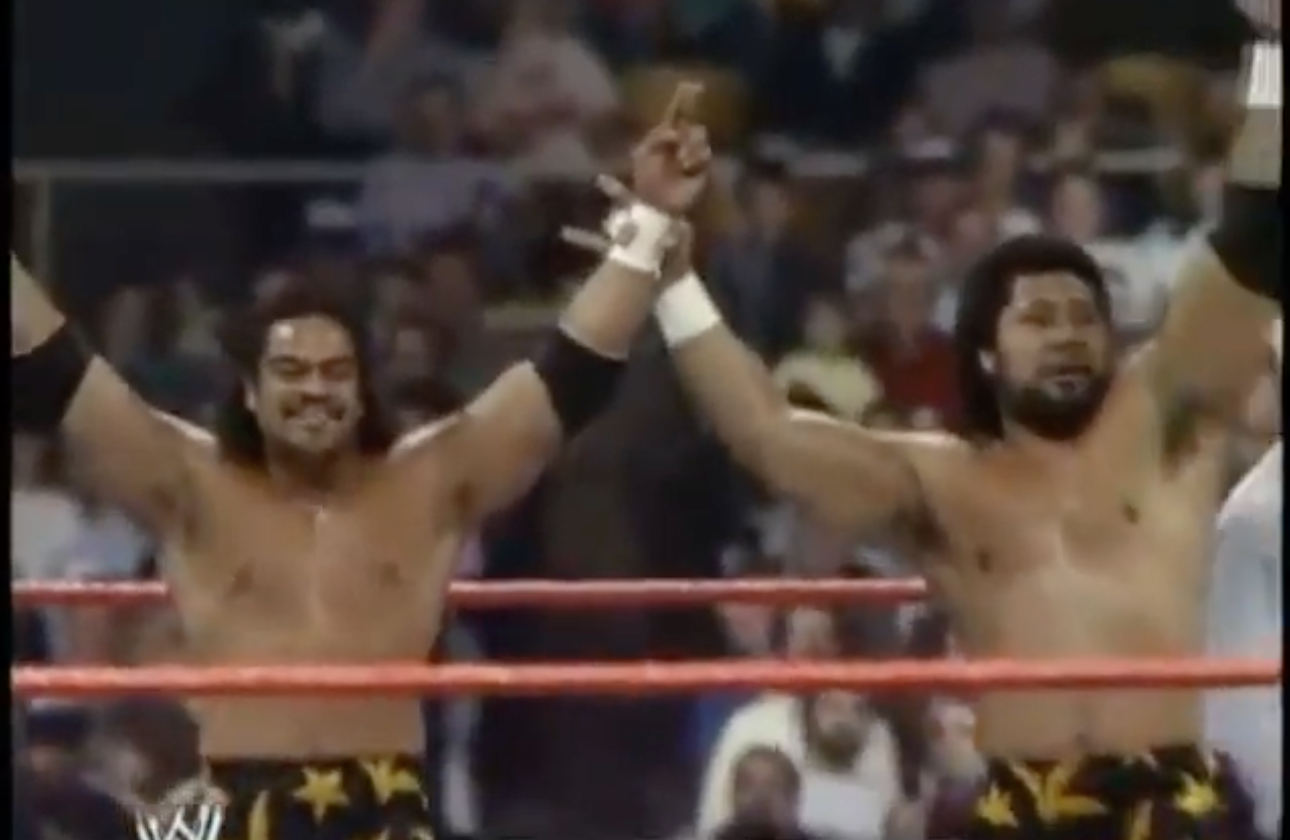
#16 The Islanders WWF’s Wild Island Descendant Brawlers
Haku (Tonga Fifita) and Tama (Sam Fatu) debuted in the WWF in 1986 as a rough-and-tumble heel tag team managed by Bobby Heenan.
Positioned as lower-to-midcard enforcers, they main-evented TV tapings and undercards with stiff strikes, headbutts, and double-team splashes, billed from the South Pacific.
Initially, they faced (with Tonga Kid), they turned heel, feuding with the British Bulldogs (kidnapping mascot Matilda), Strike Force, Killer Bees, Rougeau Brothers, and U.S. Express. High Chief Siva Afi joined briefly in 1988. Never won tag gold, disbanded in 1988 as Tama left.

#15 The Rockers/Midnight Rockers: WWF’s High-Flying Tag Revolutionaries
Shawn Michaels and Marty Jannetty (Midnight Rockers pre-WWF)—debuted in the WWF in 1988 as upper-midcard babyfaces known for athleticism, double-team innovation, and rock ‘n’ roll flash.
Famous for a “phantom” WWF Tag Title win over the Hart Foundation (October 1990, unaired footage destroyed), they never officially held gold but main-evented TV and challenged top teams.
Their key feuds included those with the Hart Foundation (title “win” although never acknowledged), the Brain Busters (Arn Anderson & Tully Blanchard), the Orient Express (Pat Tanaka & Sato/Diamond), and Demolition.
The tandem split violently in January 1992 with Shawn Michaels superkicking Marty Jannetty through Brutus Beefcake’s Barber Shop window. This became the launching pad for the Heartbreak Kid’s singles stardom

#14 The Iron Sheik & Nikolai Volkoff: WWF’s Foreign Heel Powerhouse Duo
The Iron Sheik (Khosrow Vaziri) and Nikolai Volkoff (Josip Peruzović) teamed up as one of the WWF’s most effective foreign heel tag acts in the mid-1980s.
Managed by “Classy” Freddie Blassie, they portrayed themselves as Iranian and Soviet villains waving their flags, with Volkoff singing the Soviet anthem to massive boos before Sheik spat, “USA #1… hackptui!” They were upper-midcard staples, main-eventing B-shows and TV tapings underneath world title programs.
Debuting as a unit in late 1984, they won the WWF Tag Team Championship from the U.S. Express (Barry Windham & Mike Rotunda) at WrestleMania I (March 31, 1985), holding for six weeks before dropping it back at Saturday Night’s Main Event.
Their heat was nuclear—perfect foils for Hulkamania’s rise. Among all-time greats, they rank among the top 50-75 tag teams for heat generation and cultural impact. Still, WrestleMania I gold cements their legacy.

#13 The Dream Team: WWF’s Midcard Heel Powerhouse
The Dream Team—Greg “The Hammer” Valentine and Brutus “The Barber” Beefcake—formed in the WWF in 1985 under manager “Luscious” Johnny V (originally with Jimmy Hart).
The duo was positioned as upper-midcard heels; they main-evented B-shows and TV, blending Valentine’s technical brutality with Beefcake’s showmanship below Hogan/Hennig world title programs.
They won the WWF Tag Team Championship from the U.S. Express (Barry Windham & Mike Rotunda) on August 24, 1985, at The Spectrum, and held it for 7 months before losing it to the British Bulldogs at WrestleMania 2.
Their key feuds included U.S. Express rematches, British Bulldogs (infamous plane-spot loss), Rougeau Brothers (WrestleMania III win via Dino Bravo interference), and six-man tags with Dino Bravo. Tension led to Beefcake’s face turn after WrestleMania III.
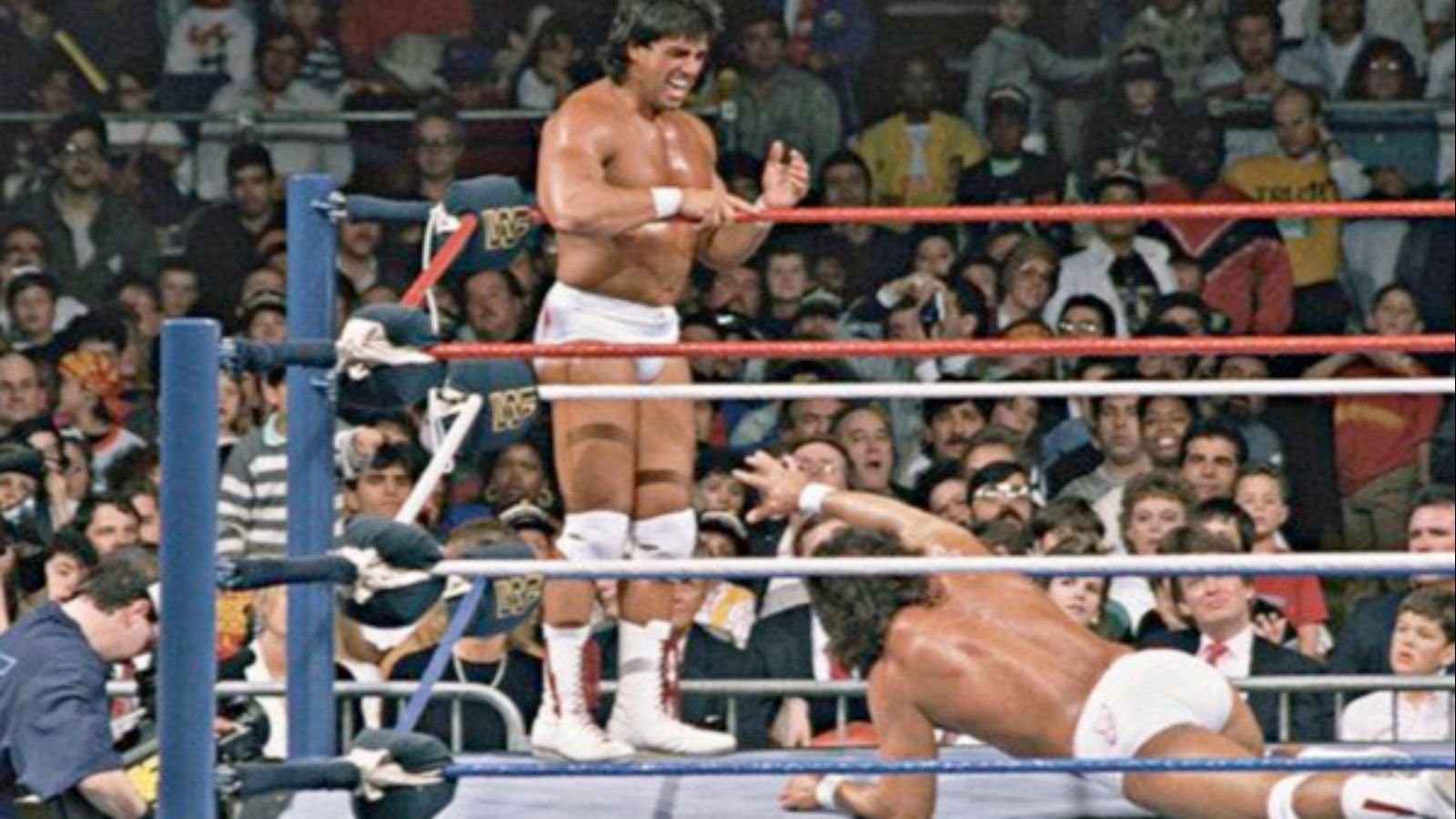
#12. The Can-Am Connection & Strike Force: Martel’s Dual WWF Tag Runs
Rick Martel teamed with Tom Zenk as the Can-Am Connection (1985-1987), debuting as athletic upper-midcard babyfaces with bodybuilder physiques and synchronized high spots.
Managed briefly by Slick, they challenged for the WWF Tag gold but split after Zenk’s departure. Martel then paired with Tito Santana as Strike Force (1987-1989), repositioned as top babyfaces main-eventing B-shows and TV.
They won the WWF Tag Team Championship from The Hart Foundation on October 27, 1987 (Saturday Night’s Main Event), holding the titles for 231 days before Demolition ended their reign at WrestleMania V.
Their most notable feuds included one against Demolition (title loss), the Hart Foundation (title win), the Bolsheviks, and the Islanders.
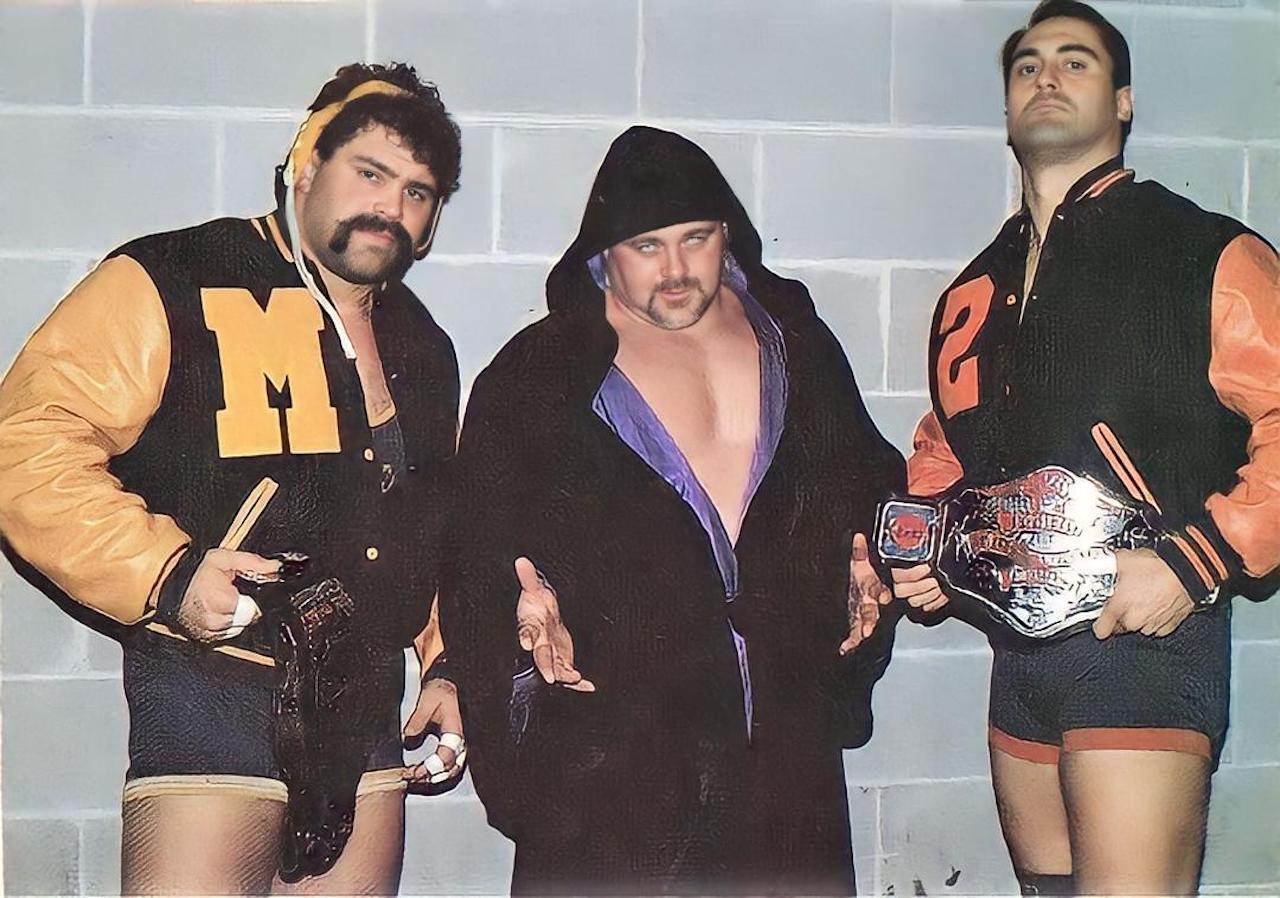
#11 The Varsity Club: NWA/WCW’s Collegiate Heel Stable
Mike Rotunda, Kevin Sullivan, and Rick Steiner (core members, with Steve Williams and Steve Keirn rotating)—debuted in NWA/WCW in 1988 as a fraternity-themed heel faction managed by Kevin Sullivan.
They were positioned as upper-midcard to main-event heels, they main-evented TV and B-shows with brawling and power offense, preaching “varsity pride.”
Rotunda and Steiner won the NWA United States Tag Team Championship (May 1989, holding them for three months). They feuded with the Midnight Express (Bobby Eaton & Stan Lane), the Fabulous Freebirds (Michael Hayes & Jimmy Garvin), and the Southern Boys (Tracy Smothers & Steve Armstrong). Sullivan’s unhinged leadership added chaos. Disbanded late 1989.

#10 Miracle Violence Connection: AJPW’s Brutal Tag Destroyers
“Dr. Death” Steve Williams and Terry “Bam Bam” Gordy teamed in All Japan Pro Wrestling (AJPW) from 1990 to 1993 as main-event heels.
These powerhouse brawlers with stiff strikes and suplexes headlined tours and Real World Tag League tournaments, winning the AJPW World Tag Team Championship five times (1990-1993).
They briefly competed in the 1987 Crockett run and the 1992 WCW stint (winning the WCW Tag Team titles from the Steiners), following AJPW dominance. Feuds: Jumbo Tsuruta/Great Kabuki, Steiners (hyped cross-promotion), Misawa/Kawada, Hansen/Spivey. The duo captured the Tag League titles in 1990 & 1991.

#9 The Von Erichs: WCCW’s Family Tag Powerhouse
The Von Erichs—primarily Kevin, Kerry, David, and Mike (rotating with Chris)—dominated World Class Championship Wrestling (WCCW) in the 1980s as main-event babyfaces.
Patriarch Fritz Von Erich promoted them as Texas heroes, headlining arenas with athleticism, discus punches (Kerry’s specialty), and family drama.
They held the NWA American Tag Team Championship (Kevin/Kerry multiple reigns) and Texas Six-Man Tag titles, feuding viciously with Fabulous Freebirds (Michael Hayes, Terry Gordy, Buddy Roberts) in steel cage wars and Freebirds Rule angles.

#8 Tully Blanchard & Arn Anderson: NWA’s Brainbuster Tag Specialists
Tully Blanchard and Arn Anderson teamed primarily in NWA (Jim Crockett Promotions, 1987-1988) as upper-midcard/main-event heels within the Four Horsemen.
They were known for technical precision, slingshot suplexes, and dirty tactics. They won the NWA World Tag Team Championship twice—first from the Rock ‘n’ Roll Express (Sept. 1987), defending against the Road Warriors at Starrcade ’87; second from Sting/Nikita Koloff (April 1988).
As the WWF’s Brain Busters (1988-1989, managed by Bobby Heenan), they beat Demolition for WWF Tag gold (Aug. 1988, ~3 months).
Their most notable feuds included those with Midnight Express (Crockett Cup finals), the Road Warriors, the Fantastics, and U.S. Express. Jumped to the WWF together.
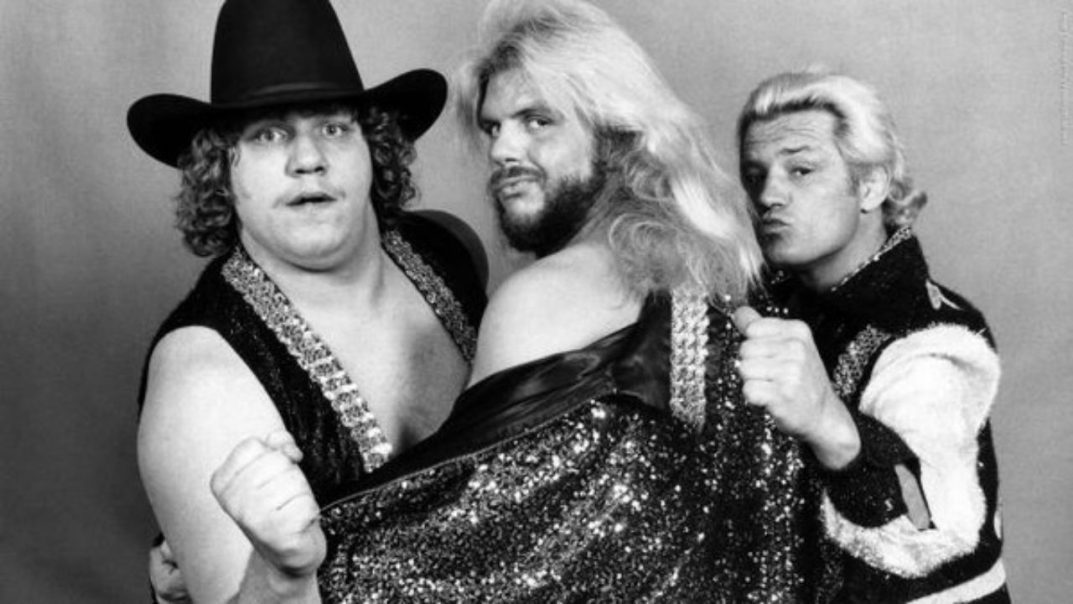
#7 Fabulous Freebirds: 1980s Territory Kings
The Fabulous Freebirds—Michael “P.S.” Hayes (leader), Terry “Bam Bam” Gordy (powerhouse), and Buddy “Jack” Roberts—formed in 1979 in Mid-South Wrestling as a groundbreaking three-man tag team.
They were upper-midcard/main-event heels across territories (Mid-South, Georgia Championship Wrestling, WCCW).
They headlined with rock ‘n’ roll flash, brawling, and the “Freebird Rule” allowing any two of the three members to defend the titles.
They won the NWA National, Georgia, Mid-South, and WCCW Six-Man/American Tag Championships multiple times.
Their signature feuds were against the likes of the Von Erichs (WCCW cage wars), Rock ‘n’ Roll Express (GCW), and Mid-South Horsemen precursors.
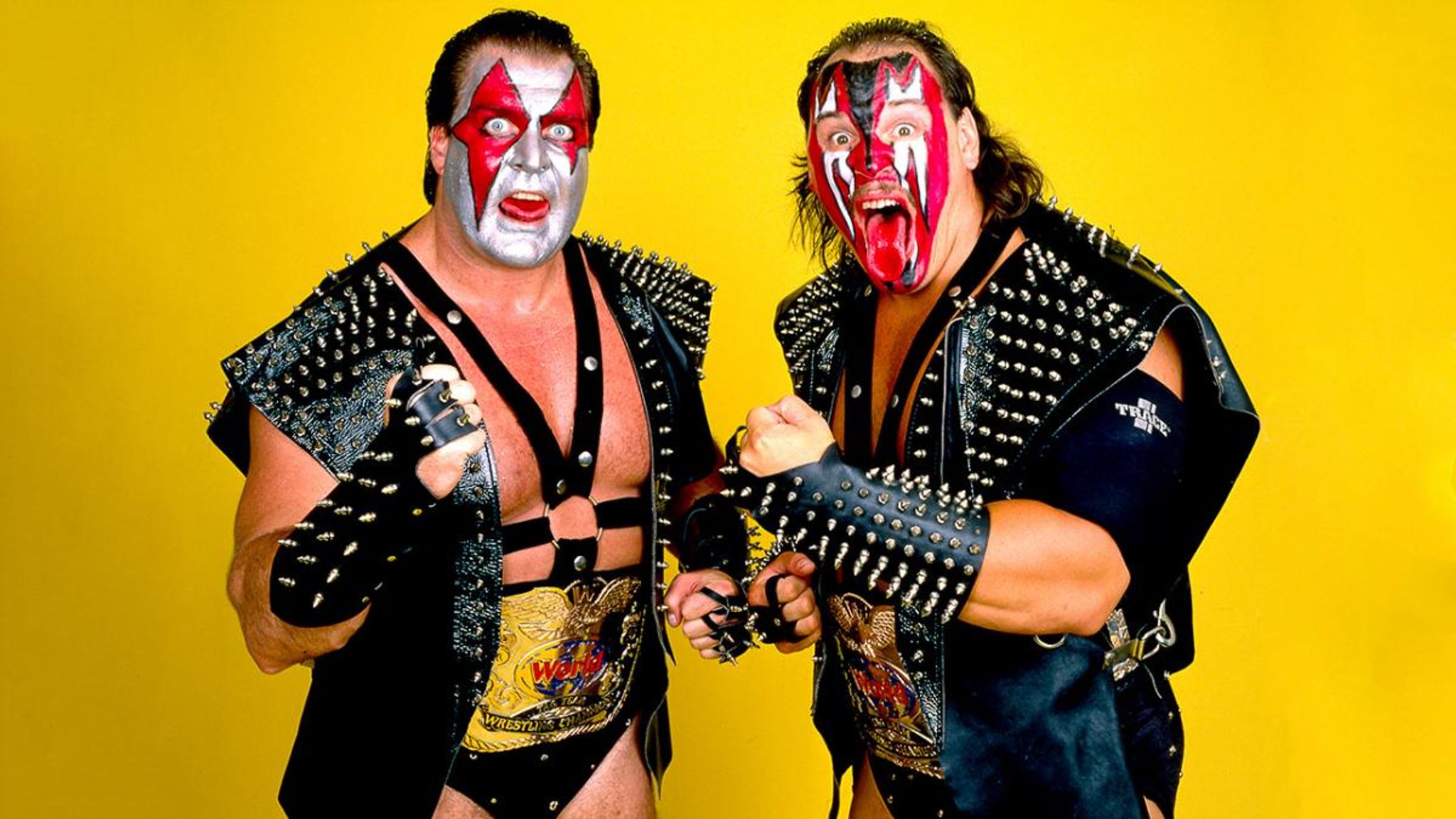
#6 Demolition: WWF’s Dominant Painted Destroyers
Ax (Bill Eadie) and Smash (Barry Darsow, replacing original Randy “Moondog Rex” Colley)—debuted in the WWF in January 1987 as upper-midcard/main-event heels managed by Johnny V (later Mr. Fuji).
Face-painted Mad Max warriors with studded leather, they headlined TV and B-shows with power offense and double-team slams.
They won the WWF Tag Team Championship three times: WrestleMania IV (vs. Strike Force, 478 days—former record), SummerSlam 1989 (vs. Hart Foundation), and 1990 (Smash/Crush vs. Rockers).
In later years, they added Crush (Brian Adams) in 1990. Their feuds included those with the Hart Foundation, Rockers, Legion of Doom, Bolsheviks, and the Powers of Pain. They held the WWF tag team championships for a then-record 666 combined days as champions.
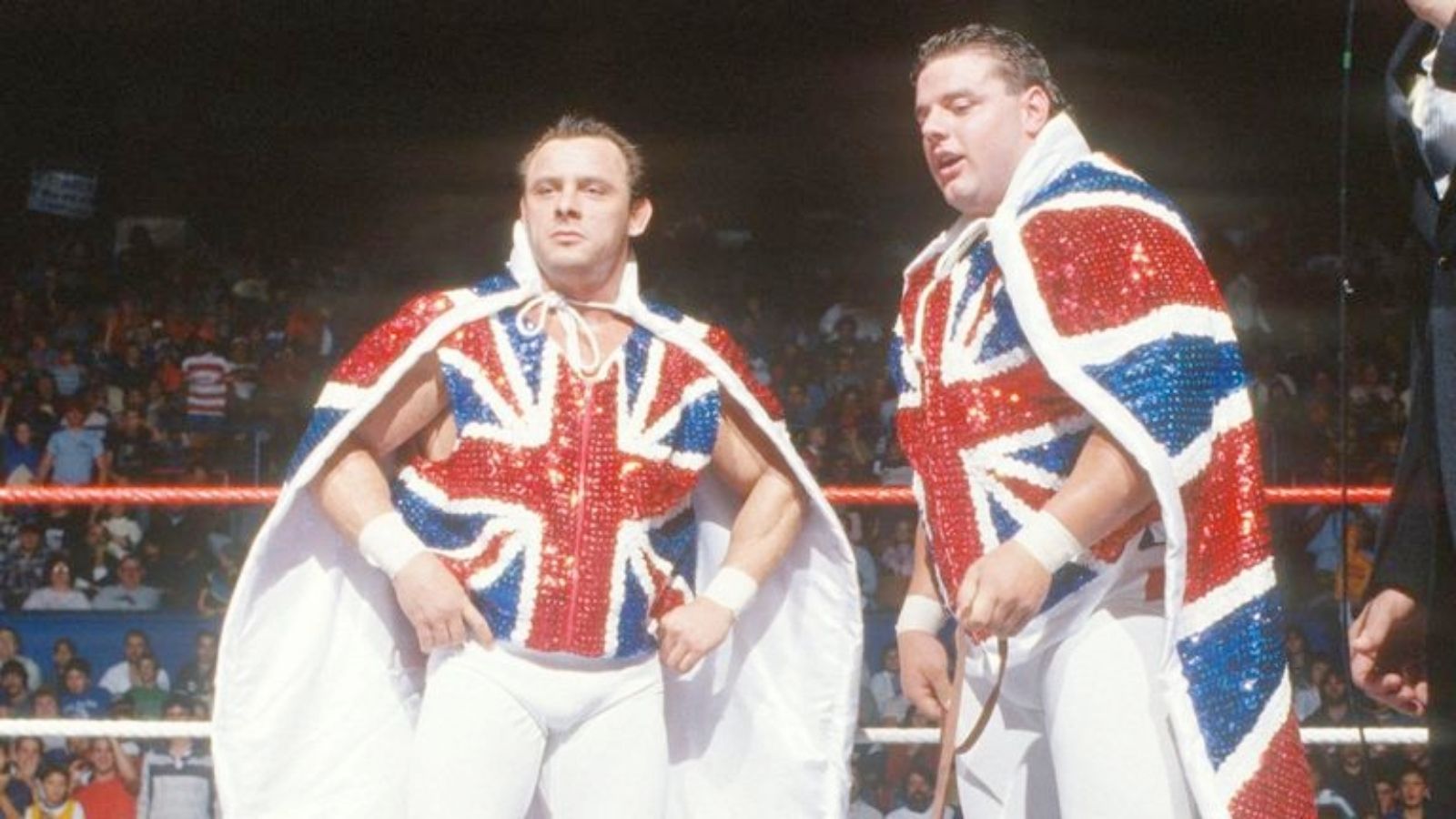
#5. The British Bulldogs (Davey Boy Smith & Dynamite Kid) WWF’s Powerhouse Imports
The perfect blend of speed, strength, and skill, The British Bulldogs captured the imagination of fans on both sides of the Atlantic.
Trained in Stu Hart’s Dungeon and refined in New Japan, Davey Boy Smith’s powerhouse athleticism paired perfectly with Dynamite Kid’s technical ferocity.
At WrestleMania II, the WWF captured the Tag Team Championships, defeating The Dream Team in a bout that showcased their revolutionary precision. Dynamite once said, “We wanted every match to feel real — if you didn’t believe it, we’d make you believe it.”
Their influence on later teams like The Hardys and The Young Bucks is undeniable. Even after their split, their Stampede roots and international success made them pioneers in bringing the Japanese strong-style influence to Western audiences.

#4. The Hart Foundation (Bret “Hitman” Hart & Jim “The Anvil” Neidhart) – WWF’s Precision Heel Powerhouse
The pink-and-black attack was one of the WWF’s most balanced duos. Bret Hart’s technical genius and Jim Neidhart’s brute power created a chemistry that elevated every opponent. Under Jimmy Hart’s management, they won the WWF Tag Team Titles twice and headlined arenas across the world.
Bret later reflected, “Tag wrestling taught me timing, teamwork, and patience. The Hart Foundation was my classroom.”
Their precision double-teams, such as the Hart Attack, became a blueprint for tag efficiency. Their matches with The British Bulldogs and The Brain Busters showcased how WWF tag wrestling could rival any main event.
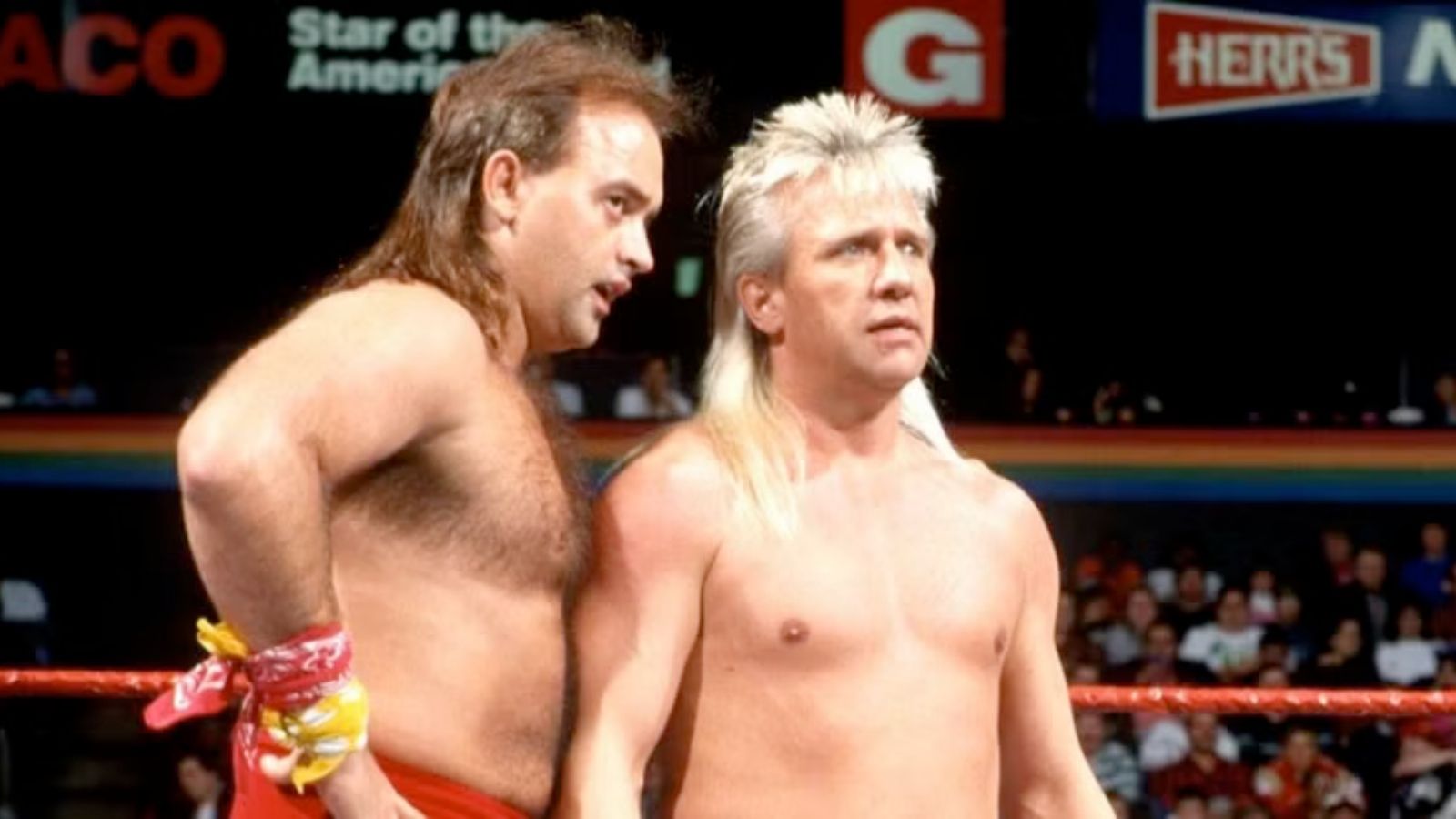
#3. Rock ‘n’ Roll Express: Territory Era’s Glam Babyface Icons
The Rock ‘n’ Roll Express—Ricky Morton and Robert Gibson—dominated Mid-South, CWA, and NWA Jim Crockett Promotions in the 1980s as main-event babyfaces. Long-haired rockers with synchronized high-flying (Morton drops, Gibson finishes), they headlined arenas, drawing massive pops.
Together, they won the NWA World Tag Team Championship four times (1985-1987) and the CWA Southern Tags multiple times.
Their most notable feuds included those with Midnight Express (Bobby Eaton/Dennis Condrey, Crockett Cup finals), the Fabulous Freebirds, the Fantastics, and the Horsemen precursors.
Morton’s “bleed” selling created sympathy; Gibson’s resilience sealed comebacks, and together they won nearly 50 career-long tag team championships.
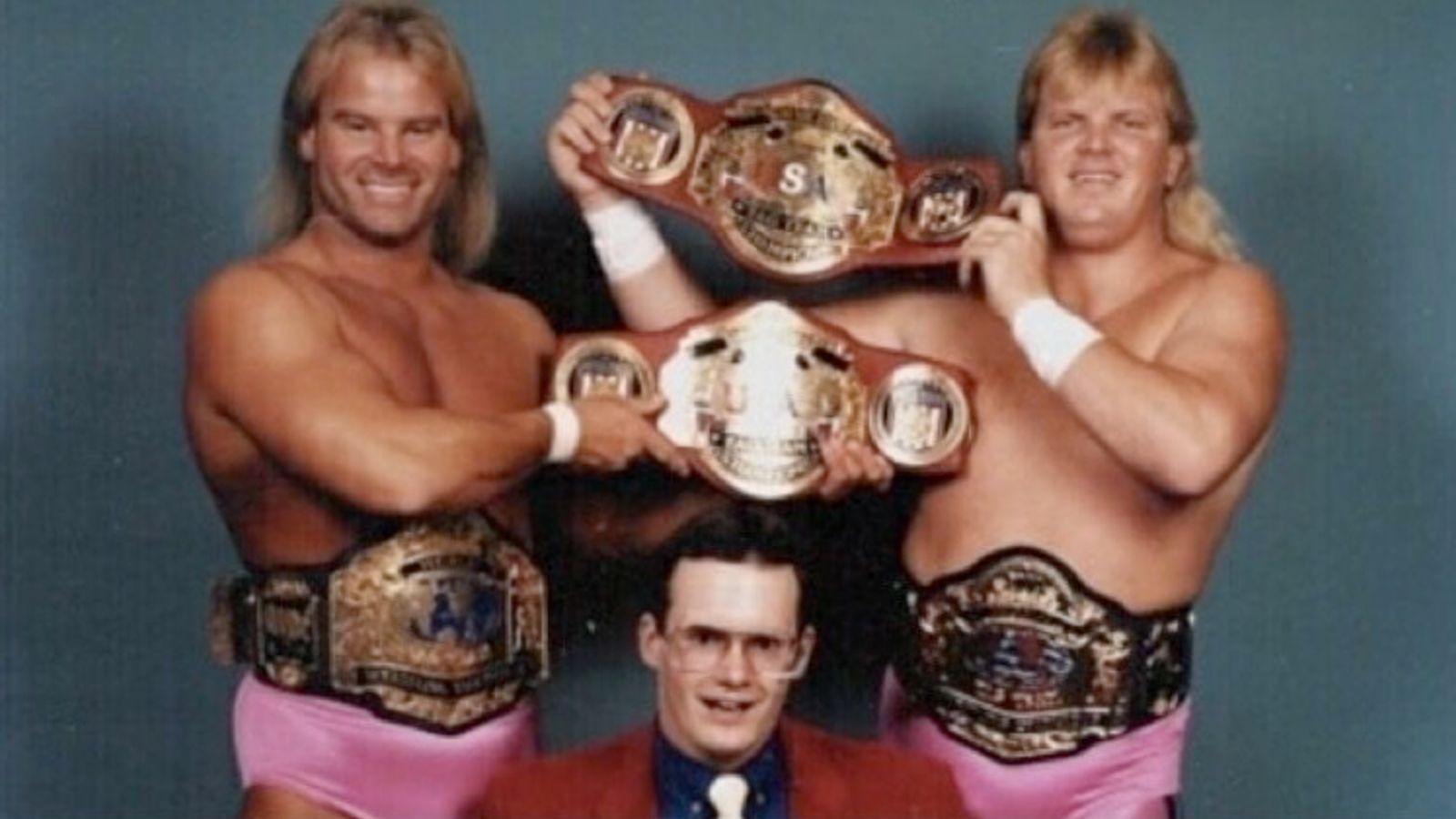
#2. The Midnight Express: NWA’s Technical Heel Perfection
The Midnight Express—primarily Dennis Condrey & Bobby Eaton (1983-1987), later Stan Lane & Eaton (1987-1990), managed by Jim Cornette—dominated NWA territories as main-event heels.
Precision technicians with dirty tactics and Cornette’s racket interference, they headlined TV/PPVs. Won AWA Southern, Mid-South, and NWA US/World Tag Championships multiple times.
Their key feuds included ones with the Rock ‘n’ Roll Express (Crockett Cup finals), The Fantastics, Road Warriors (Starrcade ’87), and the Four Horsemen.
Condrey/Rose/Norvell Austin versions of the group from 1980-1983 pioneered the stable, before Eaton and Lane remained a group until the group’s end.
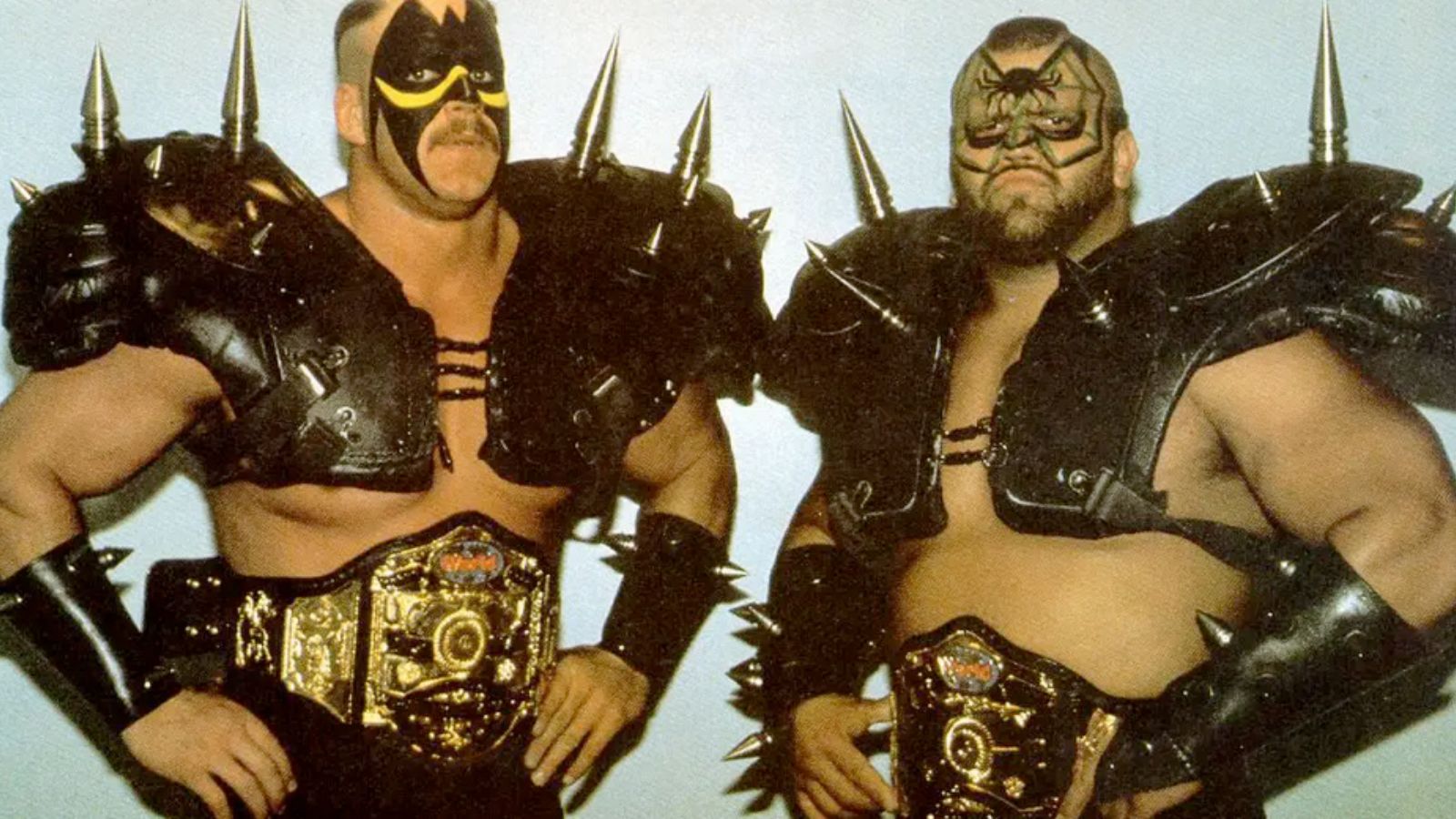
#1. The Road Warriors (Animal & Hawk): The 1980s Tag Team Destroyers
No tag team of the 1980s commanded fear like The Road Warriors. Bursting out of Georgia Championship Wrestling and later the NWA, Animal and Hawk brought a post-apocalyptic power that redefined what dominance looked like.
Managed by “Precious” Paul Ellering, they smashed through Japan, the AWA, and Jim Crockett Promotions, collecting gold everywhere they went.
Their Doomsday Device became an instant classic, and their look — spiked shoulder pads and war paint — became iconic. Hawk once said, “We weren’t just wrestlers — we were destroyers. You either feared us or got flattened by us.”
Their crossover success in Japan, especially under All Japan Pro Wrestling, made them global megastars. The Legion of Doom proved that tag teams could headline just as effectively as singles stars.
The 1980s tag scene was a perfect storm of character, competition, and creativity. Teams weren’t just side attractions — they were main event draws, shaping how fans viewed partnership, loyalty, and betrayal.
Whether it was The Road Warriors’ intimidation, The Bulldogs’ technique, or The Freebirds’ showmanship, each duo defined their era’s flavor.
By decade’s end, tag team wrestling had crossed continents, bridged styles, and birthed legacies that remain alive in every synchronized suplex or double-team finisher today. The tandem titans of the 1980s didn’t just wrestle — they built the foundation upon which modern tag team excellence still stands.