
The 1970s were the decade when tag team wrestling evolved from a colorful diversion into one of the sport’s defining attractions.
Across the National Wrestling Alliance territories, the American Wrestling Association, the World Wide Wrestling Federation, and the powerful Japanese circuits of AJPW and NJPW, duos became drawing cards equal to top singles champions.
Powerhouses, technicians, and regional icons all left their mark, creating an era of creative double-team artistry, wild brawls, and old-school psychology.
From the heated arenas of Memphis to Tokyo’s Korakuen Hall, tag team wrestling in the ’70s stood as a bridge between the golden age of heroes and the modern spectacle of global wrestling.
These are twenty teams who embodied dominance, innovation, and charisma—the tandems that defined professional wrestling’s most formative decade. These are 20 tag teams that defined 1970s professional wrestling.
20 Tag Teams That Defined 1970s Professional Wrestling

#20. The Sheik & Abdullah the Butcher
The very mention of these names evoked mayhem. As partners or rivals in Japan, they redefined violence. Their AJPW bouts left rings soaked in blood and audiences spellbound.
The duo’s presence in Japan during the early ’70s created an aura that drew record attendance. Their tag battles with the Funks and Destroyer-Baba pairing remain among the most chaotic spectacles of the decade.
This ferocious and violent team never held titles, but were perennial All Japan Pro Wrestling headliners.

#19. Ricky Steamboat & Jay Youngblood
In the late ’70s, this youthful NWA pairing breathed new life into tag wrestling. Their speed, athleticism, and chemistry made them sensations in the Mid-Atlantic region.
“We were brothers without blood,” Steamboat said.
Their feuds with the Andersons and Slaughter & Kernodle are legendary precursors to ’80s tag excellence.
Jay Youngblood and Ricky Steamboat captured the Mid-Atlantic NWA World Tag Team Championships.

#18. Greg Gagne & Jim Brunzell
Minnesota’s own aerial pioneers, Gagne and Brunzell, embodied the AWA’s athletic spirit. Combining dropkicks, speed, and technical foundations, they set attendance highs in the Twin Cities.
“We wanted to prove wrestling could be fast and clean,” – Gagne said.
Their influence would echo into the Rockers’ style in the 1980s. The duo captured the AWA World Tag Team Championships.

#17. The Infernos (J.C. Dykes & Rocky Smith)
Masked fire-themed villains with a flamboyant manager, the Infernos epitomized southern wrestling theatrics. Their use of fireballs and foreign objects drew immense crowds in Georgia and Florida.
Dykes declared, “If you can’t out-wrestle ’em, out-entertain ’em.”
They demonstrated how character work could elevate regional tag wrestling into top billing. The Infernos held the NWA Georgia Tag Team Championships.

#16. Pat Patterson & Ray Stevens
Managed by Bobby Heenan, Patterson and Stevens combined guile and experience to dominate San Francisco and AWA territories. Their tandem precision was ahead of its time.
“We didn’t need to talk—we knew what the other would do,”
Patterson remembered. Their brutal wars with the High Flyers and Bruiser-Crusher made them legends of the Bay Area circuit. Stevens and Patterson captured the AWA World Tag Team Championships.

#15. The Von Brauners (Kurt & Karl Von Brauner)
Masters of the foreign heel trope, the Von Brauners dominated Memphis, Florida, and Mid-South rings with Nazi imagery that drew furious crowds.
“We lived the gimmick 24/7,” Karl admitted.
Their ability to incite emotion demonstrated tag wrestling’s theatrical extremes. Karl and Kurt were multi-time NWA Southern Tag Team Champions.
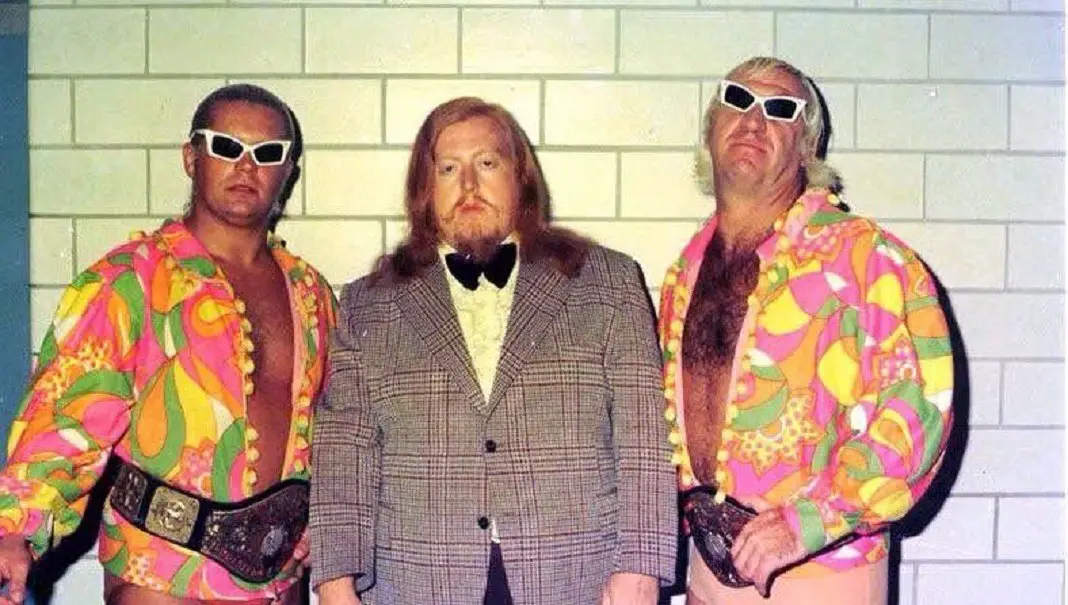
#14. The Hollywood Blonds (Jerry Brown & Buddy Roberts)
Before Roberts joined the Freebirds, he and Jerry Brown tore through Louisiana and Florida as arrogant Hollywood heels.
Their brash promos and flashy robes personified arrogance. “We made people hate us before the bell even rang, Roberts recalled.
Their act laid the groundwork for future egotistical teams across the territories. Brown and Roberts held the NWA Florida Tag Team Championship and the Mid-South NWA United States Tag Team Championship.

#13. Dusty Rhodes & Dick Murdoch (The Texas Outlaws)
Loud, brash, and beloved, the Texas Outlaws were the bridge between classic southern brawling and the modern showman’s era.
“We were cowboys chasing chaos,” Rhodes recalled.
Their antics in Florida, Georgia, and Japan made them antiheroes of their time. With cowboy hats and roughneck charm, they were crowd favorites long before “cool heels” became common. Together, Murdoch and Rhodes were the NWA United States Tag Team Champions (Florida).

#12. The Andersons (Gene & Ole Anderson)
The “Minnesota Wrecking Crew” were NWA enforcers whose style emphasized joint manipulation and relentless aggression. Ole described their philosophy simply:
“We break them down one limb at a time.”
Their methodical dismantling of opponents revolutionized tag psychology. As Mid-Atlantic Tag Team Champions, they stood as the foundation for what would become the Anderson lineage, later joined by “cousin” Arn.
Feuding with the Briscos, Funks, and Dusty Rhodes’s partners, the Andersons brought legitimacy to the concept of tag team “heat.”
Their grounded approach became the blueprint for the Four Horsemen era that followed. The duo captured both the Mid-Atlantic Tag Team Championship and the NWA World Tag Team Championship.

#11. Antonio Inoki & Seiji Sakaguchi
Inoki and Sakaguchi served as NJPW’s heroic standard-bearers, uniting martial arts discipline with tag strategy.
“We represented Japan’s fighting spirit” Inoki said during a 1976 Tokyo press conference.
Their matches against foreign invaders like Karl Gotch and Tiger Jeet Singh showcased technical precision and national pride.
They were early examples of athletic, realistic tag wrestling that would later define Japanese strong style. While together, they were multi-time NWA North American Tag Team Champions via Japan.

#10. Giant Baba & The Destroyer
AJPW’s early international pairing, Giant Baba’s stoic charisma mixed with Destroyer’s cunning technician style, made them an unlikely but dominant team.
Their popularity in Japan transcended heel-face lines, embodying sportsmanship and skill.
We trusted each other completely.
The Destroyer said in a 1984 interview.
Their matches with the Funks and Sheik-Abdullah duos are cornerstones of Japanese wrestling’s golden age. Their championship accolades include holding the NWA International Tag Team championship.

#9. The Blackjacks (Blackjack Mulligan & Blackjack Lanza)
Towering, menacing, and backed by Bobby Heenan, the Blackjacks were AWA’s dominant heels before crossing into the WWWF.
Mulligan’s power and Lanza’s cunning made them a perfect pairing.
We looked like outlaws—and we wrestled like it – “Blackjack” Lanza said.
Their signature black hats and cowboy imagery created a brand that resonated through the 1970s, influencing later teams like the Outlaws and APA.
Their championships held include the AWA World Tag Team Championship and the WWWF Tag Team Championship.

#8. The Fabulous Kangaroos (Al Costello & Don Kent)
Though their legacy began in the ’50s, the ’70s saw a strong second act for the Kangaroos with Don Kent replacing Roy Heffernan.
Costello’s gentlemanly demeanor and Kent’s rule-bending antics made them masters of crowd psychology.
We never needed a belt to get heat—just the Australian flag – Al Costello noted.
Touring globally, they worked in the U.S., Japan, and Canada, popularizing tag theatrics that would influence countless acts. The duo held the NWA Mid-America Tag Team Championships and the IWA World Tag Team Championships.

#7. The Royal Kangaroos (Jonathan Boyd & Norman Frederick Charles III)
Unlike the previous Kangaroos, this pairing was regal! Pioneers of the “foreign menace” gimmick, this Australian duo used cunning and rule-breaking to dominate Pacific Northwest and Stampede rings.
Their boomerang flags and nationalistic promos sparked riots in the crowd.
Jonathan Boyd once said, Heat wasn’t a word—it was an experience.
They held numerous NWA regional titles and paved the way for later “international” teams. Their wild style fit perfectly with the rugged regional territories of the 1970s. Boyd and Charles III would hold the NWA Pacific Northwest Tag Team Championships on multiple occasions

#6. The Crusher & Dick the Bruiser
This Midwest duo was pure chaos—two gravel-voiced brawlers who embodied the AWA’s rough-and-ready spirit.
Known for beer-swilling promos and iron-jawed slugfests, they were folk heroes in Chicago and Milwaukee.
We don’t wrestle—we fight, The Crusher boasted.
Their brawls with Larry Hennig and Harley Race set box-office records, and they carried that aura to Japan and WWA Indianapolis.
Though short on finesse, they inspired every future brawler tandem from the Road Warriors to Public Enemy.
The Bruiser and The Crusher would hold the AWA World Tag Team Championships and the WWA World Tag Team Championships.

#5. The Executioners (Big John Studd & Executioner #2)
Before Studd’s WWF stardom, he donned the hood as part of the Executioners—masked villains who terrorized the mid-’70s WWWF tag scene.
With Albano as their manager, they claimed the WWWF Tag Team Titles and became a template for dominant heel teams.
The mask gave us power; the people didn’t know us, so they feared us, Big John Studd recalled.
Their reign established masked duos as a credible threat, influencing teams like Demolition in the decade that followed. They would go on to hold the WWWF Tag Team Championships.

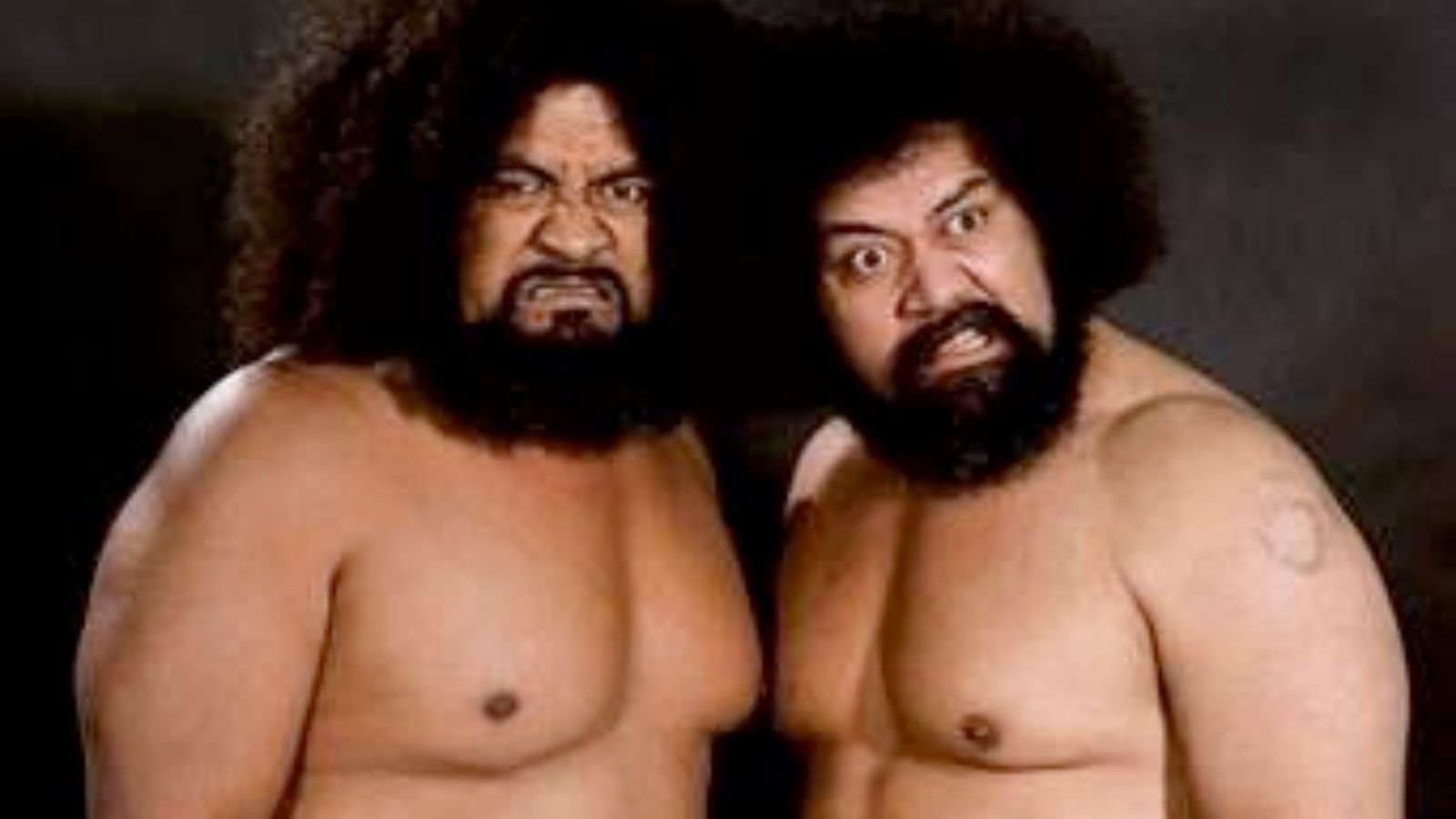
Emerging in the late ’70s, Afa and Sika brought the exotic, unpredictable energy of the islands to North American audiences.
Managed by Lou Albano, they were unique attractions thanks to their grunts, gestures, and physicality.
We didn’t speak with our mouths—we spoke with our hands, Afa said.
Their rise set the foundation for the Samoan wrestling dynasty that continues today. The brothers would go on to hold the WWWF Tag Team Championships.

#3. The Valiant Brothers (Jimmy & Johnny Valiant)
With bleach-blond bravado and big-city charisma, the Valiant Brothers brought entertainment and flash to the WWWF.
Their over-the-top personas and loud promos earned them comparisons to rock stars.
We weren’t just wrestlers—we were the Beatles with muscles, Jimmy Valiant quipped.
Managed by Captain Lou Albano, they captured the WWWF Tag Team Titles twice and helped establish Madison Square Garden as the mecca of tag wrestling in the Northeast.
Their feud with Chief Jay Strongbow and Billy White Wolf drew packed houses, blending comedy, showmanship, and heat.
Their success foreshadowed the character-driven teams of the 1980s as two-time WWWF Tag Team Champions.

#2. The Funk Brothers (Dory Funk Jr. & Terry Funk)
Operating out of Amarillo, Texas, Dory and Terry Funk redefined the concept of family dominance. Dory’s scientific precision and Terry’s fiery unpredictability made them both NWA World Heavyweight Champions and the top tag team draws in Japan.
They were two-time All Japan Real World Tag League winners and held the NWA International Tag Team Titles.
We never thought of it as a team—it was the family business, Dory once said.
Their blend of technical and brawling styles inspired countless future teams, including the Steiners and the Hardys.
Whether battling Abdullah the Butcher and the Sheik in brutal Tokyo bloodbaths or wrestling the Briscos in Florida, the Funks symbolized the global appeal of tag wrestling.
Their ability to transcend borders made them the decade’s standard-bearers for teamwork, intensity, and authenticity as holders of the NWA International Tag Team Championship and AJPW Real World Tag League Championship.
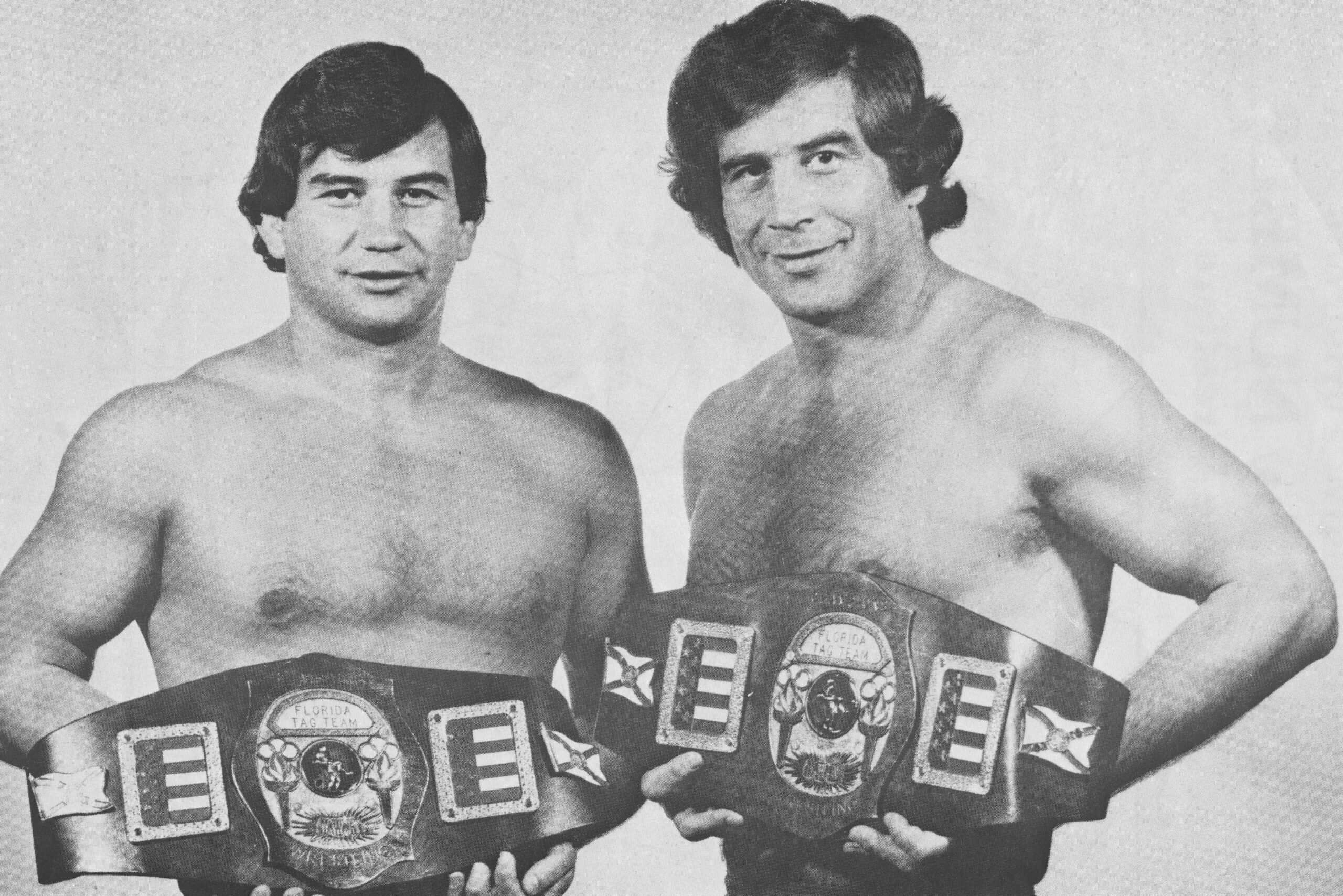
#1. The Brisco Brothers (Jack & Jerry Brisco)
Jack’s amateur credentials and Jerry’s fiery temperament made the Briscos a team of balance and technique.
As NWA World Tag Team Champions, they represented Florida and Mid-Atlantic excellence, often praised for elevating opponents with smooth, believable work.
Jack always told me to make it look real because the people deserve it, Jerry said in later interviews.
They wrestled the Funks, Andersons, and the Japanese elites, mastering chain wrestling and timing.
Their influence extended beyond the ring; both were instrumental in bridging relationships between Florida and Georgia territories and later helping talent transition to the WWF.
The Briscos’ bouts were showcases of mat wrestling at its peak, earning respect from peers and fans alike.
The brothers would go on to hold the NWA World Tag Team Championship and the NWA Florida Tag Team Championship.
The 1970s defined the art of tag team wrestling—an era where every territory produced duos that could sell out arenas, elevate opponents, and redefine teamwork.
From the Funks’ global dominance to the Outlaws’ swagger, from Japan’s disciplined tandems to the wild showmen of the American heartland, this decade birthed the identities that future generations would expand upon.
Every dropkick, brawl, and bloody feud in the ’70s laid the groundwork for the spectacle that tag wrestling would become in the following decades. These twenty teams were not just partners—they were storytellers of a golden age.