



Every nation has their cultures and traditions. The Siva Afi is an important ritual of Polynesian heritage. It requires skill, concentration, and courage.
Those who doubt themselves risk being burned or extinguishing the flames. For Papali’itele Taogaga, he had to be consumed by the fire before he could learn to control it.
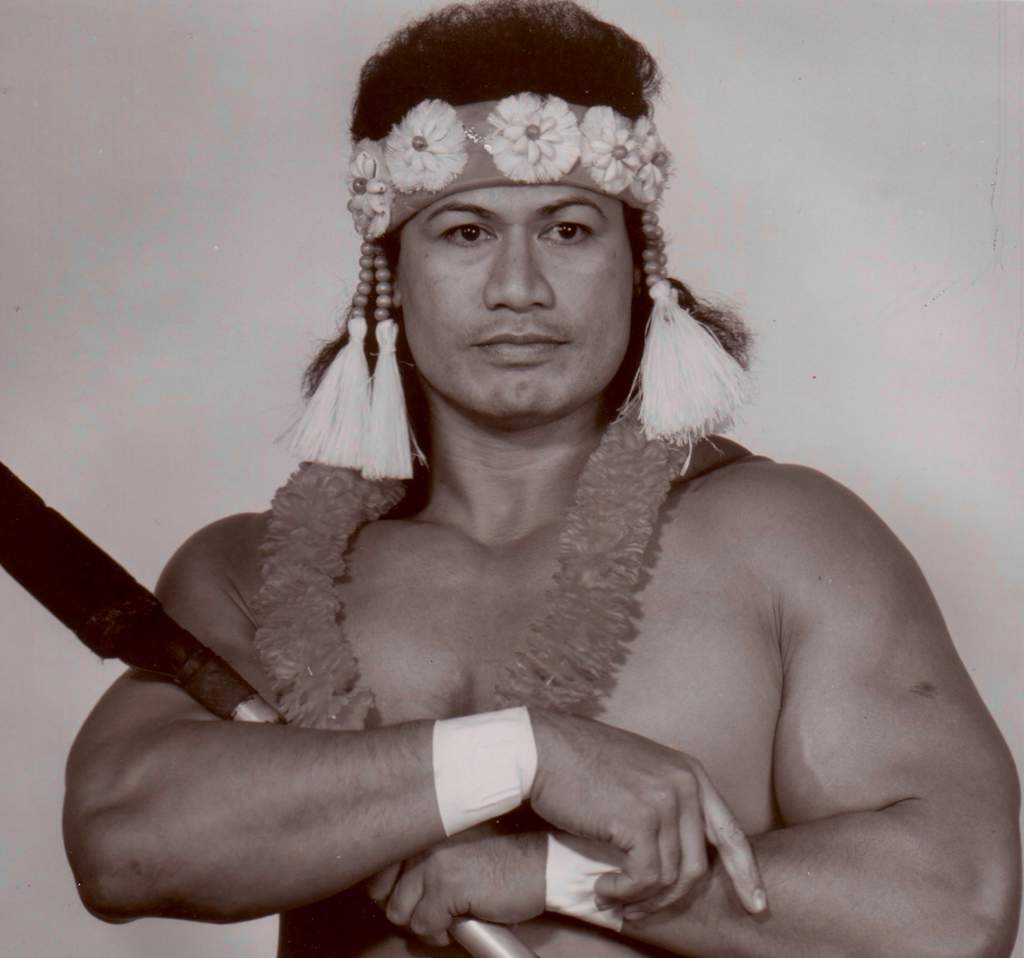
Max Taogaga was born in Samoa. Unlike most of his countrymen that found their way into the World Wrestling Federation, he was not part of the Anoa’i-Maivia dynasty.
His family had no connections to them or to wrestling until Max tried to break into the industry. They specialized in a different traditional vocation.
Siva Afi – Fighting Fire with Fire
Having grown up around animals and farming, there was nothing else that the young Taogaga wanted to do with his life. Or at least this was how he felt before he attended agricultural college.
Spending time in Apia, the only city in Samoa, made him realize he had lived a sheltered life so far. His peers had either grown up in the city or had travelled.
Introduction to Temptation
His peers had either grown up in the city or had travelled. They regularly got drunk, smoked, consumed drugs and partied hard. All of these were things that Taogaga had no inclination of doing before.
The idea of spending the rest of his life in his countryside hometown no longer appealed to him. He decided that he needed to leave Samoa and become a part of a new community. After he graduated, he emigrated to New Zealand.
Farming wasn’t the only traditional occupation that New Zealand had in common with Samoa. They, too had made wrestling a large part of their culture.
Taogaga was a fan, but he had little time for it. He was tired of hearing people around him boasting about how they made more money for one match than they did working a regular job. Eventually, these stories began to wear him down.
He had to admit to himself that his own ambitions had fallen off track. Taogaga started working in a slaughterhouse because it was the first job he could get when he arrived.
He always intended for it to be temporary until he moved onto what he wanted to do. The weeks had already become years, and he was no clearer on how to take the next step. The tall tales about wrestler pay became messages of hope.
Taogaga spent two years training under Steve Rickard, and Anoa’i-Maivia patriarch “High Chief” Peter Maivia. The Chief was highly respected throughout the industry, and this was no different in New Zealand. His endorsement helped set Taogaga up for great things from the start.
He earned a victory against popular star Del Adams for his debut in 1975. Like his mentor did, he competed barefoot throughout his career.
He had to live up to the reputation that came with being one of Maivia’s students. He was often booked as the guy who greeted challengers who visited from outside of the country.
One his way to becoming a recognised name, he won a tournament to become the first ever NWA New Zealand Heavyweight Champion.
The stories about better pay were exaggerated when he first started out. He didn’t mind as he enjoyed wrestling more than preparing animals for the supermarket shelves. The money in his pay packets got better as he got better in the ring.
It would soon occur to him that New Zealand was also a tiny island like the one he came from. There was a much bigger world out there he had yet to experience. If he wanted to grow his life, his career, and his bank balance, he would have to travel.
Taogaga spent most of the next decade wrestling around the edges of the Pacific Ocean. He worked matches in Australia, Japan and the United States as well as New Zealand.
It would be on another tiny island that he experienced two of the biggest moments of his career. He became the final holder of the NWA Pacific International Championship after defeating Masked Cyclops in Hawaii.
The only thing better than winning a title he would never lose was challenging for a bigger title that he would never win.
Over 12,000 spectators witnessed Taogaga wrestle NWA World Heavyweight Champion Ric Flair. They went for a full hour before the match was declared a time-limit draw. Merely being able to have this match meant as much to him as winning it would have.
The match with Flair caught the WWF’s attention. He signed his contract in January 1986, and worked his first match that same month. Taogaga competed at an un-taped house show in California.
Getting Too Close to the Fire
He was then repackaged as “Superfly Afi” for his official TV debut on Prime Time Wrestling. The character was unsubtly based on one of the WWF’s biggest stars at the time, Jimmy “Superfly” Snuka. He was billed as being from Fiji, which Snuka genuinely came from.
He wore identical gear and copied Snuka’s mannerisms. While Snuka liked to defeat opponents with the Superfly Splash from the top rope, Afi used a similar cross-body block at first.
Afi was formally introduced to viewers on a Body Shop segment on WWF All-Star Wrestling. He told host Jesse Venture that he was the cousin of Snuka. Just in case any viewers missed the connection, Ventura made sure to hammer the point home on commentary.
Afi and Snuka became an onscreen alliance. They mainly competed in singles matches at different levels. Afi mainly faced lower-tier stars until he had worked his way up to Snuka’s level. A single loss to Jim Neidhart prevented Ali from having a lengthy undefeated streak.
He greatly enjoyed partnering with Snuka. He regarded him as being one of the greatest in-ring performers he had ever seen.
Their friendship off-camera wasn’t as smooth. Afi always suspected that Snuka’s issues were really with management. He caught the brunt of Snuka’s bad moods just by being in the wrong place at the right time.
There had been a rumour that Afi was brought in to replace Snuka if he should leave the company. Whether it was the plan or not, it is what happened. Snuka left, and Afi took over his identity. He began using Snuka’s theme music and finisher, and took over his spot on the roster.
Fans aggressively rejected the imitation. They often chanted “Boring” at him before he made contact with the opponent. They would not let up until he had returned backstage after the match.
“There was one Superfly. You feel bad for him, you know. Anybody trying to fill that role… like trying to be the next Hulk Hogan. Same thing.”
– Don Muraco on why he believes the Superfly Afi character failed.
In a bid to reduce the damage, he was repackaged again. He was given the ring name he would become most famous for: “Siva Afi,” which literally means “fire dance.”
It is a tradition where the practioner must perform a skilful dance with the “fire knife”. It was a long pole with hooks on either end which would be set on fire.
Great care is needed to avoid self-injury. The practitioner must ignore their fear of getting hurt in order to perform the act.
It is believed those who master it learn to become fearless and prepared for all of life’s challenges. It is seen as a rebirth of that person.
“The ‘dance of fire’ means to challenge death. The knife is called ‘Death’ because there’s a hook in it, and if you miss it, you’ll die.
And the fire is the testing or the purification of the person. You have to go through the fire to be purified.”
– Taogaga explains the symbolism behind the Siva Afi dance.
If Afi was expecting a rebirth or his career, he would be denied. Fans were slow to forget or forgive him for trying to replace Snuka. The poor reactions from crowds saw Afi have his momentum reversed.
He slid back down to the bottom of the card. He struggled to get wins over enhancement talents. He was unable to impress crowds or his co-workers.
Afi had been slow to adapt to the preferred ring-style used in the WWF. He tended to work stiff as this was how he was trained.
It had brought him success everywhere else. But the constant comparisons to Snuka highlighted how Afi was not a polished or exciting in the ring.
It looked like he would be redeemed going into 1988. He racked up wins against higher-level opponents and was added to numerous cards last minute. By the end of the year, he was the enhancement talent that put other enhancement talents over.
Another factor that hindered his WWF run was the abundance of “Island” characters on the roster at the time. There were several other wrestlers of Polynesian decent wrestling barefoot and using similar characters.
Siva Afi did not stand out among them. Like with Snuka, he was frequently teamed with them purely because they were similar.
He was briefly added to The Islanders, replacing Tama. The team with King Tonga (later King Haku) went nowhere. When Tama returned, Afi was relegated to an ally who assisted them in six-man tag matches.
“Of course, I picked up a good partner. What are you trying to say? Sure, I have a good choice here.
We’re going to Montreal as a tag team for the first time, and I know the people will always support us there.”
– King Tonga, during a TV interview, responding to a question about his new tag team with Afi.
He was repackaged one last time as “High Chief Afi”. This was not just mimicking his mentor Maivia, whom Vince McMahon had tremendous respect for. Taogaga and Maivia had been made genuine High Chiefs.
He took part in a traditional ceremony where he had his body adorned with a pe’a.
Taogaga became a genuine High Chief, just like Maivia was. He would take part in a traditional ceremony where he had his body adorned with a pe’a.
It is a collection of tribal tattoos that are applied to the legs and lower torso using sharpened bones and chisels. It must be completed in one sitting.
Many have been known to pass out from the intense pain. Family members and local residents would often perform live music as a distraction. Once the process was finished, he accepted the title of Papali’itele.
The sacrifice did nothing for his career. Afi continued to be a hanger-on to the Islanders until Tama was released. King Haku began a singles push and didn’t need him. Afi remained in a directionless limbo until he was released.
Siva Afi – A Whole New Journey
Taogaga revived the Siva Afi ring name and continued to wrestle around the U.S. Despite his lack of success in the WWF, being recognisable from their programming helped him stay in the upper mid-card wherever he went.
He worked one high-profile match in Portland where the announcer claimed on air that his opponent The Dynamite Kid was paid an astounding $14,000 to perform on the show.
Using his real name, Taogaga was involved with the short-lived TV show ‘B.L. Stryker’. He worked as the real-life bodyguard and stunt double for the show’s main star, Burt Reynolds. He also had minor roles in two episodes. When the show was cancelled, he returned to New Zealand.
He reconnected with his former trainer Rickard. His mentor was now producing ‘The Main Event’ series for All-Star Pro Wrestling. Afi was consistently booked as an upper mid-carder.
He would become the only holder of the reactivated NWA British Empire/Commonwealth Championship. This show was soon cancelled too.
Siva Afi resumed touring internationally. He added countries that he had never wrestled in before. Afi competed in England, Israel, and Africa among other places. He claims that he also competed in shoot fighting while he was in Europe.
In 1991, he discovered Jeff Miller. Afi was impressed by Miller’s charismatic speaking ability and athleticism. He convinced Miller he could make great money from wrestling.
Afi began training the rookie before convincing Snuka to take him on. Miller would compete as “The Metal Maniac”.
If You Can’t Take the Heat…
Taogaga continued touring until 1997. He had fallen into the same hard-partying trap that so many wrestlers fall into. As bad as things may get for them, most do not transition into organised crime.
His name caught the attention of Cuyahoga County, Ohio Grand Jury. He was accused of being the “getaway driver” in a kidnapping incident. Taogaga was indicted and convicted on aggravated burglary, two counts of aggravated robbery, and seven counts of kidnapping. He was sentenced to 15-40 years in prison.
Being incarcerated gave Taogaga a lot of time to re-evaluate his life. He considered how he had come from humble beginnings and used to live honourably. All he wanted to do was become a farmer like his parents.
Living life in the city introduced to a world of temptations that he had only heard others talk about. As the people around him changed, so did the messages he received. They didn’t have such a cautious attitude towards the vices he had been raised to avoid.
The things he did for fun as a youth suddenly became the things he depended on to deal with boredom and stress as an adult.
As he earned more money, he surrounded himself with people who helped him to spend it. His lust for money, fame and excitement consumed him like a fire.
Each time he looked at his body, his tattoos reminded him of the heritage and traditions he had disgraced with his actions. Taogaga didn’t just leave his innocence behind in Samoa. He had also left his relationship with God.
While he was in prison, he realised that he needed that relationship more than ever. He rededicated himself to God and sought to change his life for the better.
After ten years and a series of appeals, he was released and deported back to Samoa. But he went back there as a new man.
“You know when we are on the road to fame and fortune, we seem to be forgetting about that spiritual principle; which is the basic of life.
The sort of life we have is that during it if we plant a good seed it will reap the good seeds, and if we plant the bad seed we reap bad things. That was the principle that I learned today.
When I was in the world wrestling, it’s all about me at the time. Not knowing that there is something more spiritual and more powerful than our beings.
That is the one who should be glorified; that is God. All the things that we receive, the fame, the fortune, all those things. It all belongs to God.”
– Taogaga discusses on the importance of God in his life.
As quiet as his island home was, the people there had the same struggles as others around the world. It was here that his own decline had begun. Returning made him more aware of it than ever.
He was filled with a newfound fire to help young men escape their addictions and steer clear of crime. He immediately wrote his autobiography, “Dance with Fire”.
In addition to discussing his career in wrestling, it also focused on the negative sides of his personal life. He intended for it to serve as a warning to those who may be tempted to take the same paths he did.
It also explains in great detail how his relationship with God brought him back from his lowest point. Taogaga continues to work as an evangelist in his native Samoa. He has dedicated his life to outreach work and helping others.
Taogaga built a wrestling school with a difference. Instead of training aspiring wrestlers, he sought to help young men from troubled backgrounds. He aimed to teach is students new life skills so they can lift themselves out of their situations. His soon also trained for a career in the ring too.
In July 2026, Taogaga’s family announced he had passed away. He was 77. He had only wrestled for twenty-three years.
But he prefers to be remembered for the differences he made later in life. He doesn’t want to be remembered for imiating Superfly or Maivia. He wants to be remembered for imitating Christ.
Taogaga spent much of his adult life looking for something. He longed for a personal purification. He played with fire multiple times, and got burned almost as often. Yet he still found the purification he sought when he believed he could never achieve it.